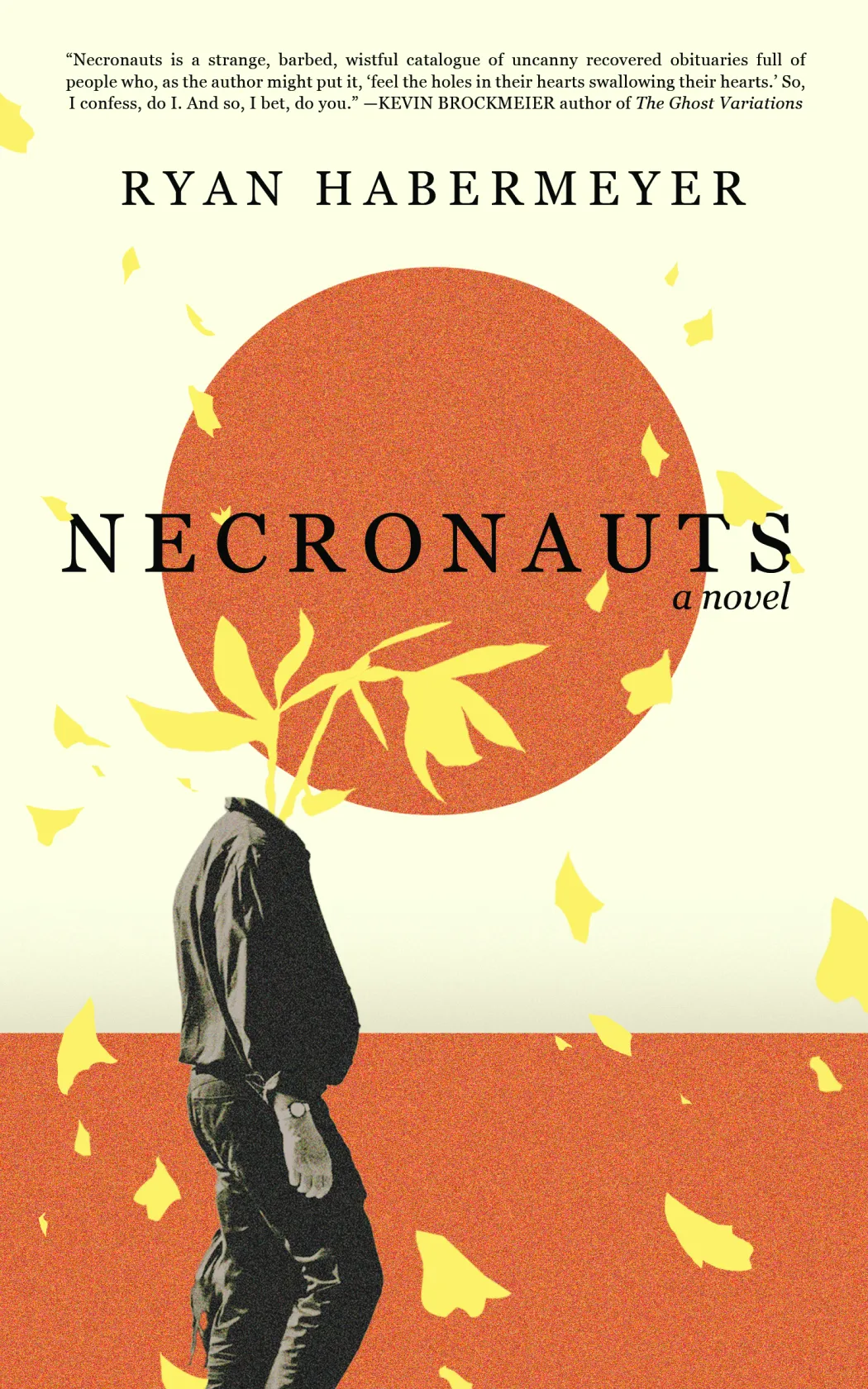
 A guest post by Ryan Habermeyer. Ryan’s novel Necronauts was released by Stillhouse Press on March 17.
When I started writing seriously twenty-something years ago, I pinky-promised myself: Never. Write. About. Utah. I was at BYU at the time, under the impressionable influence of professors who encouraged me to use Mormonism as creative fodder. Write what you know, they told me. Write about being raised Mormon in L.A.; write about your mission; write about your pioneer ancestry; write about being young and married. This was the path to authenticity, supposedly. My professors meant well. But, fearing I would be trapped in the cage of my own biography, I avoided what I saw as the dreaded categorization of “Mormon Writer.” Surely there were more important artistic concerns, I convinced myself, than faith and religion?
Besides, back then Utah and Mormonism were at the fringe of my imagination. Utah was that weird place my family had visited every summer of my childhood, embarking on a kind of surreal pioneer trek in the middle of the night with my father scooping my brothers and I out of our beds and stacking us like sardines in the back of our mini-van. Waking up hours later in the middle of the Mojave that slowly stretched into the Great Basin as we plodded through wind, sand, and sun, always felt like an alien abduction. I both feared and was enamored with the desert. The long stretches of dust that morphed into red rock were terrifying, the heat overwhelming, and yet somehow it was all enchanting.
Every writer, I think, has a place that calls them. Faulkner’s Mississippi. Joyce’s Dublin. Marquez’s Colombia. Cather’s Nebraska. Pamuk’s Istanbul. Didion’s California. Sometimes that place is explicitly conjured in the text, a vivid character in its own right, and other times a city or landscape lurks in the background like an orphaned ghost waiting to be seen. Sometimes writers evoke real places and other times the world of a story must be invented. Sometimes writers know the place that made them and are unafraid to bring it to life. Or in my case: you have to leave a place to find it. It wasn’t until I left Utah and—after a decade of philosophical seesawing—abandoned Mormonism that I felt drawn to writing about both.
Which is a long-winded way of saying I never anticipated my new novel, Necronauts, being about Utah. It’s a strange book, written in the style of ninety-five obituaries and interspersing fifty-one vintage photographs, but at its core the story is my homage to the first great modern novel, Don Quixote: a boy with a cosmonaut helmet surgically grafted to his head watches too many campy 1950s sci-fi movies and, believing he is an alien, enlists the help of a drug-addict dentist to build a catapult in the southern Utah desert in order to launch himself into outer space. Over the seventeen years I originally drafted and abandoned and re-drafted it, the book accrued ideas and side plots and episodic digressions like a tumbleweed, but Utah and Mormonism were never a consideration. I knew the story but never where it was happening: a Kafkaesque mountain town? At one point, yes. An industrialized factory hellscape? Check. A fabulist city made of glass? Check. A militarized zone? A rural haunted house? A post-apocalyptic boarding school for Mormon astronauts hoping to colonize the sun? A nameless coastal suburb? Every draft fizzled because I was never satisfied with the space and place where the story existed.
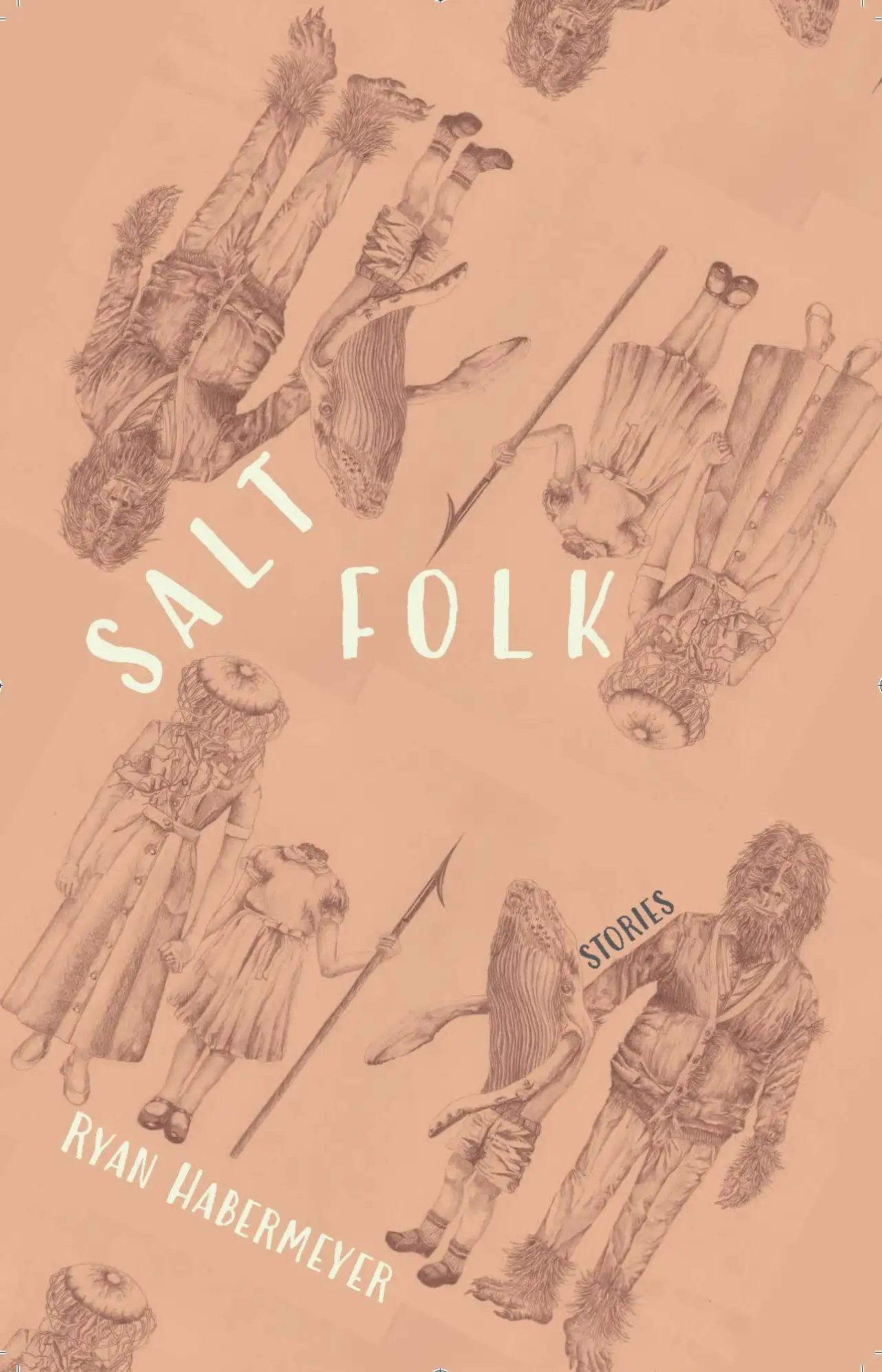 It wasn’t until I finished my second book, Salt Folk, an eco-fabulist short story collection of Utah’s past, present, and sideways future, that I revisited the abandoned novel and situated my beleaguered cosmonaut boy in a small desert town among a host of misfits, perverts, and wannabe Mormon prophets. Much to my chagrin, Brigham Young was right: this is the place. Landscape was the thread I needed to finally stitch the story together.
Of course, that decision opened up an entirely new can of worms of having to interrogate the place that all my life has felt so much like a home but also never homely. If I were Dorothy clicking my heels in those ruby slippers and wishing for home, I have no doubt I would be whisked away to Utah where a house-sized portion of funeral potatoes would be promptly dropped on my head.
Which, if I fall back on my academic training, tells me Utah is my uncanny space. Freud famously explored the German etymology of the word unheimlich and argued that what we call uncanny is a “species of frightening” that nevertheless entices; a critical disturbance of what is proper evoking the uneasy sensation of being caught in the blurred boundary between reality and imagination. With the uncanny, the familiar suddenly manifests as unfamiliar, or the unknown warps into a strange, terrifying kind of understanding. Like at the end of It’s a Wonderful Life where George Bailey wanders through Pottersville after an angel has erased him from existence: a ghost haunting the story of his own suddenly nonexistent life.
 So, I tried to channel that uncanniness into Necronauts. Each obituary foregrounds some citizen of this small Utah town while simultaneously using the recurring character of the cosmonaut boy to capture my frequent sensation of spiritual double consciousness: of being both a religious insider looking out but also a spiritual outsider looking in. Of being a sixth generation Mormon of pioneer ancestry but also never feeling or being seen as Mormon enough. I was promised more times than I can remember by multiple bishops and stake-presidents that I was one of the generals in primordial heaven, but always too unorthodox and irreverent for the true-believing Mormon crowd. And yet, I was likewise ostracized by my agnostic friends as a Mormon cultist and polygamy-adjacent weirdo. Like my cosmonaut boy, I’ve been pulled back and forth in a tug-o-war between Zion and the lone and dreary wilderness with no place to call home. I poured into the book my angst and fears and questions and wrestles with an indifferent God and his maddeningly imperfect, stupidly wondrous world where we can make sense of our existence and refine our souls into….into what? I don’t know, exactly. Only that I was—and remain—captivated with the notion of what it means to have faith in something after you’ve lost faith in everything. This is a driving force in Necronauts: what does it mean to believe in something when the thing you were holding onto turns to ash in your hand? Or, can you still believe in something if it is hopelessly, magically, crazily absurd?
Because here’s the difficult truth: I never really did leave Mormonism. Nobody does. There’s no Ex-Mo, Post-Mo, Jack-Mo, apostate, lazy learning, unruly bitter fruit, or recovering Mormon identity box for me to check. Not when you’ve been born into it, raised in it, practiced it, lived it, dreamed it, the folklore incubated in your consciousness and the ancestry tugging at you from beyond the grave demanding acquiescence. As the drug-addled dentist tells the cosmonaut boy at one point in Necronauts: We’ll always be relapsing Mormons because it’s a religion that sinks its teeth into you and never lets you go, so like it or not you’ll always feel the ghost of this faith gnawing you down to atoms.
So it remains for me, perpetually wandering through this labyrinth of being Mormon-not-Mormon. Some days, I feel like I should have stuck with the original placeholder title for Necronauts—Faithsick Brainsick Truesick Homesick Spacesick Lovesick—because Mormonism feels like a chronic illness I can’t quite cure; and other days residual Mormon beliefs I cling to are a holy balm that alleviates existential angst.
And being in the middle of that wobbling seesaw is challenging for daily living but good for the writing life. If I could travel back in time to visit my younger writing self—and there is a subtle time travel story thread in Necronauts—I would borrow and adjust a phrase from Blue Oyster Cult: don’t fear the Mormons. You’re never going to be a Mormon writer, I’d tell myself, but you might be pleasantly surprised at being a writer who writes about the lovely, bizarre, frustratingly messy complexities of being a faithsick Mormon.
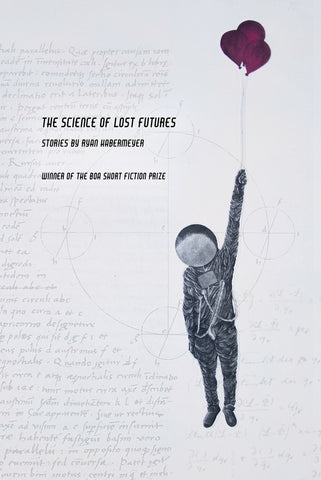
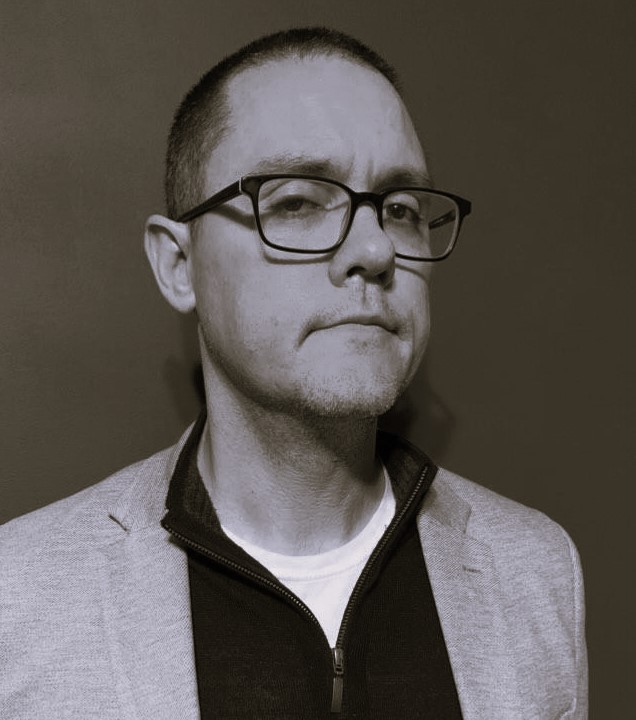 Ryan Habermeyer is a native of Los Angeles. He received his M.F.A. from the University of Massachusetts-Amherst and Ph.D. from the University of Missouri. He is the author of the forthcoming novel Necronauts (Stillhouse Press) and the short story collections Salt Folk (Cornerstone Press, 2024 AML Short Fiction Collection Award finalist) and The Science of Lost Futures (BOA Editions, 2018 AML Short Fiction Collection Award winner). His stories and essays have been published in such literary journals as Conjunctions, Alaska Quarterly Review, Massachusetts Review, Copper Nickel, Cincinnati Review, Puerto del Sol, Flyway, Fairy Tale Review, DIAGRAM, Blackbird, and Cimarron Review. A Fulbright Scholar who has lived, taught and studied in Poland, Scotland, Spain, and Mexico, he is Associate Professor of Creative Writing at Salisbury University.
Necronauts blurb:
Calypsee, Utah: a small fundamentalist town at the edge of nowhere whose patron saint is Ronald Reagan and whose motto is In Armageddon We Trust. Among its misfits, perverts, and prophets lives a boy wearing a cosmonaut helmet—or maybe it’s just an old fishbowl—who wants more than anything to launch himself into outer space.
Written in the form of ninety-five newspaper obituaries and interspersed with vernacular photography, Necronauts is a loosely reimagined Pinocchio tale and ode to campy old sci-fi films. By turns philosophical and whimsical, savage and sentimental, Ryan Habermeyer’s funhouse ride through the American West is also an intimate portrait of fathers and sons and a searing satire of 1980s Americana—where addictive religious paranoia and suspect science blur into a quixotic fever dream full of reckless fantasy.