REVIEW
———–
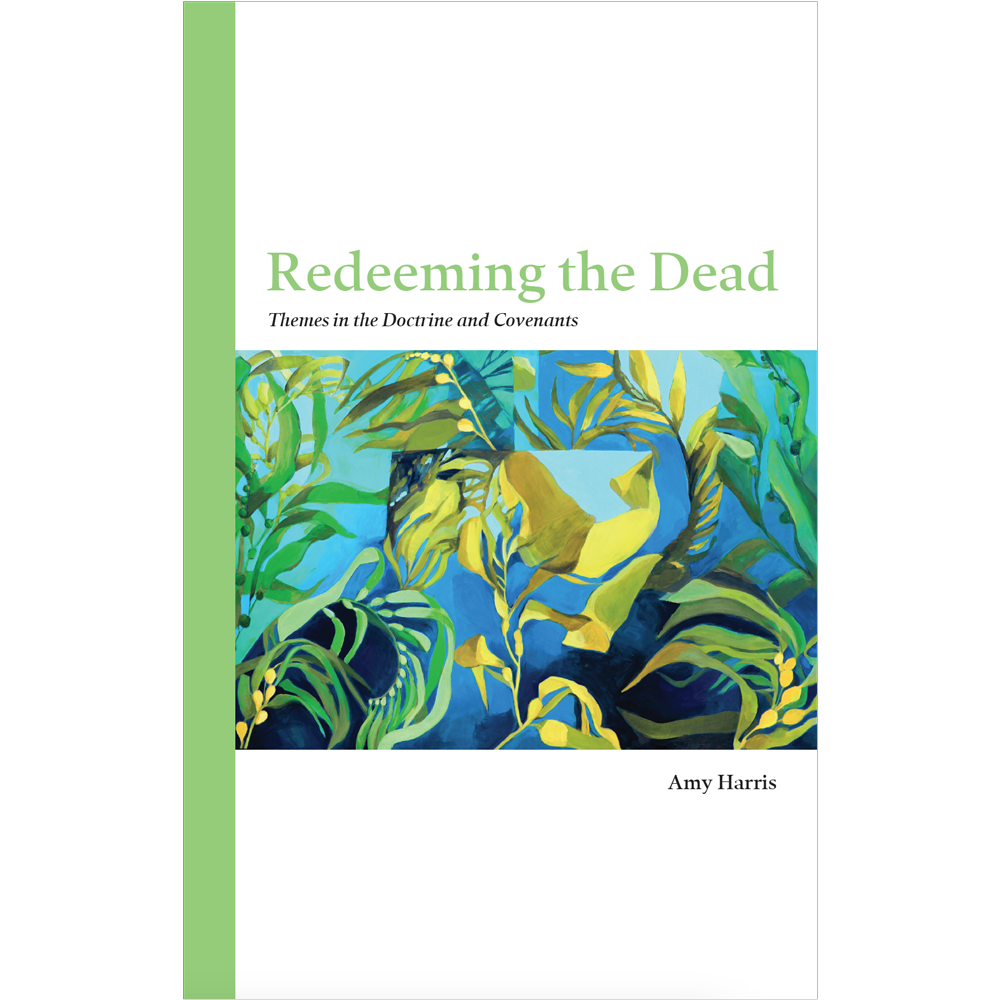
Title: Redeeming the Dead (Themes in the Doctrine and Covenants)
Author: Amy Harris
Publisher: BYU Maxwell Institute & Deseret Book
Genre: Religious Non-fiction
Year Published: 2024
Number of Pages: 127
Format: Paperback
ISBN: 978-0-8425-0134-7
Price: $12.99
Reviewed by Conor Hilton for the Association of Mormon Letters
Amy Harris’s Redeeming the Dead, a part of the Themes in the Doctrine and Covenants series from the Maxwell Institute, is surprising and insightful, an excellent contribution to the series.
Harris successfully takes a core element of the Restoration and uses it to illuminate other pieces of the Gospel in delightfully new ways AND interrogates what the actual teachings and practices related to it should mean if we take them seriously. I am not someone particularly motivated by proxy work and genealogy and so I was a little apprehensive approaching Harris’s volume. I should not have worried; Harris takes her subject in new, serious, thoughtful directions.
There are many provocative and enlightening insights throughout Harris’s book, so I’ll highlight three of my particular favorites and leave the rest for you to uncover on your own. The first comes about halfway through the book where Harris dives into the nature of proxy work and its inefficiency. Harris directly confronts the anxiety and criticism I have often heard voiced, and felt, but rarely seen convincingly addressed–what is the point of vicarious ordinances if we will never be able to perform them for all who have died without them?
Harris’s response is that it must be that the purpose is less about efficiency and checking off an item on our to do list, but instead that proxy work is a part of reorienting ourselves to the world, via God’s timetable, and putting us in relationship with the dead, reminding us that we are only truly saved together. She writes that “Redeeming the dead is not just for the future, it is about relationships now and forever” (65).
Elsewhere, Harris describes the ways that while we may think that to be a unique individual is to be autonomous and seen in isolation from others, in genealogical work, the best way to determine unique individuals from one another is through their relationships and connections. That is, maybe you have individual records with similar or exactly matching birthdates, names, etc. The best way to determine if they are the same person or different people is by looking for relationships–their parents, their spouse, children, etc. It is through our relationships and connections to others that our own uniqueness is manifest.
And finally, Harris offers a fascinating reading of Section 128 and other passages that argues that baptism for the dead is “not a fix-it for a theological gap in the divine plan of salvation, but a precondition of the earth’s creation” (16). In other words, she says that “baptism for the dead was an indispensable part of the plan of salvation from the beginning of the world” and that it “was introduced before, or at least simultaneously with baptism for the living and that part of the purpose of baptism for the living it to remind us of baptism for the dead” (16-17). What a delightfully surprising, compelling reading!
Redeeming the Dead by Amy Harris is a delight to read, as she transforms this theme into something new and alive. The book offers a compelling, unexpected reading of scripture and Restoration teachings, weaving ideas together in ways that I had never anticipated and find meaningful for my own spiritual practice. A wonderful, thoughtful little book.