
Review
———
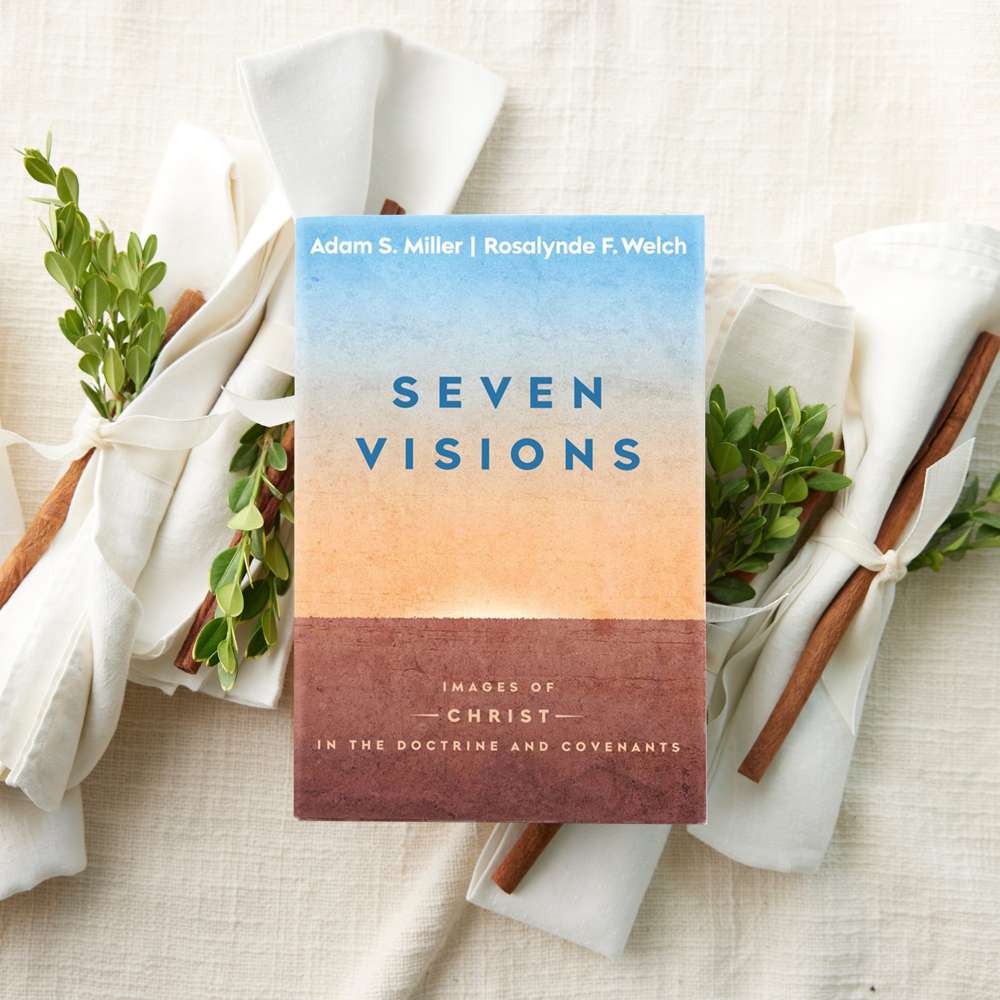
Title: Seven Visions: Images of Christ in the Doctrine and Covenants
Author: Adam S. Miller and Rosalynde F. Welch
Publisher: Deseret Book
Genre: Religious Non-Fiction
Year Published: 2024
Number of Pages: 146
Format: Paperback
ISBN: 978-1-63993-339-6
Price: $17.99
Reviewed by Conor Hilton for the Association of Mormon Letters
In many ways, Seven Visions: Images of Christ in the Doctrine and Covenants is a continuation of the conversations that Adam and Rosalynde have in Seven Gospels. Like that lovely book, this one is a thoughtful, charitable model of disciple-scholarship, offering a glimpse at what it might look like to reason together as scripture calls us to do. The book is insightful and compelling in the way it moves through careful, close readings of seven different visions of Christ, as recorded in the Doctrine and Covenants. This focusing of attention productively narrows the material, putting particular sections together in conversation that are not always read alongside one another, resulting in some surprising and delightful connections.
While I remain interested in seeing Rosalynde and Adam play a little more with the epistolary form used in these two volumes, I was struck by the organic unfolding of the conversation from one vision to the next. The book feels like a slice of a conversation that Adam and Rosalynde have been having for years and will continue having long after. Each chapter is focused on a particular vision of Christ, with Rosalynde and Adam’s readings of the scriptural passages. Wonderfully, these chapters build on each other, with some of the questions and concerns surfacing again and again throughout the book, with each successive vision lending a new layer to thinking about what it might mean to actually see Christ and be in his presence.
As with Seven Gospels, I am compelled by the confident humility that Rosalynde and Adam demonstrate in their prose. They weave their insights together, recognizing that the other is offering something necessary to more fully flesh out what these visions might mean. This approach implicitly invites the reader to do the same, to return to these scriptural texts and develop their own reading, responding to what Adam and Rosalynde offer in Seven Visions.
One specific insight that struck me (perhaps because of its relation to my dissertation on Gothic justice) comes from Rosalynde and section 130. She argues that “When we receive the fullness of God’s generous presence, we enter a place where time is no longer shackled to projects of punishment and vindication. Instead, time is graciously freed” (123). I love this insight tucked away here about the ways that time and our relationship to it is wrapped up in ideas of justice, and that expanding or disrupting the common, relentless forward march of time that we believe we inhabit may be necessary to fully embrace the generous presence of God and the grace that accompanies it.
Seven Visions: Images of Christ in the Doctrine and Covenants by Rosalynde F. Welch and Adam S. Miller is a thoughtful, enlightening look at who Christ is revealed to be by visions in the Doctrine and Covenants. Adam and Rosalynde model what disciple-scholarship can be and particularly the way that friendship and kinship may necessarily be at the core of such an endeavor. A book certainly of value for all interested in seeing Christ and understanding who he is, found to be in restoration scripture.