A guest post by Scott Hales and Kevin Klein
In February of this year, Greg Kofford Books simultaneously published two poetry collections: Sacred Scar by Scott Hales, and Loved Ones by Kevin Klein. Here’s how Scott describes his book:
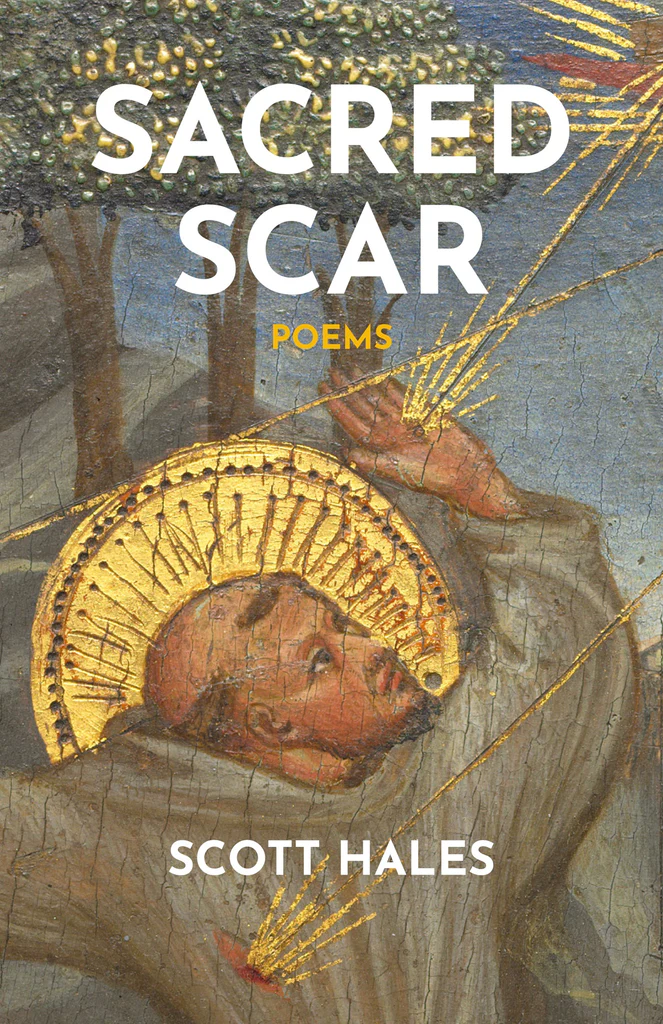 Sacred Scar begins with “Compilation,” a poem about the risks we take when choosing faith. It was originally three poems, which I compiled together when I realized how well they worked as an introduction to the collection. Unlike Hemingway in Paradise and Other Mormon Poems, my first poetry collection, Sacred Scar doesn’t take the afterlife for granted. Rather, it wrestles with our finite sense of the merits of God, sainthood, and human connection in the here and now. If people die or disappoint us, if valleys become suburbs, if God turns a silent ear to our prayers, why do we invest our hearts and minds in them? If faith snaps at us like a mousetrap, as I write in “Compilation,” why do we “take the risk/and return for the cheese”?
Readers of Sacred Scar will likely arrive at different answers to these questions. My own responses to them are embedded in the poems themselves, although I may be the only one who recognizes them. The book is divided into five sections: 1) “the boy, his burden”—ten poems about Catholic Saints , often in conversation with my Latter-day Saint life; 2) “the ranks of ghosts”—ten overt Latter-day Saint poems about history and its legacies; 3) “our forgotten valley”—eleven poems about the history and rapid recent suburbanization of Cedar Valley, Utah; 4) “some handmade lace”—twelve poems for family, friends, and (I hope) readers; and 5) “an afterthought”—a word of advice for young Mormon poets.
Readers of Irreantum and Wayfare will recognize several of the poems in Sacred Scar. Taken as a whole, I hope the collection speaks to the sacredness of this life and its many struggles. I also hope readers catch some of the humor of my past work in the book since I firmly believe that humor is key to healing the many wounds we accumulate over time. And, at heart, Sacred Scar is about healing, even if the wounds I probe are, as one poem puts it, “slow to mend.”
Also replete with LDS themes, Loved Ones contains forty poems divided evenly into four sections: faith, hope, charity, and love. As Kevin explains in his introduction,
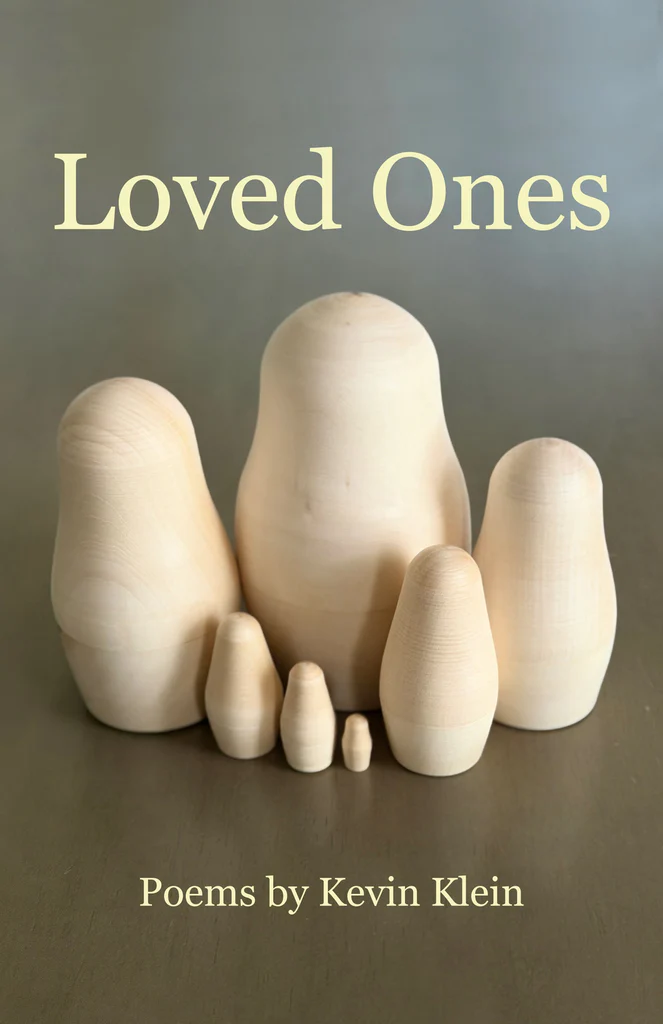 These poems honor people who have taught me faith, hope, charity, and love. You might recognize this list as Paul’s essential Christian virtues from 1 Corinthians 13, to which Joseph Smith appended “love” in Doctrine and Covenants 4. Why the addition, when many Bible translations actually use the word “love” in place of the King James “charity”? When even Nephi declares that “charity is love,” and Moroni defines charity as “the pure love of Christ”?
Here’s a possible answer: our souls grow from feeling this pure love of Christ for ourselves and others, but from what I know about Jesus, he ultimately wants me to feel the pure love of Kevin for them. Writing poetry is for me a form of repentance—not necessarily the guilt-confession-restitution process, but a gratifying divineward expansion of perception and heart—that teaches me charity, which leads me to love. Is love truly the fulfillment of charity? Well, “charitable” describes me, but “lovable” describes my neighbor. I think Brother Joseph was on to something.
The poems in Loved Ones engage imaginatively and affectionately with a range of LDS topics: the fall, atonement, First Vision, and pioneers; chapel cleaning and Primary programs; children serving faithfully at church, leaving the faith, and departing mortality; the sacrament, Mormon prayer tropes, the priesthood/temple ban, the Provo Temple rebuild, and Heavenly Mother. To elaborate on one example: “For I Will Consider Thy Servant Oliver Granger” (modeled on 18th-century English poet Christopher Smart’s delightfully quirky ode to his cat) presents what may be a completely original interpretation of D&C 117: Joseph Smith’s prophecy that Oliver Granger’s name shall be held in sacred remembrance didn’t fail; it was actually fulfilled through his daughter, Sarah Granger Kimball.
Overall, Sacred Scar and Loved Ones offer accessible poems in the sense that they reframe the familiar – not to alienate but to accompany, jogging and jostling readers just enough towards and along the path of new creaturehood. The poems in them serve as signposts on that journey more than interpretive puzzles or aesthetic destinations themselves. At the end of each poem in Loved Ones is a QR code to a Substack page with a video of Kevin reading the poem, the poem’s full text, and explanation of the poem’s origins and techniques. As he explains at the end of his introduction, “If these supplemental materials help you better appreciate the poems, then the poems may have a greater chance of helping you better appreciate your own loved ones.”
Ideas for reading and book clubs:
-
This year the Come Follow Me curriculum focuses on the Old Testament, around a third of which is poetry. Beneath their stylistic differences, both ancient Hebrew and contemporary verse use imagery and language patterns to express a range of feelings, foretellings, and ideals. Most significantly, they both represent human conflict and tragedy without fully resolving them – think Jeremiah and Lamentations, Jonah and Job. These similarities suggest that contemporary poets can offer insights for engaging with Old Testament poetry. In their work, poets Scott Hales and Kevin Klein demonstrate how seeking stillness in the midst of uncertainties and challenges – what the English Romantic poet John Keats called “negative capability” – can help us grow towards the holistic emotional connection with God manifested by the poets of the Hebrew Bible.
-
Poetry requires humility and honesty, two antidotes to our current cultural polarization. Through their poetry, Scott Hales and Kevin Klein practice faith, hope, and charity towards people they may not agree with but are determined to understand and love.
-
By many metrics, Latter-day Saints value education. Their theology holds that the purpose of earth life is to learn, grow, and be tested; that people can’t be saved in ignorance, and that the glory of God is intelligence. According to many learning frameworks, effective education culminates in students’ ability to use new knowledge and skills creatively. Indeed, several recent Conference talks have encouraged Saints to explore worthwhile forms of creative expression. In their poetry, Scott Hales and Kevin Klein demonstrate how faithfully imaginative interpretations of familiar LDS themes and scriptures manifest a genuine quest for the literally proverbial getting of understanding.
-
As author and Holocaust survivor Elie Wiesel wrote, “Man raises himself to God by the questions he asks.” Poetry is a powerful medium for asking and exploring questions, including the fundamental Christian question: not “What would Jesus do?” but the one Jesus himself asked about each of us: “What’s it like to be you?” In their poetry, Scott Hales and Kevin Klein illustrate how reading and writing poetry can sharpen our curiosity and expand our empathy.
-
In the inspiring words of theologian Reinhold Neibuhr, “The intimate relation between humour and faith is derived from the fact that both deal with the incongruities of our existence. … Laughter is our reaction to immediate incongruities and those which do not affect us essentially. Faith is the only possible response to the ultimate incongruities of existence.” Through their poetry, Scott Hales and Kevin Klein promote faith through humor by finding delight and wisdom in Church historical oddities and playfully tweaking entrenched cultural conventions.