
Review
———–
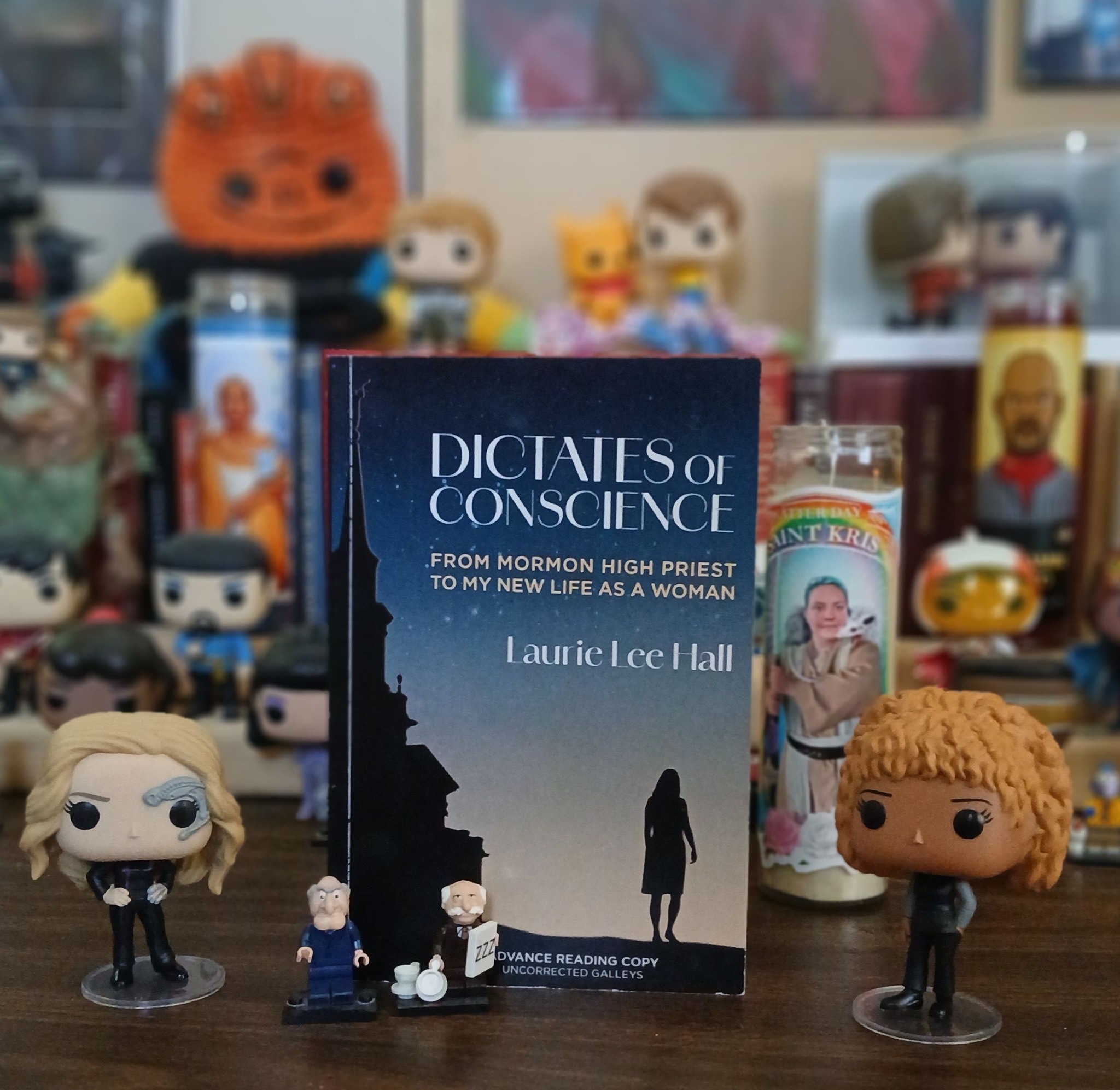
Title: Dictates of Conscience: From Mormon High Priest to My New Life as a Woman
Author: Laurie Lee Hall
Publisher: Signature Books
Genre: Memoir/Autobiography
Year Published: 2024
Number of Pages: 350
Format: Hardcover
ISBN: 9781560854791
Price: $34.95
Reviewed by Conor Hilton for the Association of Mormon Letters
Laurie Lee Hall’s Dictates of Conscience: From Mormon High Priest to My New Life as a Woman is an important book, detailing one transwoman’s journey of self-discovery and self-acceptance and the clashes that journey creates with the Church of Jesus Christ of Latter-day Saints as an institution.
Hall’s story is straightforwardly told with unadorned prose, relaying a simple narrative of what occurred. I longed for a more artfully written and constructed version of the book, given my own tastes and biases, but came to appreciate the insight into Hall that was provided by reading her story in her own words.
One of the most striking elements of the book, for me, was reading about the frequent and specific spiritual promptings that Hall received throughout her life. A particularly vivid example is her prompting that she will be the next stake president (a prompting received before her transition), which was followed quickly by spiritual guidance to select not only counselors, but the full roster of stake leadership positions. Hall dutifully records this information on a notepad and tucks it away. Some while later, she is called to meet with Elder Tingey, who extends the calling and invites her to take time to think about counselors, etc. Hall replies that she doesn’t need to and produces the notepad, when Elder Tingey replies that he has never experienced anything like that in all his years of extending these callings (Hall 134).
These powerful witnesses give Hall comfort after her excommunication. She writes that, “I rehearsed in my mind the knowledge that my excommunication was merely an institutional administrative action, and God wasn’t in it. God hadn’t excommunicated me from him. Nothing could separate me from God’s love and acceptance—nor from the love and acceptance of people who cared about me” (247). This sense of spiritual confidence, of knowing God’s will with clarity, guides Hall in striving to live according to “the dictates of conscience”. Even when faced with institutional resistance, Hall finds comfort in these personal spiritual experiences. I am fascinated and moved by the tension that this clarity creates when it challenges the teachings and practices of the Church of Jesus Christ of Latter-day Saints, and I would love to have read more reflections about that and how Hall developed this spiritual attunement.
While much of the book is heartbreaking given traumatic experiences wrapped up in gender dysphoria and conflicts internal and external developed in response to it, Hall’s narrative is peppered with love and acceptance from individuals, sometimes surprising ones. One such example is about Richard Heaton, director of the MTC in Provo, during the open house for the new expansion, which Hall served as chief architect of, prior to being forced out of church employment. Hall is excommunicated days before the open house, calls Heaton to say she understands if she shouldn’t attend under those circumstances, and in response, Heaton insists on her coming. Hall writes this about the experience, “Richard graciously introduced me to everyone he could as Sister Laurie Lee Hall, chief architect of the MTC expansion” (247). The love that Hall finds, even in the midst of rejection and indifference, is moving and powerful. May we all strive to be examples of such love to those in our lives.
Dictates of Conscience: From Mormon High Priest to My New Life as a Woman by Laurie Lee Hall is a good read for people interested in better understanding a piece of the trans Mormon experience. The book is also illuminating for folks who are interested in the inner workings of church headquarters, particularly regarding building projects, including the reconstruction of the Provo tabernacle as the Provo City Center Temple. I hope Hall’s story helps us have the courage to live more lovingly and according to the dictates of our consciences.