
REVIEW
———–
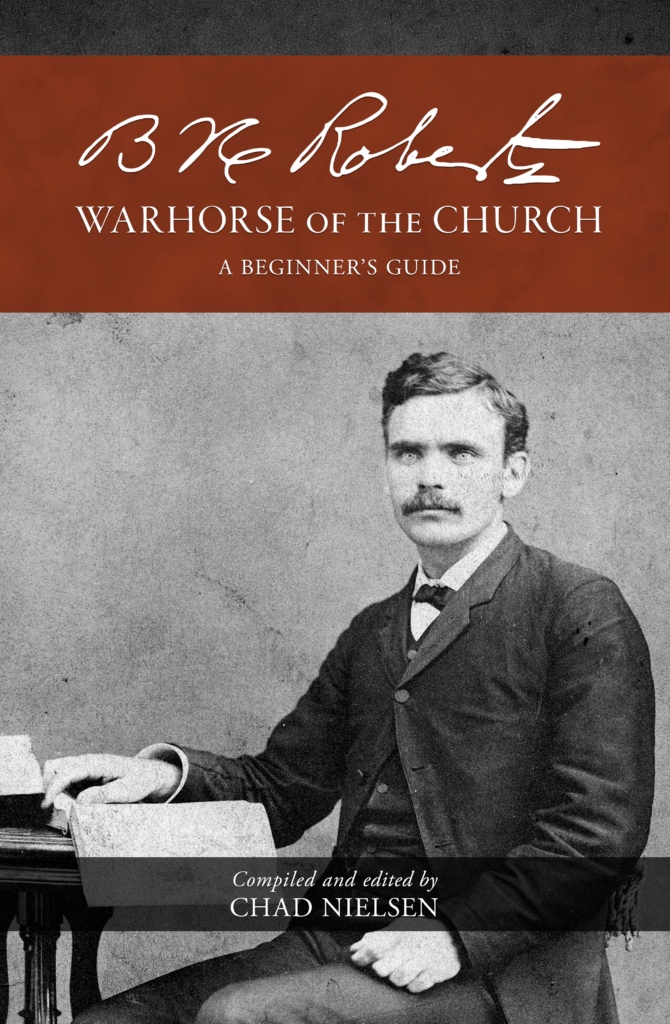
Title: B. H. Roberts: Warhorse of the Church, A Beginner’s Guide
Editor and Compiler: Chad L. Nielsen
Publisher: Fair (2026)
Genre: History
Year Published: 2026
Number of Pages: 175
Binding: Paper
ISBN: 9798890920362
Price: 16.95
Reviewed by Melvin Clarno Johnson for the Association for Mormon Letters
B.H. Roberts: Warhorse of the Church, A Beginner’s Guide offers readers a valuable introduction to one of the most influential intellectual figures in the history of The Church of Jesus Christ of Latter-day Saints. For those interested in both Church history and the development of Latter-day Saint thought, the volume provides an accessible yet substantive examination of Roberts’s life, achievements, and enduring influence within both religious and scholarly communities. Compiled and edited by Chad L. Nielsen, the book shows why Roberts remains a significant figure while highlighting the determination, resilience, and intellectual rigor that characterized his career.
The title Warhorse of the Church aptly captures Roberts’s role within the Church. Throughout his life, he consistently placed himself at the center of questions, controversies, and difficult challenges facing the faith. His responses to both personal adversity and institutional difficulties reveal an individual deeply committed to defending his convictions while grappling with complex historical, theological, and intellectual issues. Nielsen effectively shows why Roberts became one of the Church’s most influential advocates and thinkers.
Particularly noteworthy is the attention given to Roberts’s early life and formative experiences. Born in England in 1857, Roberts endured significant hardship, including abandonment by his father and the poverty that marked his childhood. At the age of nine, he and one of his sisters emigrated to Utah, walking much of the journey from Nebraska barefoot. These experiences provide important context for understanding the perseverance and determination that would later define his life and career.
That flexibility was tested constantly. In 1889, Roberts pleaded guilty to unlawful cohabitation and served approximately five months in prison, while his second wife, Celia, remained in exile in Colorado. His difficulties continued when the United States Congress refused to seat him following his election in 1898. To Nielsen’s credit, the book neither ignores nor minimizes these episodes but instead addresses them candidly as integral aspects of Roberts’s life.
One of the most compelling episodes discussed is Roberts’s response to the 1884 Cane Creek Massacre. After a masked mob murdered two missionaries and two other church members in Tennessee, Roberts, then serving as mission president, embarked on the dangerous task of recovering their bodies and arranging for their return to Utah. Traveling through a hostile environment in disguise as a hobo, he completed his mission despite considerable personal risk. The episode illustrates not only physical courage but also a profound sense of loyalty and duty, qualities that help explain the origins of his reputation as the Church’s “Warhorse.”
I like how Nielsen examines Roberts’s commitment to scholarship. Nielsen consistently emphasizes Roberts’s dedication to education, historical inquiry, and intellectual engagement. Particularly significant is Roberts’s conviction that faith and rigorous investigation need not be mutually exclusive. This perspective is one of the reasons his writings continue to attract the attention of historians, theologians, and students of Mormon studies.
One of the volume’s notable strengths is its unwillingness to portray Roberts as a flawless or idealized figure. Rather than presenting a hagiographic account, Nielsen acknowledges the complexities, challenges, and contradictions that characterized Roberts’s life and career. This balanced approach is particularly effective because it produces a more realistic and human portrait. By examining both Roberts’s accomplishments and his struggles, the book provides readers with a fuller understanding of the burdens of leadership, the demands of public service, and the tensions that often accompany lives of faith and intellectual inquiry.
The volume’s writing style is clear, approachable, and well suited to its intended audience. Readers unfamiliar with Latter-day Saint history are unlikely to feel overwhelmed by unnecessary detail or academic jargon. Nielsen balances historical substance with readability, creating a narrative that remains engaging while preserving scholarly integrity. The introductory biographical sketch and chronology provide valuable context for the selections that follow, while explanatory notes and historical commentary help readers navigate unfamiliar names, events, and controversies. The thematic organization of the material further enhances accessibility, allowing readers either to proceed sequentially or to consult individual topics without losing the broader narrative thread. As a result, the book makes Roberts’s life and ideas readily accessible without sacrificing accuracy or intellectual depth.
Nielsen’s discussion of Roberts’s views on plural marriage provides an excellent example of it as both a historical and interpretive work. Explaining Roberts’s eventual acceptance of the Manifesto, Nielsen observes that Roberts came to reject the notion that Mormonism was fundamentally defined by plural marriage. Roberts argued that the faith predated the introduction of the practice and continued after its discontinuation, demonstrating that plural marriage constituted an important historical feature rather than a foundational theological principle. Nielsen’s treatment of the subject is concise yet nuanced, illustrating both Roberts’s evolving perspective and his effort to distinguish core doctrine from historical practice. Passages such as this demonstrate the author’s ability to summarize complex issues with clarity and precision.
One subject that might have improved the volume is Roberts’s October 1911 General Conference address concerning plural marriage and the subsequent reaction of the infuriated Church President Joseph F. Smith. While the book’s introductory nature necessarily requires selectivity, the absence of this episode is noteworthy. The incident would have provided a valuable opportunity to illustrate how Roberts’s intellectual independence and willingness to speak candidly occasionally placed him at odds with Church leadership. It also would have highlighted his ability to navigate disagreement within institutional settings while remaining committed to the Church and its mission. Although understandable in a concise introduction, the omission leaves this aspect of Roberts’s career unexplored and directs interested readers toward an important avenue for further study.
This volume’s greatest accomplishment is its ability to encourage additional investigation. By introducing readers to pivotal moments in Roberts’s life and emphasizing the significance of his writings, Nielsen generates curiosity about both the man and his intellectual legacy. It serves not only as a summary of Roberts’s career but as an invitation to delve more deeply into his work and into the broader history of Latter-day Saint thought. Readers are likely to finish the volume with a greater appreciation for Roberts’s contributions and a desire to explore his writings firsthand.
Overall, B. H. Roberts: Warhorse of the Church, A Beginner’s Guide provides an informative, engaging, and thoughtfully constructed introduction to one of the most influential leaders, historians, and intellectuals in Latter-day Saint history. Although its brevity precludes a comprehensive treatment of Roberts’s life and career, the volume successfully fulfills its purpose as an entry point for new readers. Nielsen’s careful selection of materials, balanced commentary, and accessible presentation make this work a valuable resource for anyone interested in Church history, Mormon intellectual traditions, or the life and legacy of B. H. Roberts. As an introductory study, it proves why Roberts continues to occupy a key place in both the historical and intellectual development of The Church of Jesus Christ of Latter-day Saints.