The Association for Mormon Letters’ AML Awards, for works published in 2025, were presented at the Association for Mormon Letters Online Conference, June 20, 2026. You can see the awards ceremony here, including acceptance videos from many of the winners.
Below is each award winner, along with the award citation written by the judges. Each category was judged by separate juries of authors, academics, and critics.
James Goldberg was presented with the Smith-Pettit Foundation Award for Outstanding Contribution to Mormon Letters. Angela Hallstrom was presented with Association for Mormon Letters Lifetime Achievement Award. See the links for the award citations and interviews about their careers.
Comics
Camilla Stark. The Desert Prophet. Camilla Stark Art
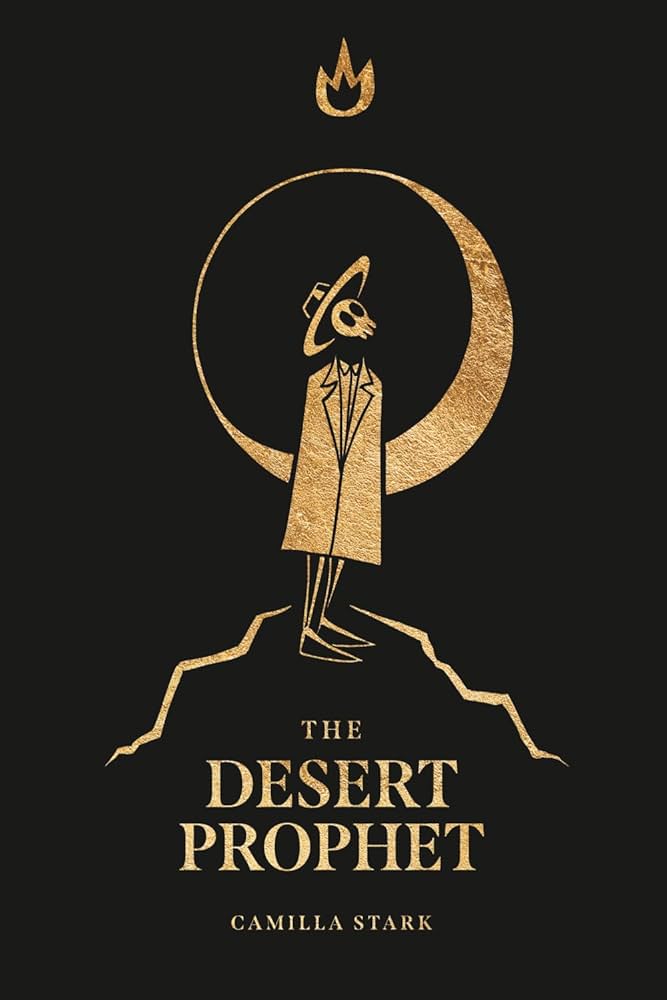 The simple illustrative style of The Desert Prophet hides a depth that is not often seen in comics. Stark walks the reader through a stark desert full of saints, sinners, and beasts as the Desert Prophet does everything he can to escape his calling while on his way to tell the Desert God that he’s done being the prophet. Stark shows that the journey, both external and internal, and what we think we know about ourselves and others is not always as simple as it may appear at first glance. The Desert Prophet struggles every step of the way to his destination atop the Mountain, and he changes his perspective about his life along the way. Stark paints a detailed picture with her simple style, drawing the reader into the story and revealing it one
 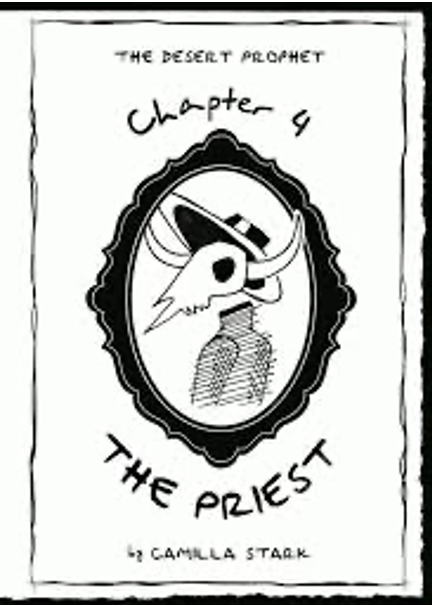 frame at a time. The Desert Prophet is an interesting character, someone with whom anyone can relate as he deals with his frustrations, working through them as he draws closer and closer to the Mountain,
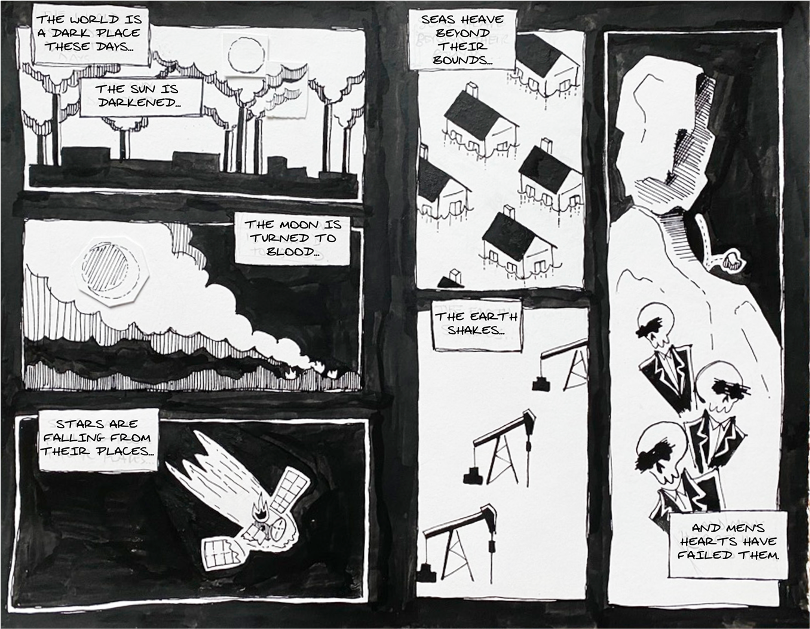 the Desert God, and what will happen when arrives there. This quirky tale, with its layered approach to questions and challenges familiar to all mortals, is a delightful story on many levels.
Other finalists:
Maddie Baker. “Minerva!”
Michael Grover. Deeply Dave
Nick Perkins. Ginseng & Dreams: 1776-1816: The Beginnings of Mormonism
Tui T. Sutherland and Jake Parker. Wings of Fire: Legends Darkstalker
Creative Nonfiction
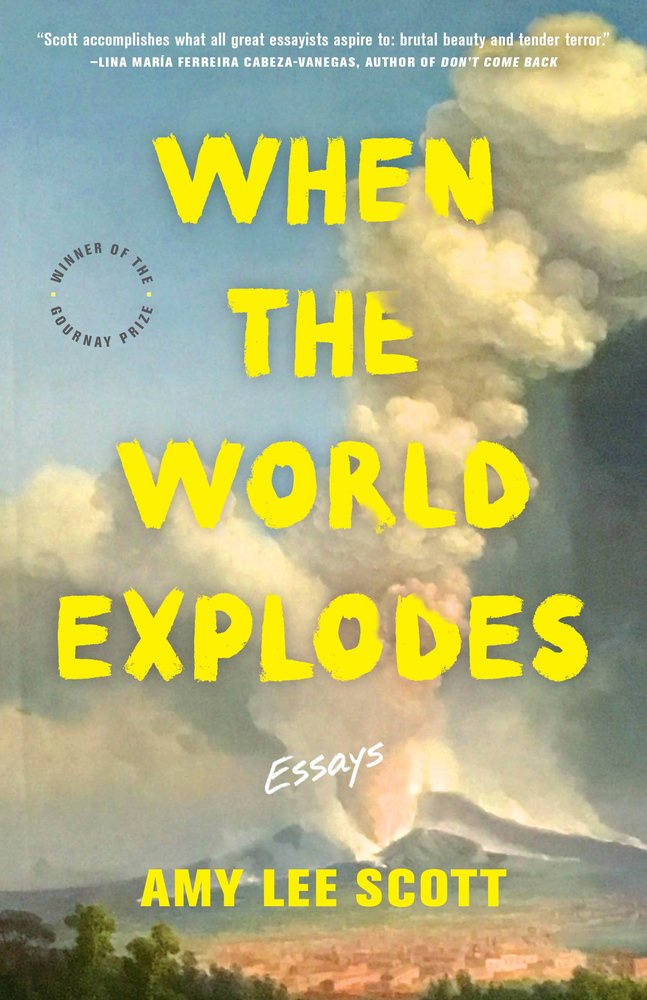 Amy Lee Scott. When the World Explodes. Ohio State University Press
We are delighted to honor Amy Lee Scott’s first collection of essays, When the World Explodes. Essays are attempts to be in the world, in spite of, or perhaps because of its complexity. Scott’s essays turn over this very complexity, considering our common humanity, even at our peril.
These haunting braided essays weave the local with the global, the small with the great, and they press on the heart, because ultimately, disaster does find us all: A good friend dies; cancer takes your adoptive mother; contaminated flood waters smother life; the air hides death; and such disasters constitute only a partial reckoning.
Disasters work their cruelties without our leave, or even our notice, at least until they can no longer be ignored. You could almost be forgiven for, “[having] somewhere to get to, . . . sail[ing] calmly on,” as expressed by W.H. Auden. Scott, however, refuses to sail calmly on. She balances our universal human mandate to bear disaster, knowing it is never the last one, with our human desire to thrive, clear-eyed, despite it.
Into this tapestry she weaves explosive hope. Her closing sentences say it best: “But I wonder if, within the utter chaos, lies something sparking to become more, a precious metal yet undiscovered. Perhaps we are the catalyst alchemists sought in ancient times–if only we have the gall to keep all of our small fires burning.”
Other finalists:
Philip L. Barlow, editor. A Thoughtful Faith for the 21st Century
Ryan W. Davis. Dispatches from Mormon Zion
Danielle Leavitt. By the Second Spring: Seven Lives and One Year of the War in Ukraine
Criticism
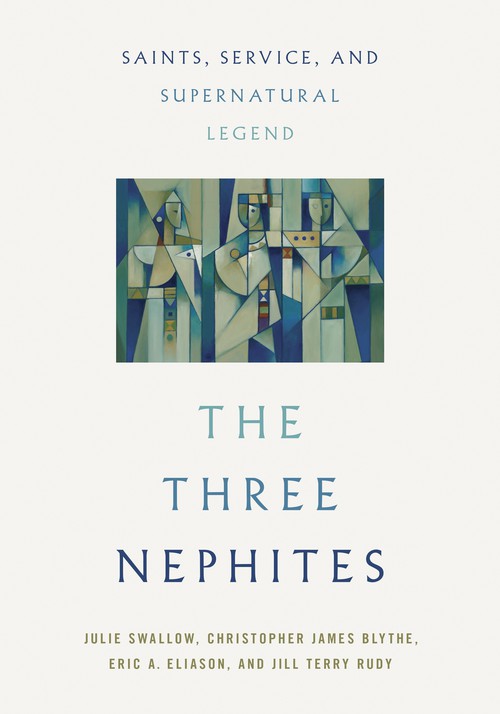 Julie Swallow, Christopher James Blythe, Eric A. Eliason, and Jill Terry Rudy. The Three Nephites: Saints, Service, and Supernatural Legend. University of Illinois Press
The Three Nephites works as a book of Latter-day Saint literary criticism on two levels. First, the book acts as a summative collection of the work and thought of William A. Wilson, referred to affectionately in the book as Bert, one of the preeminent scholars of Latter-day Saint folklore. The book details how Bert realized in graduate school that Mormons indeed have folklore and his life’s work of collecting it. Quotes from his academic and public essays on the subject provide a clear view of how Bert’s methods and conclusions changed over time, as well as how they interacted with the larger field of folklore. This book, completed by his students, colleagues, and fellow scholars, stands as a testament to his life’s work and fills in an important part of the intellectual history of Mormon letters.
Even more valuable is the volume’s work on categorizing, contextualizing, and analyzing Three Nephites folklore itself. The introductory essays for each chapter help the reader to notice the unique features of each type of Three Nephites story, from apocalyptic admonitions to missionary rescues, from humorous jokes to faith-promoting rumors to the sincere and the sacred. For scholars outside the tradition, these essays provide needed cultural and theological context. For those within the tradition, they call for a reappraisal of the biases we might bring to these stories, asking readers to see them as authentically representing Latter-day Saint concerns, even when they might not authentically represent actual facts. The stories themselves are, of course, an excellent cross-section of the typical and the unusual in Three Nephites accounts, which will undoubtedly spark ideas for future scholarship and literature. This volume admirably continues Bert Wilson’s work in asking scholars to take religious supernatural legends seriously as a means of studying the lived experience of religious communities.
Other finalists:
Mason Allred. “The Body is the Message: The Promise of Mormon Horror.”
Chanel Earl. “Atonement and Fairy Stories.“
Reid L. Neilson. “A Catholic Storyteller of the Latter-Day Saints: The Life and Writings of Utah Novelist John Dennis Fitzgerald.”
Darlene Young. “Seers, Saints, Poets.”
Drama
Ben Abbott. Backw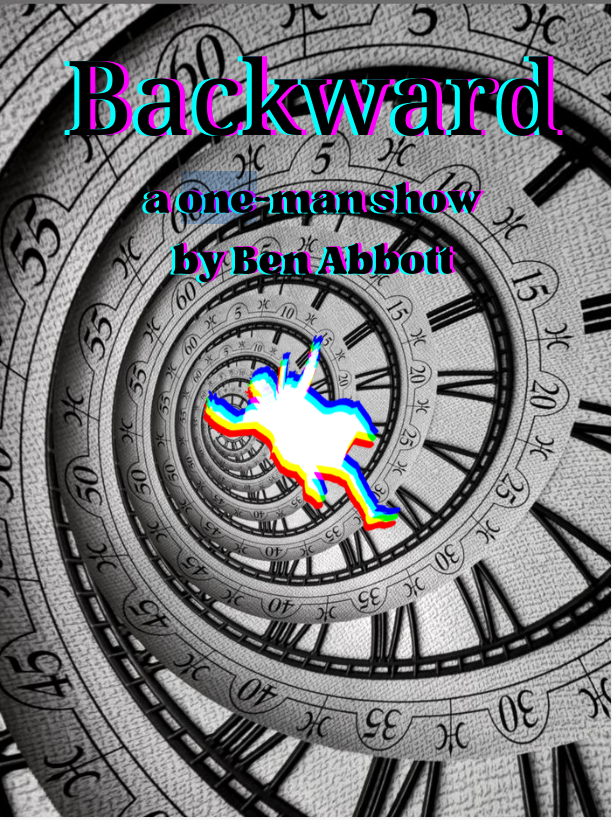 ard. Hollins Playwrights Lab New Works Festival, Roanoke, Virginia, July 2025. MFA Thesis, Hollins University, May 2026.
Backward is a beautifully written one-man play about a man who has the opportunity to live his life three times: forward, backward, and forward again. The play begins as Roger begins to age backwards. The audience gets to experience regret, excitement, fear, embarrassment, and enlightenment with him in real time. It is a truly human story about what it is to be human and maybe even the purpose of being human in the first place. In a poignant realization Roger, the protagonist, sums up the experience of this play for all of us: “I see her past, present, and future. I think I see her as God sees all of us.” We are pleased to present the 2026 AML Drama Award to Ben Abbott for Backward.
[We were not able to edit Ben’s acknowledgement video into the main video, but you can see it here.]
Other finalists:
Morag Shepherd. The Big Quiet
Melissa Leilani Larson. The Boxcar Children
Feature Film
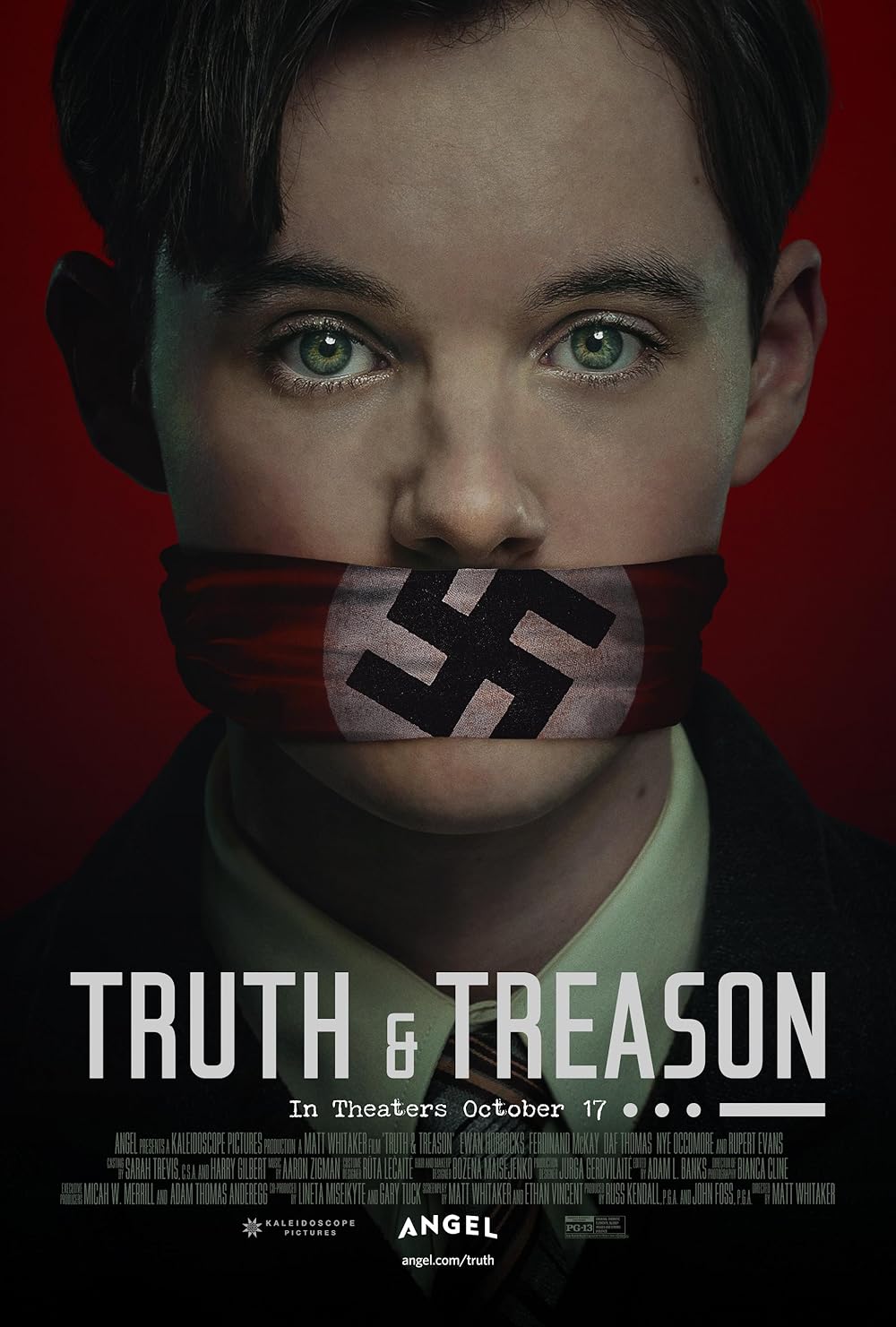 Truth & Treason. Written and directed by Matt Whitaker, co-written by Ethan Vincent.
As someone who has been aware of Truth & Treason since some of its earliest iterations, and of Matt Whitaker’s long journey to bring the film to the silver screen, you could say my expectations were extremely high when I stepped into my first viewing. The lights dimmed, and two hours of total engagement ensued. When the lights came up and the spell was broken, the subsequent Q&A with the group only set aflame the despair the film had left in me. A certain hopeful hopelessness ensued.
Unlike many films surrounding World War II and the Nazis’ fascist regime, Truth & Treason avoids the sensationalism and familiar tropes of the genre, carving out a path of its own. The film takes us on a true journey, exposing how institutions, partisanship, and societal momentum can be weaponized to stomp out what is most sacred and precious: truth.
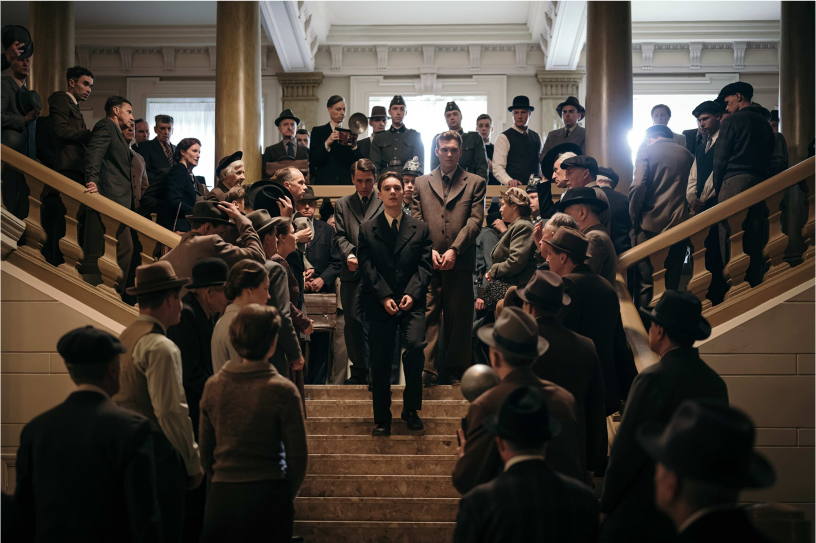 It was impossible to watch the film without drawing comparisons to the state of American politics and to the imposed infallibility of both political parties that is eating away at the soul of this country. Whitaker’s opus exposes that danger with startling clarity.
I left the theater feeling one thing: perhaps God Himself had hidden this film away all these years, as He is wont to do, preserving it for a wise purpose; for a day when its message, warning, and truth were needed most.
Other finalists:
Omaha. Directed by Cole Webley, written by Robert Machoian.
Standout: The Ben Kjar Story. Written and directed by Tanner Christensen.
Short Film
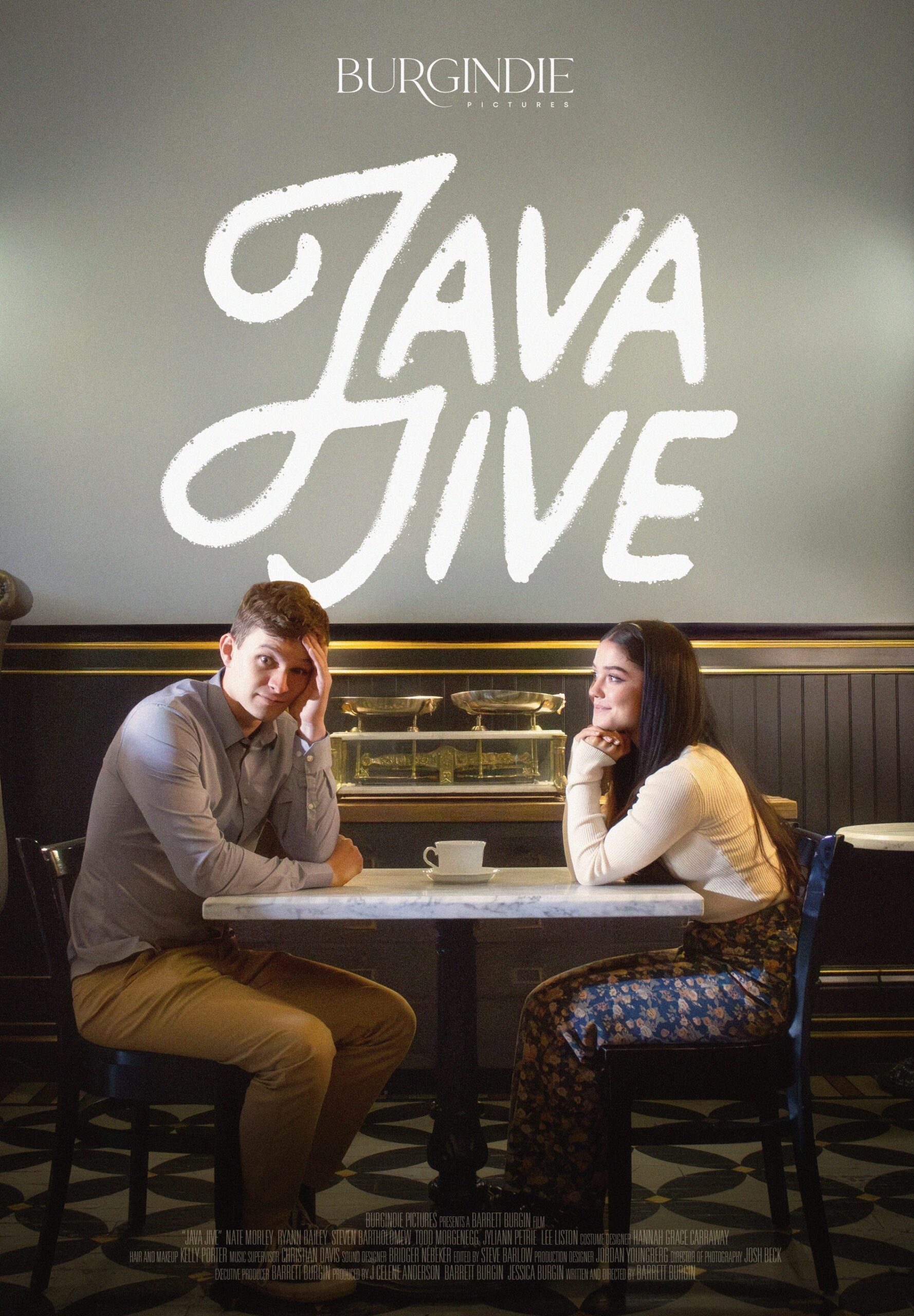 Java Jive. Written and directed by Barrett Burgin. Burginde Films.
It’s an uncharacteristically hot winter day when I sit down, nurse my third Dirty Coke of the day, hit play, and begin Java Jive. I didn’t realize I would be taken on a journey that would make me question my own hypocrisy and encourage me to stand my theological ground more, all whilst trying not to project Dirty Coke out my nose from laughter.
Barrett Burgin never seems to miss when he sets out to try something new, whether he is trapping missionaries in a psychological crime thriller or tempting two wives with the false promises of an angel of light. But one mayhaps have thought that a quirky relationship comedy centered on Mormon shame culture and young love may have been outside of his wheelhouse; but the sheer number of full-body laughs and satisfying cringes I experienced throughout the duration of the film would indicate that his wheelhouse is excessively large, or he may not have a wheelhouse at all, and the entire lexicon of cinematic genre is his proverbial oyster.
 Java Jive is crafted with the same level of care as the most over-engineered espresso. From the first coffee tinted frame to the last credit, the craft and the joke persist. This viewer was consequently thrust back over twenty years to my high school’s hallowed halls, where Shelly Schumacher (name changed for her own protection) joked about how many moms I certainly must have. Instead of yelling that I had only ever had one mom and running away from the interaction, I may have instead more boldly stood my ground and let her know that, as a member of The Church of Jesus Christ of Latter-D…
Other finalists:
All These Pieces. Written and directed by Steven Bartholomew
I Hid My Heart Inside My Head. Directed by Luis Fernando Puente
Novel
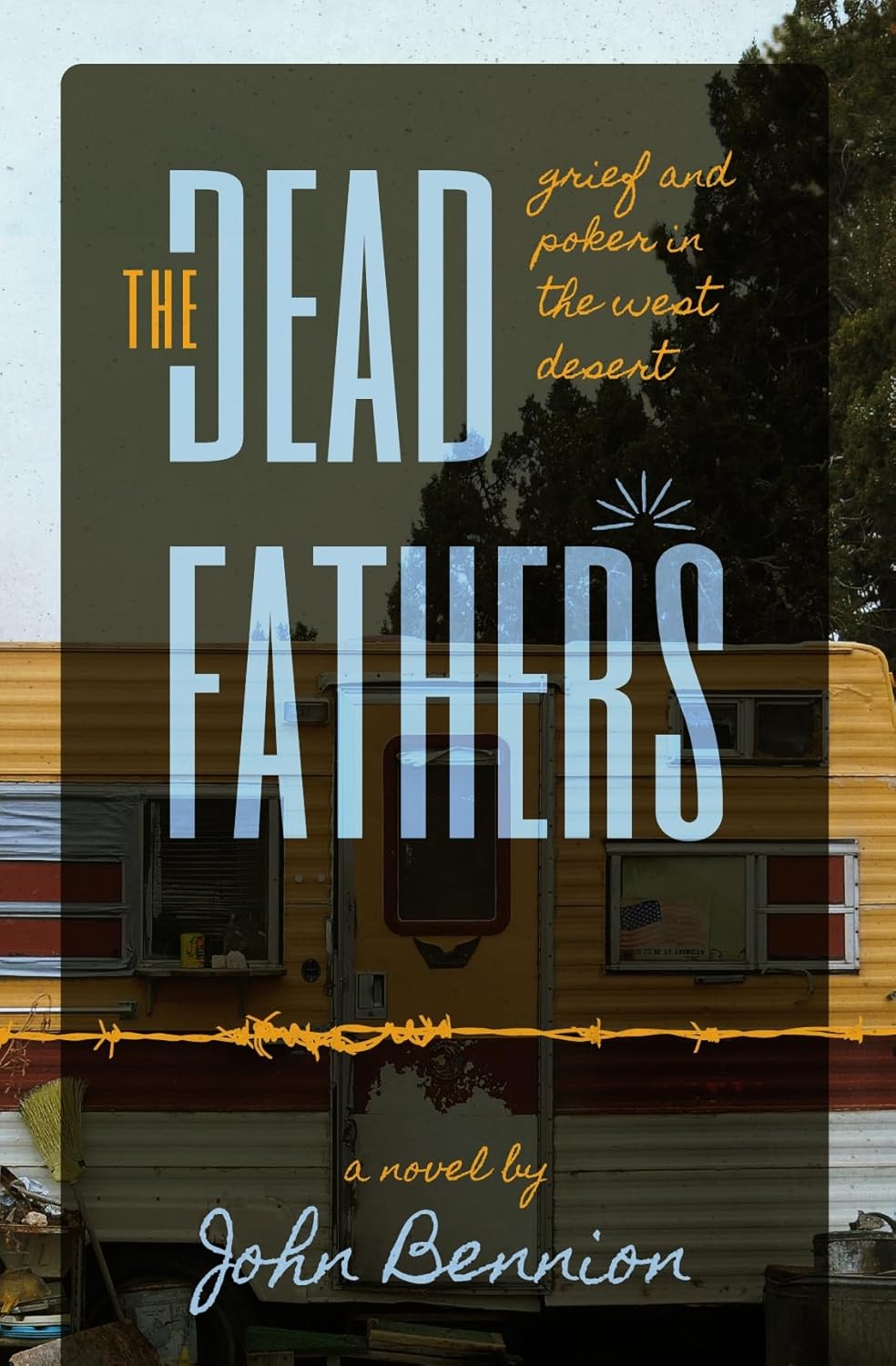 John Bennion. The Dead Fathers: Grief and Poker in the West Desert. BCC Press.
John Bennion is an AML Lifetime Achievement Award winner and has had a lengthy career in Mormon literature. His most recent book, The Dead Fathers powerfully affirms his mastery as a writer with its quirky characters, multilayered plot, and richly imagined setting.
The Dead Fathers is about a man who tries to simplify his life but instead finds it busier than ever. A man who wants to hide from other humans but becomes entangled in myriad complicated relationships. A man who is skeptical of the spiritual yet converses with ghosts. A man who seeks to flee his marriage and family but instead renews those relationships.
The book engages with familiar themes of gender, authority, the environment, spirituality, and history. As the book’s desert landscape may seem empty at first glance, the book’s engagement with these themes might initially seem to offer nothing new. But the reader will discover, alongside the book’s protagonist Christopher Twist, that this seemingly barren ground is actually teeming with life for those who have eyes to see. The Dead Fathers is a novel that is both contemporary in its focus and timeless in its message.
Other finalists:
Steven C. LeSueur. Every Man a Prophet
Gabriel González Núñez. La dama errante en la ciudad del fin del mundo
Picture Book
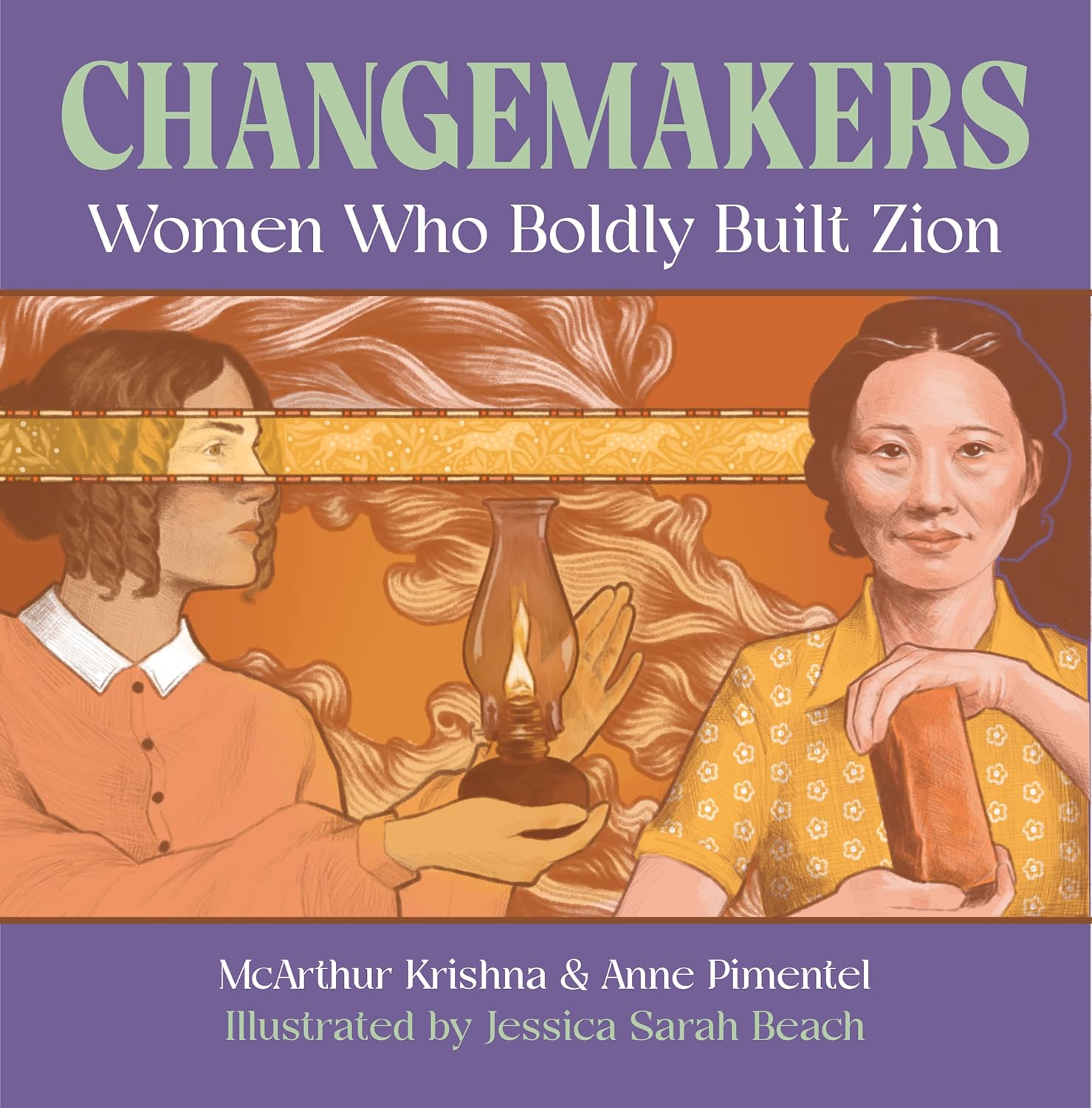 McArthur Krishna & Anne Pimentel, illustrated by Jessica Sarah Beach. Changemakers: Women Who Boldly Built Zion. Signature Books.
McArthur Krishna and Anne Pimentel begin Changemakers by telling the story of Lois and Eunice, women mentioned by name only in a single verse in the New Testament. They expand this scant reference by explaining that Eunice had married outside of her Jewish faith and therefore took the unusual responsibility, along with her mother, of teaching her son the scriptures. Some women in this book, like Emma Hale Smith, have been the subject of multiple biographies. Others, like Melissa Wei-Tsing 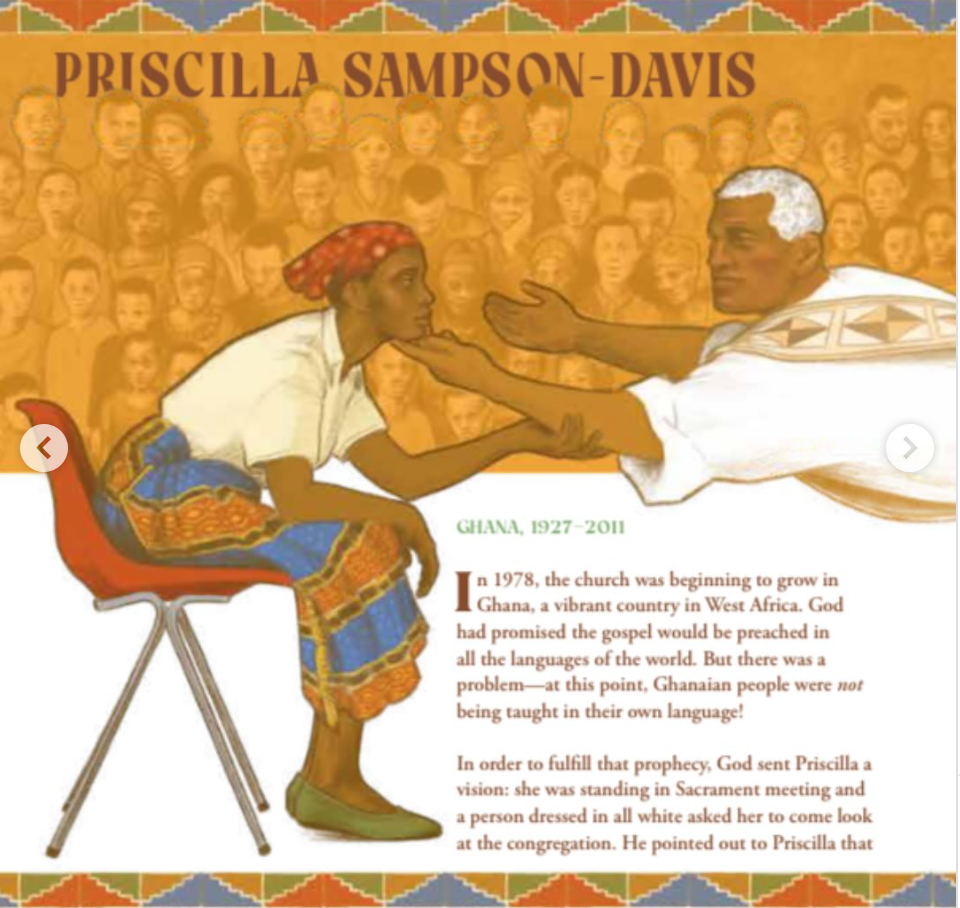 Inouye, lived at a time when their words could be recorded on video and sent around the world in a matter of seconds.
Jessica Sarah Beach’s vibrant illustrations situate us in the time and place of each story, from Utah to Ghana to New Zealand and from ancient dye warehouses to modern yoga studios.
This book serves to remind us that the important work of women of faith has never been limited to a particular time or situation and invites us to count our own lives among them.
Other Finalists:
Shannon Hale, illustrated by LeUyen Pham. Parts of Us
Micah Player. This Is a Moment
Jean Reagan, illustrated by Lee Wildish. How to Say Thank You
Elaine Vickers, illustrated by Samantha Cotterill. Heartfelt
Podcasts
 The Storming Journey. Hosted by Adam McLain, El Call, and Liz Busby.
Mormon authors have a long tradition of turning scripture into story. Orson Scott Card, H. B. Moore, and James Goldberg, among others, have taken stories from the Bible and Book of Mormon and fleshed out the characters, dialogue, and setting. The Storming Journey podcast is doing the opposite—turning story back into scripture through the practice of sacred text reading. Following in the footsteps of Harry Potter and the Sacred Text, hosts Adam McLain, El Call, and Liz Busby are reading Brandon Sanderson’s Stormlight Archive 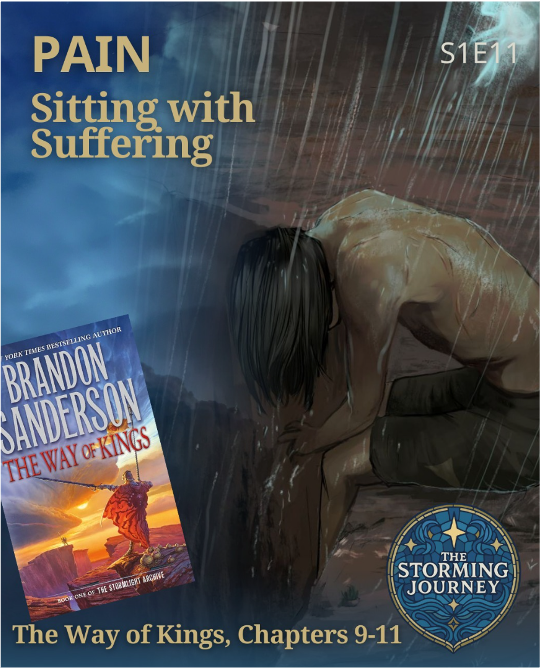 using a variety of sacred reading techniques. Literary critics from outside Mormonism often want to reduce us to stereotypes and scandals, but The Storming Journey hosts are working to expand the Mormon tent by treating Mormon literature and Mormon spirituality as worthy discussion topics.
Other finalists:
Poetry
 Dave Nielsen. Meant to Be. Press 53.
The poems in Meant to Be beguile you, using their plain-spoken set-ups and small size as camouflage for fantastic leaps, dry humor, tender confessions, or ironic, understated grief. Play is the watchword, but the stakes are high. Like Dickinson before him, Nielsen distills the human condition into poems about the slightest things: neighborhood walks and roly-poly bugs, dirty dishes and puddles of slush. I thought the crushing mix of love and rage that comes with parenting was inexpressible, until I read his “How to Make a Hootenanny Pancake.” I thought I knew what midlife was, but “After a Few Decades of Life” called out my ignorance. Where other poets try to impress us with phony majesty and painted pomp, Nielsen plays hard to get, never letting his wry, sometimes absurdist premises devolve into generalizations or hollow moralizing. The Norwegian poet Olav Hauge wrote: “Large windows and grand poems — I like neither. Rather a small opening in the wall with wavy green glass.” Large windows would leave us readers nothing left: no mystery, no need to lean in closer and participate. Instead, the poems of Meant to Be give us small openings that are all the more luminous for their restraint, their quiet trust that the domestic is divine, that the quotidian is eternal. “I’m going to tell you everything,” Nielsen says at the start of the hootenanny pancake poem. And in eighteen little lines–trust me–he does.
Other finalists:
Steven L. Peck. Experiments in the Fading Light
Jim Richards. Song for My Left Ear, Song for my Right
Religious Nonfiction
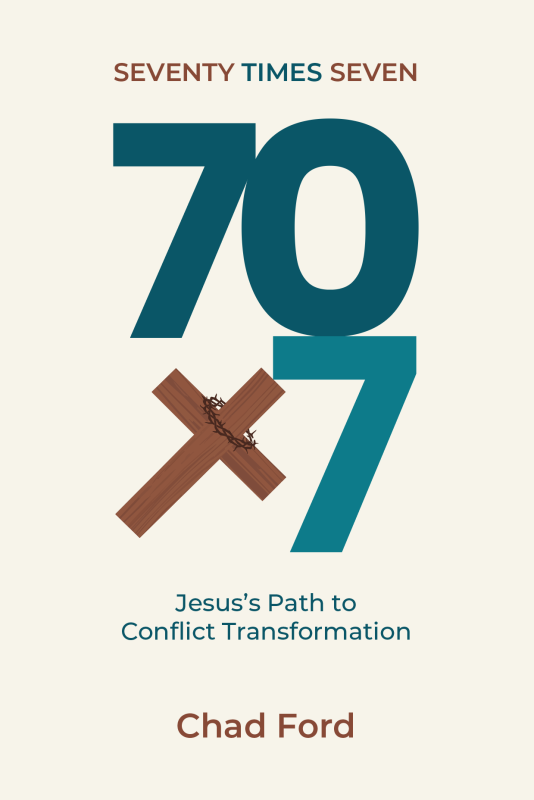 Chad Ford. Seventy Times Seven: Jesus’s Path to Conflict Transformation. Maxwell Institute/Deseret Book
Beautifully designed and beautifully written, Chad Ford’s Seventy Times Seven approaches a well-established topic in a manner that is not sentimental, trite, overdone, or cliché. Seventy Times Seven is a challenging but hopeful book that is guaranteed to engender thought, discussion, and–if the reader so accepts–a call to the way (path) of peace. This text is timely and insightful, qualities which combine to make it the winner of the AML Religious Nonfiction Award.
By moving deftly between personal and professional style, as well as between the sociopolitical interactions of communities and nations, Ford invites a wide audience to consider the power of peace. Ford appeals to that wide audience by drawing from a wide range of inspirational work, including quotations from others, personal story, innovative scripture exegesis, and prose. In so doing, Ford appeals to everyone from the academic scholars to the neighbor next door. The author’s eminently readable and persuasive manner builds trust, and that trust is redoubled because the text rings with honesty, grace, and realism.
Ford openly admits the risks and rewards of peace building, acknowledging that readers often push back against these ideas. The pushback should be seen as a compliment. It draws attention to the originality of his arguments and to the persuasiveness of the ideas. After all, there would be little need to push back if the ideas were lackluster and unoriginal or if old and tired. Ford addresses concerns with care and logic, but he continues to kindly insist that the rewards of peace are worth the risk.
Ultimately, Chad Ford’s Seventy Times Seven is unforgettable. There will be a few who do not like this book. Those few will find themselves thinking about the ideas, regardless of their personal agreement. The many other readers who like or love the ideas know what they need to do: modify their behavior. At its best, Seventy Times Seven is nothing short of life changing.
Other finalists:
Jennifer Finlayson-Fife. That We Might Have Joy: Desire, Divinity & Intimate Love
Robert Rees. Imagining and Reimagining the Restoration
Joseph M. Spencer, editor. The Great and Lasting War: Studies in Alma 45-63
Short Fiction
 Jenny Rebecca Rytting, “Sister Wives.” Eternities of Cats (bonus issue of Irreantum 22), Summer 2025.
Jenny Rebecca Rytting’s “Sister Wives” is exactly what it purports to be: a story of two sister wives (Rachel and Leah) sharing a common husband (Jake) in a polygamous marriage. But there’s a twist: It is set in the present day after a bombshell announcement in general conference restores the Principle to the contemporary church primarily to rectify the church’s overabundance of single members. Thrown into something of an ethical tailspin, Rachel and Jake negotiate whether to take on a second sister wife, but the situation is further complicated because they are considering Leah—Rachel’s childhood friend and former BYU roommate—as their third wheel. That Rachel once, a decade earlier at BYU, offhandedly, jokingly commented to Leah that she would love to have her as a sister wife only adds additional strain to an already tense situation because nobody is quite sure how seriously this proposal had been offered or—more problematically still—taken. After a little radio silence and much hand wringing, Rachel and Jake begin to dip their toes in the water, sending Leah flowers, arranging a dinner/date with Jake, and eventually delivering a letter from Rachel with an official invitation to at least consider the possibility. There are still numerous logistical matters to work out and even more interpersonal relationships to navigate, but ultimately something roughly approximating, slowly inching towards, and perhaps only partially and imperfectly realizing marital bliss is tentatively achieved. At least as much as might be expected under the circumstances, which might not be all that much really. Given the premise, it should surprise no one that much hijinks ensure in this delightful comedy of manners (and errors) as this throuple maneuvers the intricacies of intimacy in a brave new modern world suddenly burdened down by the haunting ghosts of a pioneer past. Throughout Rytting draws on her expertise as a Jane Austen scholar to provide much rich detail and more than occasional loud laughter to her engaging tale which is truly worthy of Austen’s own clever wit and brilliant imagination.
Other finalists:
James Goldberg, “The Strange Case of Frau K”
Nathan Curtis Roberts, “Yellow Tulips”
Citlalli H. Xochitiotzin, “TIEMPO, una partícula”
Charity Shumway. “The First Letter She Found”
Short Fiction Collection
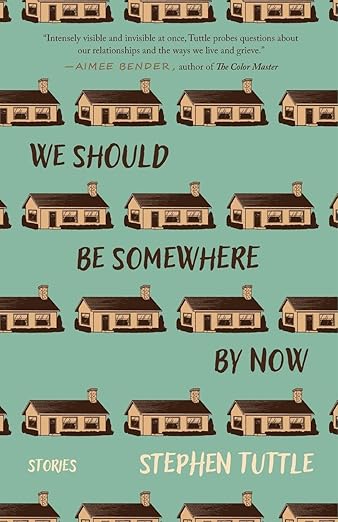 Stephen Tuttle. We Should Be Somewhere by Now. Cornerstone Press
Stephen Tuttle’s We Should Be Somewhere by Now is a delightful collection of stories, the majority of which were previously published by prestigious national literary journals. While the collection has very little Mormon-specific content, it abundantly overflows with extraordinary writing truly worthy of recognition from the AML. The stories are consistently creative and boldly inventive, taking the reader on a wild ride through playfully intriguing imaginary worlds full of unexpected surprises and gentle humor. In “Amanuensis,” we are introduced to a reclusive man who builds a secret scale model of his hometown in his basement, complete with a mysteriously cryptic code to decipher its meaning. “Keeper of Bees” begins simply, “My wife wanted bees.” Having a wife who has dabbled in chickens and outdoor rocket kilns—I’m not exactly sure what rocket kilns even are, but they have never sounded good to me—Tuttle had me at bees. I can only imagine, but I can imagine, where such a story might lead even if Tuttle’s creativity ultimately led me on a wild goose chase that I never saw coming. Like its title seems to suggest, “The Two Mr. Greens” simply tells the story of the first Mr. Green and the second Mr. Green who are mundanely digging an ordinary fence when the second Mr. Green suddenly discovers a metal box containing a mysterious one-entry, twelve-page diary describing the fallout from a teenage pregnancy written as a deeply—not to mention literally—buried private confession. The second Mr. Green then is confronted with the onerous task of trying to figure out how to decipher—and whether or not to reveal—the secret meaning of this carefully hidden missive from the past. “The Funambulist” recounts a simple story about an old man who “entered the tallest building in our town, took the stairs to the roof, and walked off it.” The story, however, isn’t rally about the man or his demise per se, but rather about what the town—the wealthiest bartender, the teenagers, the bus driver, the children, the meteorologists, the ambulance drivers, the clergy, and the doctors—have to say about this incident. As these stories within the story unfold, they collectively introduce grace notes of humor and levity to at least the telling of, if not quite the actuality of, this tragedy. “Aboard Abroad” is an elaborate—and comically absurd—faux logic puzzle about four people on a train with four professions, four hat colors, and four countries of origin. If you can solve it, call MENSA immediately. “The Hidden Curriculum” is pure comedic gold and all by itself well worth the price of admission. And the rest of the stories are collectively a chef’s kiss. There are simply no clunkers among them. With this exquisitely written volume, Tuttle brings to the AML an exceptional dedication to and mastery of craft which is simply a delight not only to read, but also to analyze, dissect, learn from, emulate, and simply marvel at.
Other finalists:
Eternities of Cats. Theric Jepson, editor
The Christmasing Spirit: 2025 Advent Calendar of Latter-day Saint Literature. Glen Nelson, editor
Young Adult Fiction
Julie Berry. If Looks Could Kill. Simon & Schuster Books for Young Readers
All of the AML finalists for the young adult category were strong contenders: well-told stories with engaging and dynamic characters, and moving interactions. What sets Julie Berry apart is the impeccable detail of her world building, the lyricism of her prose, and the depth of her themes.
Berry is not new to the AML awards: she has previously won twice, including the award for best YA novel in 2019 for The Lovely War. Like that earlier novel, If Looks Could Kill marries an evocative historical setting with epic characters and themes. Here, readers find themselves in the gritty world of the Manhattan Bowery in the 1880s, a cesspool of vice and human misery that draws the reforming impulses of the Salvation Army, and with them, their newest recruits, Tabitha and Pearl. But in the fall of 1889, it’s not just prostitutes and their patrons walking the streets of the Bowery–but Jack the Ripper as well. And with Jack has come the avenging spirit of Medusa, reborn again and again into the bodies of abused women.
The book’s ingenious conceit is characteristically Berry: who else would think that the Salvation army, Jack the Ripper, and Medusa were effective ingredients for a gripping, keeps-you-up-past bedtime true-crime drama–that also happens to be funny? And while the concept is remarkable, it’s in Berry’s deft writing that the real magic happens: Tabitha’s wry, feisty voice narrates her faith crisis, her grudging admiration (and envy) of Pearl, and her deepening conversion to larger truths. Through her, we see the Bowery and its inhabitants with increasingly compassionate eyes. Occasional interludes voiced by Jack the Ripper are as poetic as they are chilling. Underlying the drama and the romance of the narrative is a deep, affirming ode to sisterhood–to women working together in often terrible circumstances to care for one another. The novel raises questions about faith versus work, of spiritual salvation pitted against physical safety, of abuse and culpability and the cost of terrible acts. All these elements together add up to something impressive, by turns funny, startling, and deeply moving. As a New York Times reviewer put it, Julie Berry is indeed “a celestially inspired storyteller.”
Other finalists:
Kate Gilbert. Love, Canter, Action
Erin Stewart. Every Borrowed Beat
Steven C. LeSueur. Every Man a Prophet
That would get my vote in every fiction category in Mormon letters for the last five years.
Congratulations to “The Dead Father.”