In this edition of Saints & Cinephiles, Isaac Wright interviewed the director of the film (and miniseries) Truth & Treason, the true story of a Mormon teenager in Germany who led a resistance movement against Hitler.
By Isaac Bing Wright, crossposted from Substack.
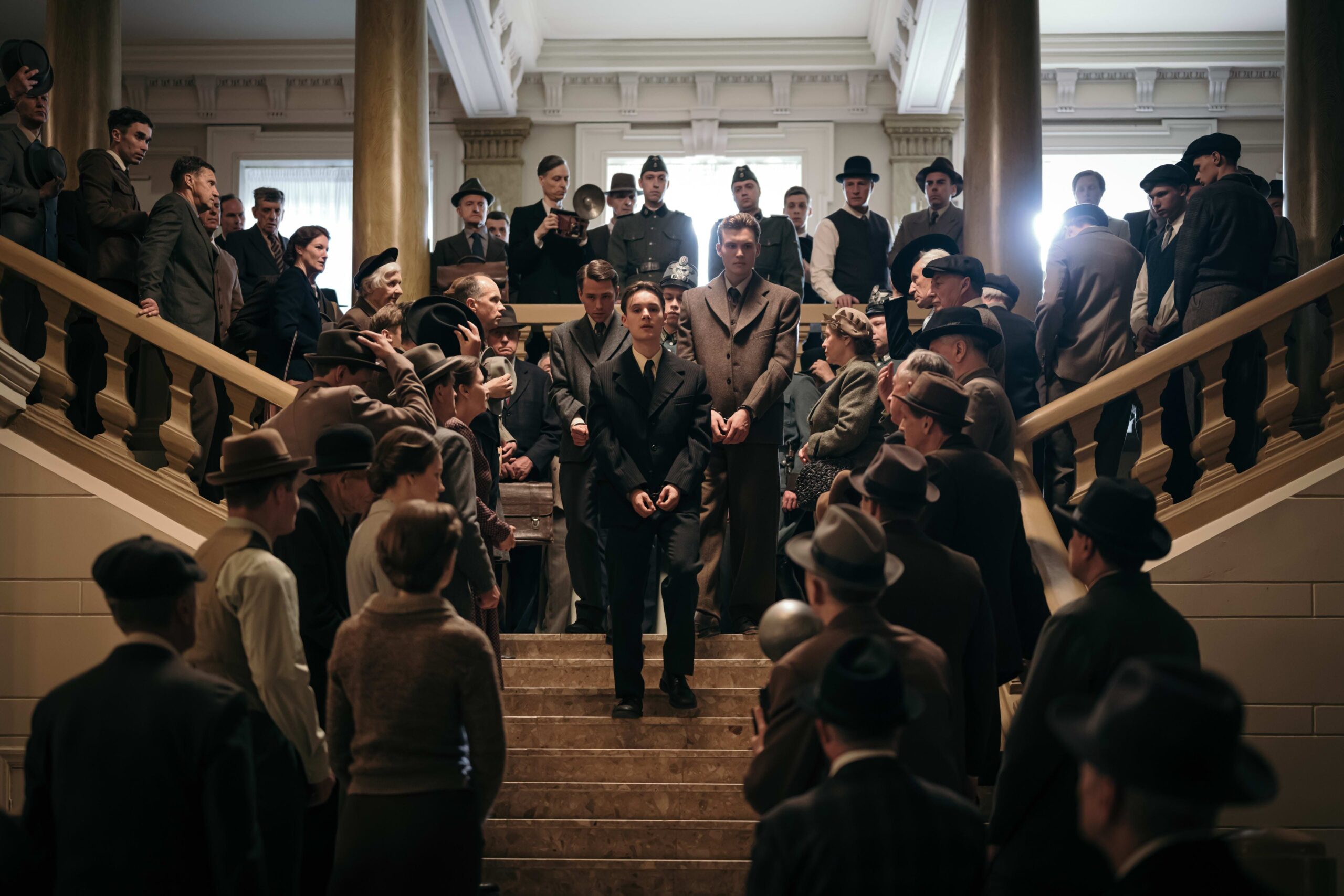
Helmuth Hübener, a member of The Church of Jesus Christ of Latter-day Saints in Nazi Germany, was only 17 years old when he was executed for treason. It’s a fascinating story of heroism, loyalty, and complicity, and it’s finally being told: last fall, Truth & Treason made its debut in movie theaters around the world. It’s an excellent film – well-acted, beautifully shot, and very affecting. I spoke with Matt Whitaker, the screenwriter and director of Truth & Treason, about what drew him to the story, its rocky path to production, and its relevance in the modern era. And in an exciting and somewhat unprecedented move, Angel Studios has recently released an extended, 4-part miniseries that expands on the film, giving its characters and themes added resonance. Check out the interview below!
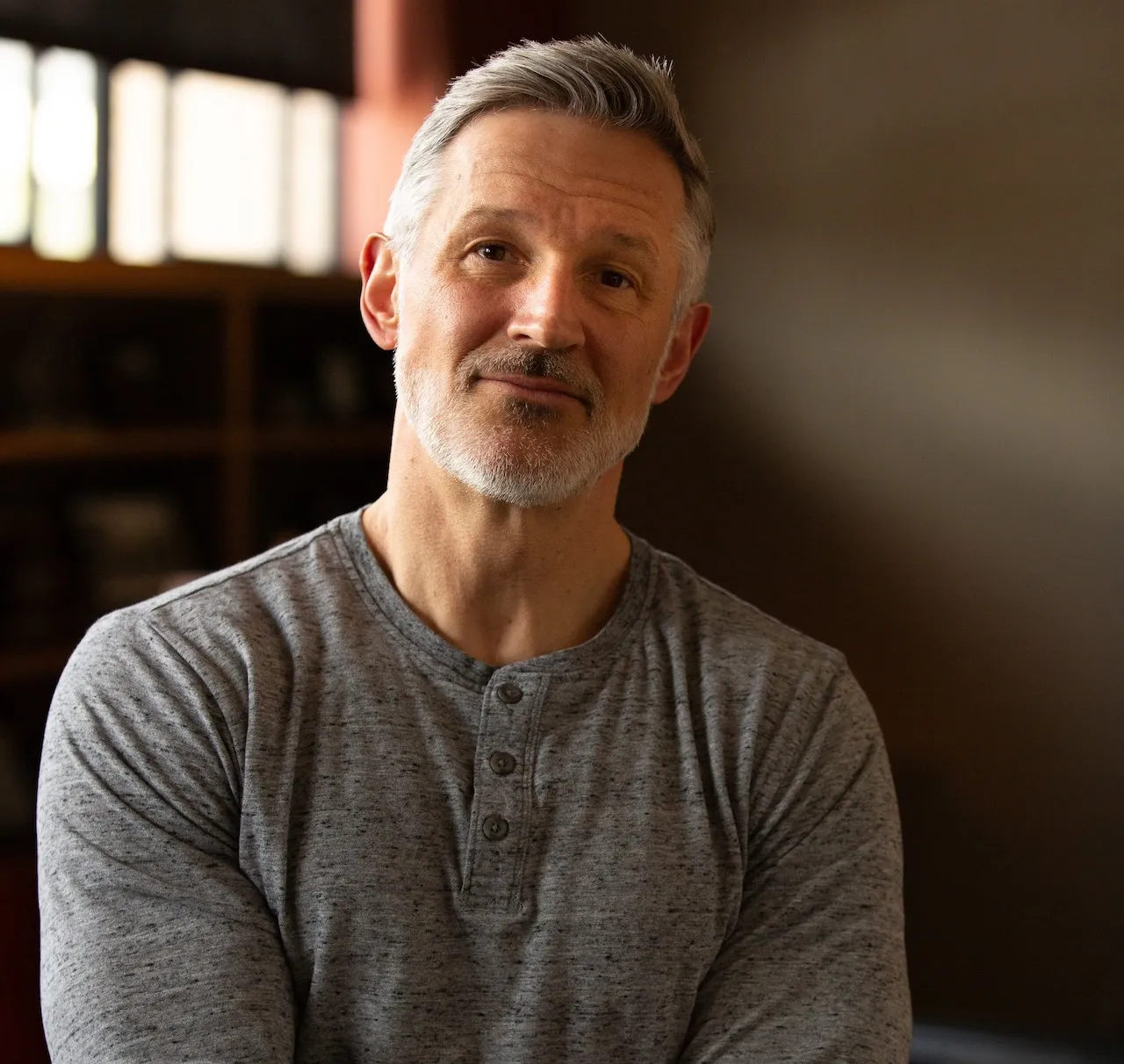
You’ve been trying to tell this story for over two decades. How did you first hear about Helmuth Hübener, and why did his story resonate so much with you then?
World War II has been something I’ve always been really interested in. My dad was a B-24 bomber pilot in World War II, so I grew up hearing stories and I’ve always been fascinated by it. Back in 2001, so 25 years ago now, I was doing a lot of historical documentaries and really loving that. I was directing another World War II documentary, and one of my crew members actually said, “Hey, have you ever heard of this kid named Helmuth Hübener? He was in Nazi Germany; he was a resistance fighter,” and I hadn’t. And he said, “Well, I think that the last surviving member of his resistance group is still alive, and he just lives up in Salt Lake.” And so we literally just opened up the phone book, found Karl-Heinz Schnibb, and asked if we could come over and hear his story. And thankfully he said yes.
We went over to his house and he gave us the short version of this experience with his best friend Helmuth Hübener, their resistance efforts against Hitler, and then getting captured by the Gestapo. And I was just blown away by it. And I can remember walking out of his house that day and just thinking, “I’ve got to make this into a documentary.” Later that summer, we sat Karl down in front of a camera and shot an interview on film, and that interview was just even better. It was just so, so powerful. We got the whole story, and that became the spine of this documentary that I did for PBS called Truth and Conviction. It was while we were in the process of shooting and then editing the documentary that I started writing a screenplay for a theatrical, cinematic version of the story. That was way back in 2002. I started writing the script with my co-writer, Ethan Vincent, who was raised in Germany and Austria and spoke fluent German. He was actually my student editor on the documentary. And he brought this kind of European perspective and an understanding of World War II and the resistance fighters. And so for about three years, he and I were writing drafts. We’d actually optioned the script. There was a director attached. There was a big LA producer attached.
I heard Haley Joel Osmond was attached at one point?
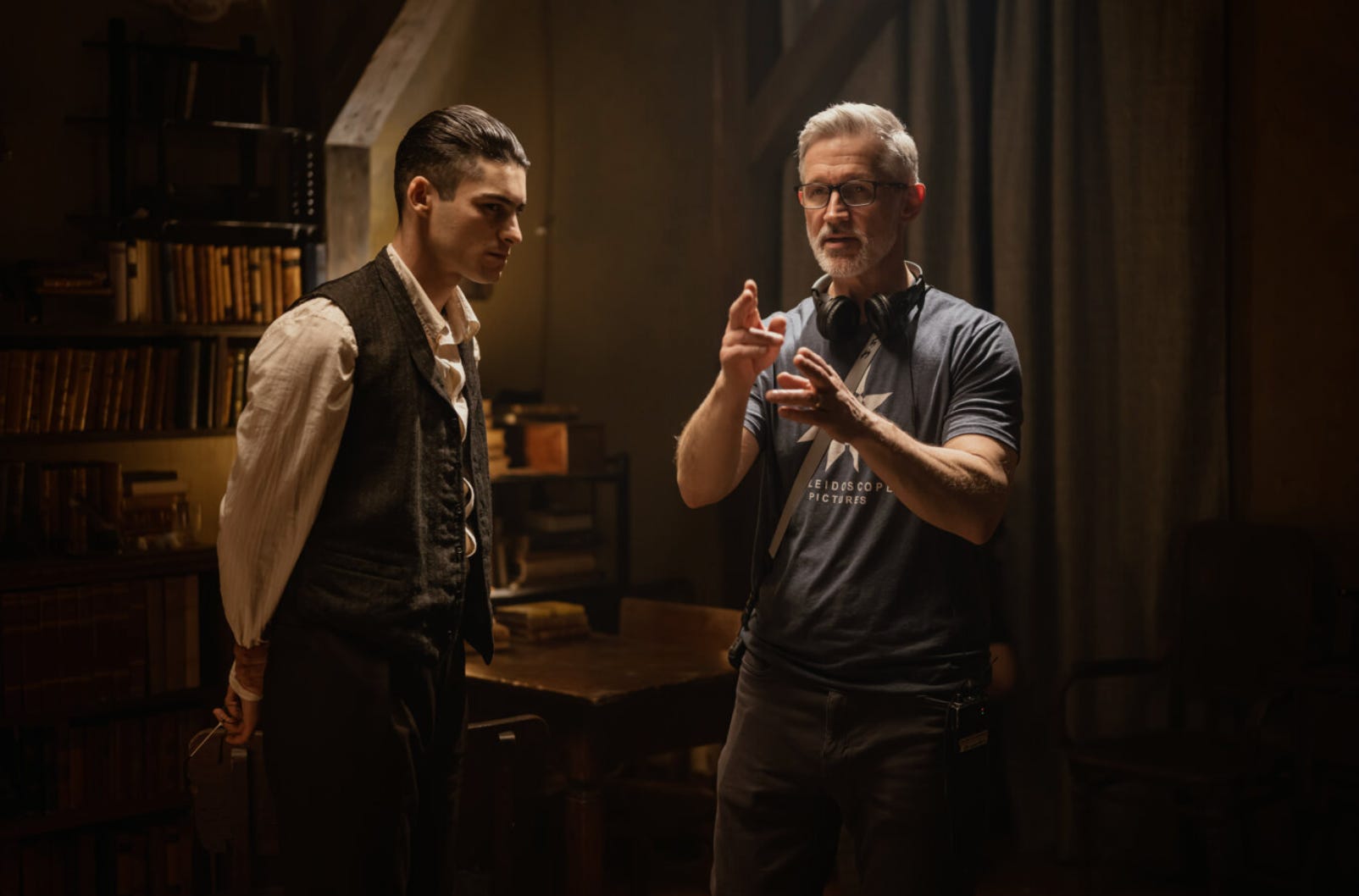
Yes, that’s correct. To jump forward to 2005, I just had one of those experiences where I felt really strongly that I needed to be the one to direct it. And so we hired the attorneys, got the rights to the script back, and then I reached out to Russ Kendall, who became my producing partner on it with his production company, Kaleidoscope Pictures. We started raising the money, all the millions. And so it was in 2007 that we sent a script to Haley’s people, and they loved it. Russ and I flew down to LA, had a meeting with Haley and his dad. It was cool – at that time, Haley was 18, and he was a hot item. He was the best young [actor] of his generation. He was probably one of the best actors in the world.
And so we went down all prepared to pitch why he should take this lead role of Helmuth Hübener, and very quickly realized that he really wanted this film too. So we had Haley attached and actually shot some concept footage with him, which was really fun and really cool. But then the housing market collapsed. Our investors pulled out, and he aged out. We had Max Von Sydow attached to play the judge in the climactic courtroom scene; he even mailed me a handwritten letter saying how excited he was to be in this film and to be a part of it. So when the investments fell through, when the world housing market collapsed and our actors eventually pulled out, that was a really tough thing. Later, we had this incredible young actor Freddy Highmore attached. But again, we just couldn’t hold onto them when COVID hit and everything pulled out again. So yeah, it’s been a long journey. [But] I’m so glad that it took as long [as it did], and I can say that honestly. I had a really good team around me, especially my wife who just kept saying, “Come on, man, keep going.” I finally got the financing together in 2023, and then we started shooting in 2024.
What was that process of finding Angel Studios as a distribution partner?
You shot Truth & Treason in Lithuania. Why there? And were there particular challenges shooting that far abroad?
We knew that this was a European story – Nazi Germany, Hamburg, in 1941 – and that we were going to be shooting it somewhere in Europe, probably Eastern Europe. First, it’s less expensive to shoot in Eastern Europe. And a lot of the inner-city old towns in Eastern Europe are more preserved than they are in Western Europe. We couldn’t have shot it in Hamburg; it was completely bombed to the ground in ‘43 and rebuilt.
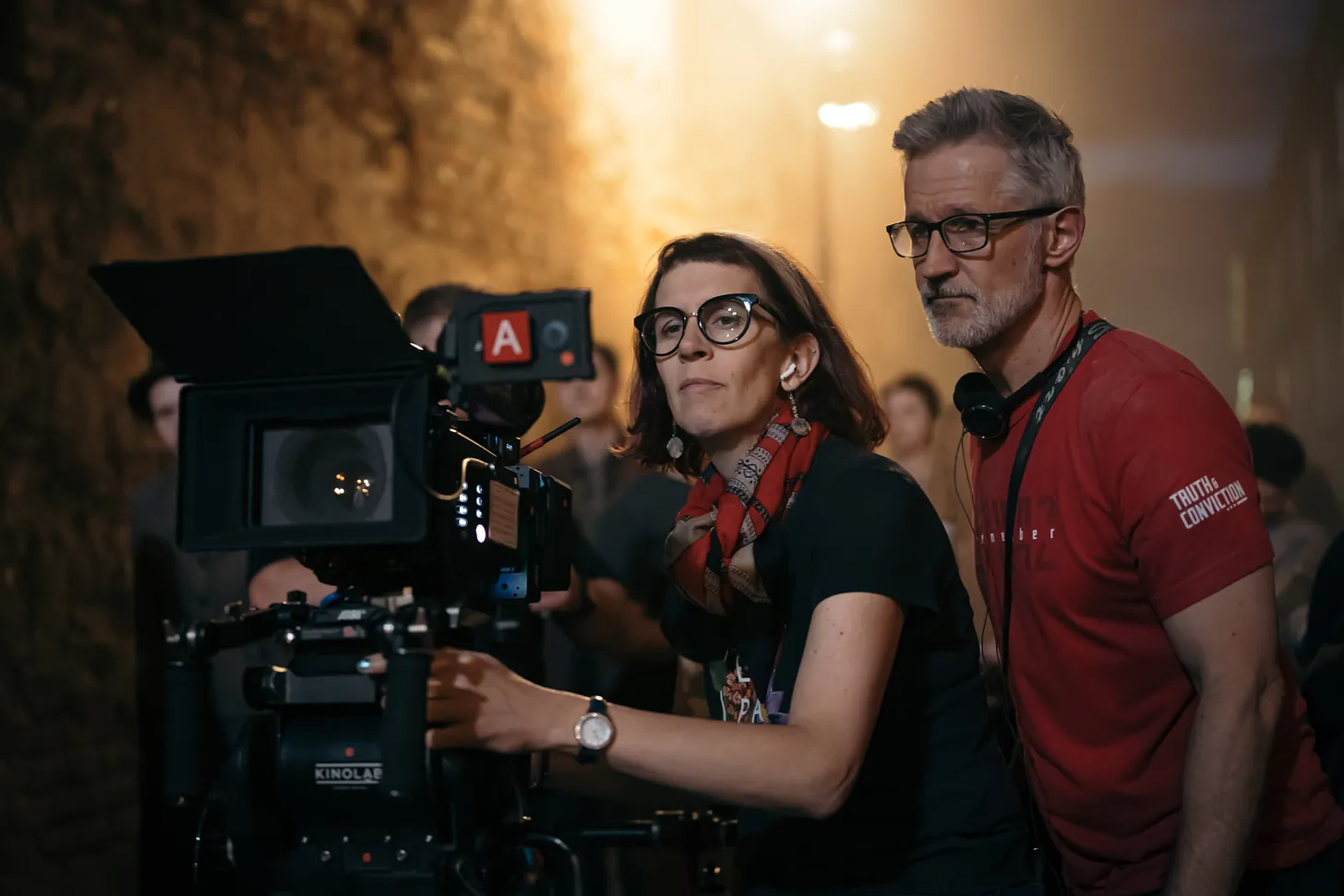
We actually shot another project in 2016 in Lithuania. My producing partner Russ Kendall was there, and one day I got a text from him when they were over there prepping. It was a photo of a street in the old town, and it just said, “Dude.” A week later I flew over and started scouting locations. We just knew that’s where we wanted to film it. So once we finally did get the financing together, it was just a really smooth ride. We brought over Bianca Cline, our cinematographer, and everybody else on the crew was Lithuanian. And they were incredible.
I want to turn to the story itself, because it’s a story about heroism, but it’s also about complicity. There’s an LDS bishop who’s enforcing Nazi policy, who in one scene does the “Heil Hitler” from the pulpit. Talk to me about that tension and why you really chose to lean into that.
Let me put it this way. I think it’s easy, 80 or 85 years later, to look back at Nazi Germany and see things in black and white with the heroic resistance fighters and the evil Gestapo. Those things were true, but there was this big gray area in the middle, and that’s where most people kind of lived out their lives and made their decisions. And that for me was so intriguing. I mean, there’s this teenage kid who does this really brave thing, but at the same time puts his family and his friends and his whole church congregation at risk. It’s nuanced and it’s messy.
And at the same time, I was diving in and learning about this Gestapo agent who was obsessed with hunting down whoever was putting out these leaflets. We have evidence that he would do horrible things during the day, he would torture people. And he would go home at night and he was a loving husband and father, and he was gentle and kind. Those sorts of really interesting and difficult juxtapositions were just fascinating for me.
As you mentioned, there’s a bishop in the film. In real life he was a branch president, Arthur Zander. When I did the documentary, I met his sons. Everybody that I talked to who had been alive in that little LDS branch in Nazi Germany, who knew him personally, said he was such a devout good man, a good branch president, and a devout Nazi who really believed it.
Again, I was just really intrigued with that aspect of it, and I didn’t want to shy away from that. Some people today may look back and say, “Wait, how could there be a bishop who was a Nazi?” This was life in Nazi Germany. There were Nazis in Nazi Germany. And I was really intrigued with the difficult decisions that he had to make as an ecclesiastical leader, as a husband and father, and also somebody who had bought into the propaganda and who seemed to believe it.
It’s never been my intent to have this be a “message film” at all. I wanted to tell a complex, interesting story that would be something that I would want to go see. I’m drawn to complex characters and complex stories. And so that’s the kind of script that Ethan and I tried to write, and that’s the kind of film that I’ve tried to make.
The interview continues on Substack, where Isaac and Matt discuss interviewing witnesses to the Hübener story, the resonance of the story in today’s society, making the LDS seminary short “Spiritual Crocodiles,” writing about faith, and advice from Mitch Davis.
One thought