
In this edition of Saints & Cinephiles, Isaac Wright continues his discussion with indie director Barrett Burgin about his vision for a new wave of LDS film.
By Isaac Bing Wright, crossposted from Substack.
In part 1, I spoke with Barrett about the life of an indie film director, and his choice to incorporate Mormon themes and symbology into his latest short, The Angel. But Barrett’s vision goes beyond just his own work. He sees the potential for a new wave of LDS cinema, one that builds on the foundations of the past while taking the genre to bold new heights. Below, we discuss his five pillars of Mormon cinema, who gets to claim the moniker of Mormon filmmaking, and his vision for a new community of Saints in the arts.
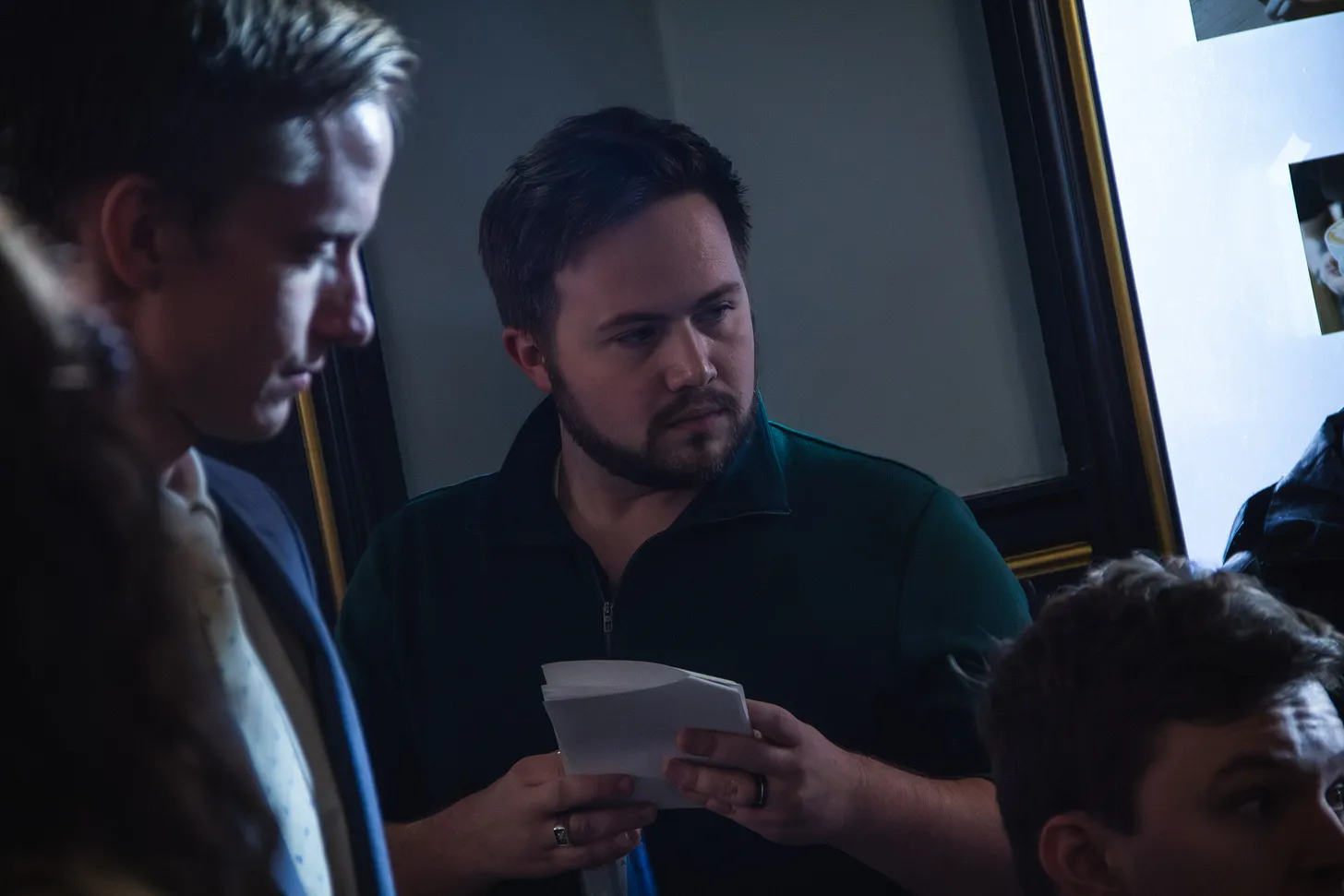
You have been outspoken in calling for a new wave of Mormon cinema. What does that mean to you and how would it be different from the types of LDS films that are currently being produced?
The use of the language “new wave” is very intentional. In film history, you learn about different film movements. So there’s the French new wave, there’s Italian neorealism, there’s German expressionism, and these are all examples of new waves of cinema where they share this commonality of trying to reinvent what their national cinema looks like. American cinema experienced a new wave of its own in the ‘70s with the directors that are now the established directors.
For somebody who is familiar with film history or theory, a new wave around an identity of cinema is an understandable kind of concept. And we actually do have previous waves of Latter-day Saint filmmaking. One of my points is to honor what’s been made before, because as people are making films that are LDS in nature or content in some way, a lot of times they don’t actually know the history that they’re building on.
And I really have to credit my experience in the BYU film program, though I’m not sure they intended for it to kind of inform this sort of thinking. Not everybody, at least while I was a student, loved the idea of Mormon cinema, per se. But it was there that I learned that theory and history are extremely important. And it was there that we read so many film manifestos and so many chapters on film history and identifying styles. And so it was using that training to approach our own identity-driven tradition, which is frankly enormous.
And if there’s anything to take away from Saints and Cinephiles, it’s that it supports that idea that Latter-day Saints in and through and of the industry not only have a significant amount of contribution, but that there’s a really large history there in terms of representing our own culture.
And so the first step was to create and define a foundation for how to build on that. Because when you say Mormon cinema, it means a lot of different things to a lot of different people and can often be off-putting.

What are you trying to accomplish with this new way of building on that past foundation? What’s your vision for what comes next, or what could be next?
I wrote a manifesto where I’ve tried to identify what five pillars of Mormon cinema might look like. So I wouldn’t say I’m leading the charge on this, but I’m trying to articulate what I think are necessary adjustments that Latter-day Saint filmmakers must make in response to their own culture and blind spots if they are going to tell stories that connect with a larger audience and are still authentically and authoritatively Mormon. And to the extent that I have tested it in my own work, it seems to be very effective. So what are these five pillars? The first is that Mormonism functions as a “strange attractor.” You’d think this would be self-evident, and yet you have so much discussion about people going out of their way to hide their Latter-day Saint identity from their work, or scrub it, or allude to it in a sort of winking way.
What does that mean, the concept of a “strange attractor”?
The term comes from the screenwriter Terry Rosio, who did Pirates of the Caribbean and Shrek and several really effective films. The idea is that in screenwriting, you can have something that is an interesting concept on its own that is made more interesting by the combination of another concept that acts as the “attractor”. So a pirate story is interesting. But pirates plus ghosts? More interesting.
[LDS filmmaker] Marshall Davis wrote a feature screenplay called El Misionero, which was just a top 10% finalist in the Nicholls Academy Screenwriting Competition. And he was told, “We get all kinds of narcos films, but we’ve never seen a narcos film that has Mormon missionaries in it… it’s authentic, it’s dramatic, it’s unlike anything that we’ve seen.” So Mormonism functioned as the strange attractor. He took a story, put an overtly Latter-day Saint identity in it, and it was effective.
And it doesn’t have to be Mormonism for this to work. When I was at Sundance, I saw a film called In My Mother’s Skin, which is essentially a film very similar to Hereditary, but it has Vietnamese folklore in it. And so Vietnamese folklore functioned as the “strange attractor”.
I find that to the extent that someone is willing to incorporate elements of Latter-day Saint culture and identity that can be overtly identified, it makes their film or show more marketable. Our short film The Angel is my experiment upon the “strange attractor,” and it absolutely works. If Spielberg can write something about Judaism and it feels authentic and real, or if Jordan Peele wants to keep going back to a Black milieu for his storytelling, [they] have every right to do so and ought to do so. And I find that same thing in my work – I don’t feel married to the fact that I have to make my films LDS in any way, but I like doing it.
The interview continues on Substack, where Isaac and Barrett discuss the remaining “pillars,” story before sermon, no sermon of form, excellence and expertise, and identity and intent. What counts as Mormon cinema? Does Heretic count as Mormon cinema? How about reality TV element of shows like The Real Housewives of Salt Lake City or The Secret Lives of Mormon Wives?