 Originally published on Robert Bennett’s Substack, “Mormon Short Stories”
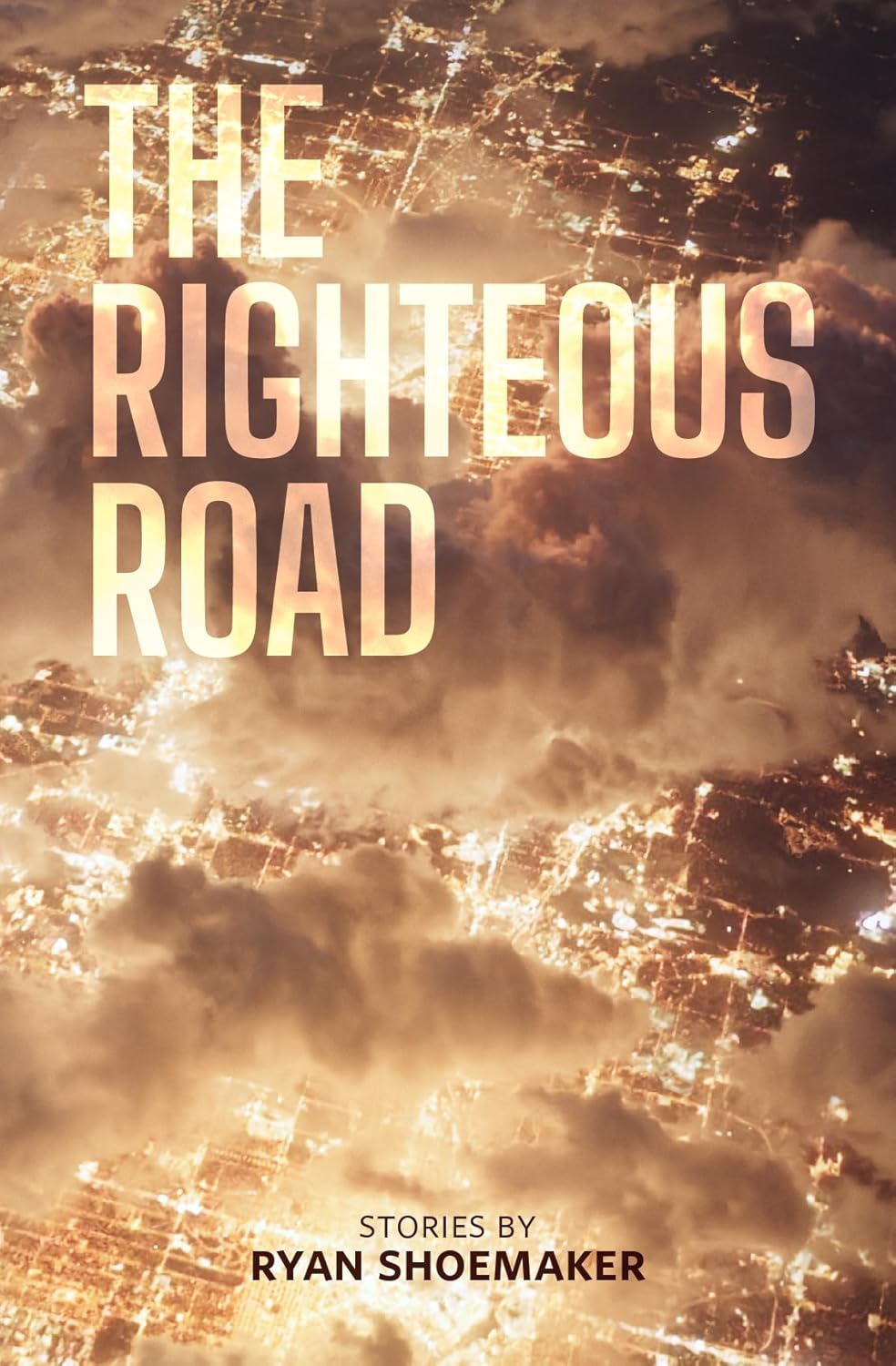
If you write a substack about Mormon short stories today was pretty much as close as it gets to Christmas. I had heard the rumors, the rumblings, the sotto voce whisperings that Ryan Shoemaker was about to publish a new collection of short stories. Consequently, I had begun periodically checking online ever since I heard the initial buzz, only to be repeatedly disappointed. Until today, when the BCC Press announcement suddenly dropped in my inbox: The promised tome has arrived. A little late perhaps, but no Godot after all. Thank goodness! The last thing this world needs nowadays is more no shows. I downloaded the book immediately, so I could start reading it right away, and if you care at all about the Mormon Short Story you should do the same. Or at least buy the hard copy if you prefer the feel of paper between your fingers—and have more patience than I do.
I give this book my simplest and most unqualified review: if you read only one collection of Mormon short stories this year, it should be Shoemaker’s The Righteous Road. And if you can only bring yourself to read one Mormon short story period, well then what in the hell are you doing reading this substack for starters? Go read a book. Or at least another story, since apparently you aren’t much of a reader, but you should start with this collection’s title story, “The Righteous Road.”
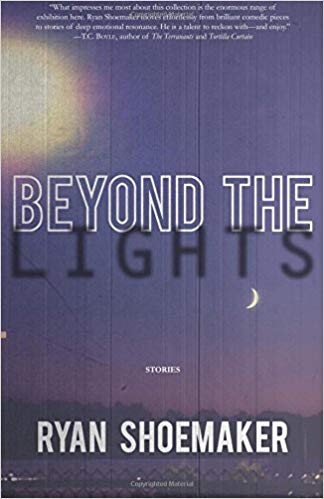 It is about as close as it gets to a canonical Mormon short story, and it is readily available. Not only is it published in this collection, but it was previously published in Shoemaker’s earlier collection, Beyond the Lights, and before that in Dialogue (48.3), so it’s even available for free. That means that you have no excuses to not read it. Since Shoemaker’s collection was so recently released, I will go particularly light on the spoilers, but if you haven’t at least read the title story go read it before you read this post. It is both a much better read and a better promo for the larger collection than I can ever write.
Riffing on Greg Kot and Jim DeRogatis’ review of “Sheena is a Punk Rocker,” however, I will simply say that I will go to my grave saying if I had to choose one Mormon short story, at 24 pages, to say this is what this literature is about, “The Righteous Road” is the story. It is impossible to read this and not be moved. If you read this and you do not like it, well you do not like Mormon short stories. With all due respect, go listen to some jazz or something.
As the story’s title implies, it—like so many of Shoemaker’s best, or at least most serious, stories—fundamentally explores the concept of righteousness, not as a fixed given or even as a simple variable, but rather as some more complex nonlinear regression. Perhaps even a Gordian knot. Typically, his characters are driven by the righteous impulses that motivate missionaries to wander the streets of Italy searching for new converts (“Light Departure”) or inspire a young idealist teacher in a blighted urban high school to reach out to an underprivileged, but talented, student (“In That Classroom”). But these high-minded idealists inevitably hit a moral snag which forces them to confront various ethical conundrums. Or in Mormon parlance, these stories explore what it means to choose the right. Not in a Primary class, but in difficult and complex real-life grownup scenarios without easy solutions. And as these scenarios inevitably grow more complicated, so do these stories’ explorations of the meaning and practice of righteousness, ultimately depicting righteousness more as a difficult road that must be continually and precariously traveled than as some kind of relaxing final destination at the end of the Covenant Path.
Or in the case of “The Righteous Road”—and this is only one element that makes this story, in particular, so dynamic—Shoemaker depicts a pair of friends (Derrick and Reed) with gradually diverging senses of righteousness. The story begins with these two idealistic late teens initially sharing a common vision of righteously changing the world, hoping “to do something about all [its] misery and devastation.” More specifically, they want to “do something more than” the “ridiculously inconsequential” tasks routinely assigned to Mormon youth: “just praying for the sick and afflicted or cleaning out flower vases at Mountain View Cemetery for church service projects.” Instead, they prefer to go the extra mile, burning with the Jeremiadic righteousness of activist-prophets who “march, block sidewalk traffic, and loudly upbraid” the less committed. Or, after taking things up a notch, even go full-on Fight Club, “spray paint[ing] butcher shops and furriers with pithy slogans” to defend animal rights.
To the traditional Mormon, the cause of protecting animal rights, let alone the open lawlessness Shoemaker’s characters use to defend them, may not seem like righteousness at all, especially given that these late teens’ idea of church is simply “a shared sacrament for nature’s children meant to enlighten the mind,” which includes partaking of “a thick joint and a jug of wine.” The fact that Phish is playing in the background adds a nice touch of 1980s verisimilitude, and when the story later goes on to quote Mario Savio it firmly establishes its bona fides as an authentic exploration of throwback 1960s idealism. Nice touches both; not to be missed. I’m not going to go out on a limb and declare Phish prophetic or anything like that, but I will take a stand for Savio’s Sproul Hall address. I’m also prepared to go to my grave defending Savio’s fiery rhetoric as the most righteous speech in American history since Lincoln’s at Gettysburg. If this is the company that Shoemaker’s characters keep, they may be countercultural, even a touch anarchistic, but there is no denying their righteous street cred no matter how misguided it may seem to traditional Mormon eyes.
Not surprisingly, therefore, even the more conservative Derrick’s sense of righteousness initially diverges from his “parents’ conservative politics. My parents bored me. No hobbies, no friends they went out with, no interest in music or art. If that was righteousness, I didn’t want it.” Meanwhile, the more radical Reed positively chafes at the “naïve and narrow-minded strictures of Mormonism,” openly embracing “anti-religious sentiments” which reduce religion, in general, and possibly Mormonism, in particular, to a “mental illness” and the “opium of the masses.” Consequently, Reed and Derrick’s sense of righteousness may not be the one we are expecting in a Mormon story, but Shoemaker immediately forces the reader to confront the very real possibility that it might even be a superior one to its milquetoast Mormon alternative, at least if you consider saving the world from tyranny, or even whales from extinction, more consequential than cleaning out flower vases.
While these two characters initially share the same “grandiose plans,” Shoemaker ultimately sends them down starkly diverging paths, and this is what makes the story much more interesting than just some simple paean to the radical 1960s. Reed takes the prophet-activist’s road less traveled, even if it involves widely traveling the world to “Istanbul, Mumbai, Munich,” and a “squalid open market in Jerusalem,” among other locales, always in search of idealistic causes. In sharp contrast, Derrick settles down, ultimately serving a mission, going to BYU, and doing most of, if not quite all of, what follows predictably from there. He may even still send a periodic check to Amnesty International, but he is clearly not exactly on the front lines anymore.
After depicting these two distinctly different senses of righteousness, the story could simply end there, sending its co-protagonists each down their respective roads. Tomayto, Tomahto. Two characters. Two lives. Two paths. Two different senses of righteousness, with the reader simply being left to choose one or the other according to the dictates of their own consciousness, as they say. Shoemaker could even develop each character’s life in rich detail with thick descriptions of their respective worlds and worldviews. He might even give one character or the other the nod, possibly even the more radical one, suggesting at least tentatively that his road is the righteous one. Or at least the more righteous one.
To some degree this is perhaps the story’s general outline, but it does not simply end there. The rest of the story goes on to place these two different characters, with their respective senses of righteousness, in a series of complex juxtapositions in unique situations and circumstances, challenging the reader to view each character’s worldview from a variety of different angles and perspectives. Ultimately, the characters may follow different paths, but those paths crisscross and zigzag in creative and interesting ways to develop a rich and unpredictable narrative arc—not to mention a profound philosophical meditation on the meaning of righteousness and the many roads that lead both toward and away from it.
What makes this story—like so many of Shoemaker’s stories—so vibrant, then, is that it is not simply a depiction of, but rather a much deeper and more complex interrogation of, the concept of righteousness. “The Righteous Road” does not explain righteousness, but instead asks questions about it, starting with the most fundamental question: What even is righteousness? Is it what we think, or even can imagine, it is? Does it have higher and lower forms? Is it fundamentally religious and devotional or secular and political? Is it conservative or progressive? Or might it possibly carve out some new third middle way? Does it even need to be legal? Is it Mormon, or at least how might Mormonism help us achieve it? Is it anti-Mormon, or how does Mormonism actively impede our quest for it? Can the pursuit of righteousness have unintended consequences? Does it have limits? Are some versions of righteousness simply faux inconsequential rule following and box checking, even mere middle-class complacency, or conversely just some kind of pie-in-the-sky Peter Pan “perpetual adolescence,” if not outright irresponsible recklessness? And perhaps most importantly: Is there one righteous road or many? Or better still: Which one will you personally chose or perhaps invent and imagine sui generis for yourself? And even with this lengthy list, I am simply suggesting a starting point for considering, not trying to make an exhaustive account of, all the complex questions Shoemaker’s stories raise about the ultimate meaning of righteousness.
I may have lightheartedly invoked the Ramones to praise Shoemaker earlier, but here I make a more serious comp to Anton Chekov who famously suggested that the role of great art is not to “solve a problem,” but rather to “correctly pose a question.” And that is exactly what Shoemaker’s stories do with their often open-ended, ambiguous, or surprising endings. They pose righteousness as a question without any simple answers, and they pose this question correctly in such a way as to promote genuine ethical inquiry, to cause the reader to interrogate their own often limited, or at least incomplete, sense of righteousness, and to encourage a broader range of ways of considering its complex possibilities. At times, I’ve been known to be critical—okay outright mocking—of the Cult of Levinas that engulfed the BYU philosophy department back in the day—and probably still does for all I know—but at least it promoted genuine exploration of our ethical responsibilities toward others. Given my druthers, however, I’d much rather read a Shoemaker story than another volume by Levinas, and I will go to my grave yet again defending the claim that pound for pound his stories can teach at least as much about ethical responsibility as anything Levinas has ever written.
In this sense, Shoemaker’s other comp is perhaps the Parable of the Good Samaritan, a story which perhaps more than any other story in the Bible, if not literature itself, brilliantly interrogates the concept of righteousness, turning it on its head, if not exploding it altogether. After reading “The Righteous Road,” you will think twice about which side of the Road to Jericho you are traveling on and whether or not you have been a good neighbor, whether or not you could be a better one, or even simply the Master’s ultimate question: Who is my neighbor and what are my ethical responsibilities to them? We all know that this is a question that can never be asked enough.
But Shoemaker is also something of a Swiss army knife with tremendous range. In fact, this breadth of voice and style within a single writer is perhaps his most defining and significant contribution to Mormon literature. If “The Righteous Road,” “Light Departure,” and “In That Classroom” do the heavy lifting of promoting true profound ethical introspection, “Adam and Lilith. And Eve,” Barry Dudson,” Parley Young,” “The Lord’s Sacred Funds,” and “Come as You Are” all tackle the still more daunting, even Sisyphean, task of making us laugh. Not that these stories are entirely without serious, or even ethical, moments, but they definitely skew more to the comic than the tragic. And they are LOL, ROTFL, and LMFAO funny. If Mormon literature can be FA anything.
Obviously, I don’t have space to tackle all these stories, and I have already commented on “Barry Dodson” in my first substack post, “Mormon Speculative Short Fiction,” so I will kind of pick my shots here. I would be doing you all a disservice, however, if I did not comment on Shoemaker’s comic brilliance. And there is no place that it shines brighter than in “Adam and Lilith. And Eve,” a Barthelmean or Saundersian retelling of the Garden of Eden story. If I make too frequent reference to Barthelme and Saunders in my analyses, please take this as a kind of superlative compliment—even if it is perhaps also an indictment of the narrowness of my reading—and as an attempt to claim, even promote, the fulfillment of my own prophecy that Mormon letters needs its Barthelmes and Saunderses as much as it needs its Shakespeares and Miltons.
I’m not going to spoil any of the plot, but I will outline in broad strokes a couple of the most obvious comedic techniques that Shoemaker uses in this story. To begin with, he retells the story in the colloquial vernacular instead of the elevated stuffy KJV English. The KJV’s “it was good,” is instantly replaced with Shoemaker’s “You’re going to love this! God said,” as if God were a real estate agent showing off a local California Ranch or Mid-century Modern. Obviously, no one—not even Barthelme this time—has ever done it better than Bob Dylan’s, “God said to Abraham, ‘Kill me a son.’ Abe says, ‘Man, you must be puttin’ me on.’ God say, ‘No.’ Abe say, ‘What?’” But Shoemaker comes close, real close, and Dylan did win a Nobel Prize, after all. Within the first paragraph, Shoemaker follows this up with “And look at the hills and the forests and the meadows, all for you.” Again, the setup is in the vernacular, but it’s the punchline, “What do you think?” that puts this story over the top. Once again, God not only is trying to sell the place, but Shoemaker’s diminutive god meets his creations on their own level, actively seeking their approval like a teenage girl showing off her prom dress for the first time.
Next, Shoemaker comically undermines the gravitas of both God and His creations by having his Eve, who rejects Adam’s suggested nomenclature and choses her own name, Lilith, subtly critique the “strong, authoritative, grand” names of God’s creations—such as the Gihon or Hiddekel Rivers—as perhaps too “masculine,” before giving Him further advice that the “overwhelming” greenness of his grassy knolls could maybe use a “touch of red and yellow? Maybe some wild flowers?” By the end of her monologue, she has also suggested “more light,” “boulders for sitting,” and “running water [which] really calms the mind.” In Shoemaker’s Eden, God’s creations may not only be flawed, but it is not even clear that God Himself is even in control as Lilith stomps around with her own plans about how to redecorate the place. In classic comic fashion, Shoemaker takes the proud and mighty, even God Himself, down a notch, presenting us instead with a god who might better be described with only a lower-case g.
After Lilith renames herself, it should come as no surprise that Shoemaker also introduces a little comic feminism into his tale. When God tells Adam that it is “his world,” so he can name its creations as he pleases, Lilith immediately and predictably protests, “His world?” But it is her “two fisted hands suddenly planted on her naked hips” that registers her outrage in a clever telling detail. It only takes moments for Lilith’s pushback to even clear the decks entirely as God “clear[s] his throat. ‘Wow, look at the time,’ he said, tapping the gold watch on his thick wrist. ‘I’d love to stay and chat, but I have to talk to my oldest son about his role as Savior of mankind.” Shoemaker’s henpecked God is small, indecisive, and timid instead of omnipotent like He usually is. And Adam fares no better. When God commands Adam to “multiply and replenish the earth” with a wink and a nudge, Lilith simply “close[s] her eyes and ma[kes] wet kissing noises” before “doubling over in laughter.” It is pretty clear who wears the pants in this Garden.
And Shoemaker adorns this colloquial, diminutive, feminist garden paradise with lush comedic brilliance. There is comic misdirection, incongruity, escalation, eclectic banter, pacing, and one-liners here in spades. There is one laugh, even zinger, followed quickly after another in what is better described as a literary fun house than a spiritual paradise, a stand-up comedy routine than scripture, and raucous Dionysian laughter than sober and solemn mythological truths. And I haven’t gotten past the first page yet, so I’ll leave you the rest to enjoy for yourself.
If Shoemaker makes even Elohim Himself bow down to the gods of comedy, then certainly Bruce Horkley, a bishop with his own minor god-complex, isn’t going to fare any better in “The Lord’s Sacred Funds.” This starched suit, if not outright scribe and pharisee, wants the “timbre of his voice [to] sound solemn and apostolic” so that “his delivery of the weekly announcements [will] be flawless and spiritually evocative.” If you can’t already see the satire coming on only three sentences in, then maybe you should stop reading your Book of Mormon so much and go see the musical instead for a change.
When the bishop recalls negotiating whether the ward should stop paying poor old Sister Peterson’s premium cable bill, you might suspect that Shoemaker is giving us his variation on Levi Peterson’s “The Christianizing of Coburn Heights”—another story about a bishop trying to assist a poor woman in his ward—and you wouldn’t be wrong. That said, knowing Shoemaker’s work no one should be surprised that his variation is much more than a sequel, let alone a knock-off. Initially, Sister Peterson may be Shoemaker’s Rendella Kranpitz, but his story quickly escalates to a second mendicant, a “bearded man” dressed in “sandals” and a “white robe.” Bishop Horkley immediately sizes the man up and determines that he is “obviously homeless and certainly insane and no doubt sniffing around for a few bucks.”
With a hockey assist from Peterson, Shoemaker is setting up the pattern for an obvious rule of three. We have already read the plight of Peterson’s Sister Kranpitz, Shoemaker himself has given us his own Sister Peterson (note the name? is it a coincidence?), now we should brace ourselves for the misdirection. Shoemaker’s mendicant isn’t Sister Kranpitz 3.0, however, but rather in a decidedly comic incongruity the resurrected Lord and Savior Jesus Christ Himself. Perhaps the beard and sandals—or at least the robe—should have given it away, but maybe you were just expecting a slightly more eccentric Sister Kranpitz. Like I’ve mentioned in several of my substack posts before, however, a good humorist never misses the opportunity to escalate. I just wonder if Shoemaker has left future writers any more room to keep ratcheting up this bit.
After Jesus suggests that he might attend the bishop’s ward, the bishop gets a little tongue tied, but not because his flock isn’t prepared to meet Jesus. After all, the bishop has already “come down with an iron fist over the last month, really pound[ing] into the members the need for reverence, punctuality, and modesty, daily scripture study and prayer—otherwise they’ll face damnation.” Looks like the bishop has done his job all right. The problem is whether the Lord Himself is ready to meet the bishop’s flock, after all he could use a shave, so as not to unduly influence the Aaronic priesthood, and a tie, to move Jesus “just a baby step into the twenty-first century.” Once this setup is delivered, after that it’s all downhill: more comic misdirection, incongruity, escalation, eclectic banter, pacing, and one-liners in spades.
At this point, I could go on writing all day about Shoemaker’s engaging and captivating comedic wit, but alas I fear that I may be enjoying writing this more than you are reading it, so I will go to my grave one last time—albeit perhaps this time only provisionally. Hands down, The Righteous Road is my favorite collection of Mormon short stories yet written, and one of its main rivals is actually Shoemaker’s other collection, Beyond the Lights, which includes the brilliant satire, “I Reject Your Rejection Letter.” A must read for any writer who has received a rejection letter. And “A Letter to Daniel LaRusso, the Karate Kid,” another must read for us children of the 1980s. At this point, it might even be tempting to suggest that Shoemaker is sort of simply playing chess against himself, trying to outdo his own unparalleled work volume after volume.
But the truth is much murkier and more optimistic. With the daily increasing quality and quantity of recent Mormon short stories—and the list is rapidly growing far too long to mention in a mere aside—it is certainly more accurate to say more modestly that The Righteous Road may perhaps be the leader of the pack (IMHO), but that it is a rapidly growing pack which is fiercely beginning to nip at its heels. But to quote the inimitable David Letterman: “This is only an exhibition. It is not a competition. No wagering, please.” So, at the end of the day, analysis requires much more than some simple AML Top 25 ranking of Mormon short stories, so it is probably best, therefore, to simply describe The Righteous Road as another small, albeit consequential, step in Shoemaker’s hopefully only beginning career rather than some kind of epoch-defining giant leap moonshot for Mormon letters in toto. If it defines such an epoch, it is not because it stands alone and above, or even simply on the backs of giants, but also now alongside them in an emerging Golden Age of Mormon short story writing at large.
Nothing would make me happier, therefore, than to be proven wrong and be forced to recant my opinion that The Righteous Road is the Mormon short story collection of the year. New Mormon short stories seem to be coming out of the woodwork every day, and it is beginning to look like the sky’s the limit for what is possible in the genre. After all, even The Righteous Road itself looked like it was going to be just another Godot for a while, and you never know if perhaps tomorrow or the day after or the day after that some new unexpected Godot may actually show up. And here’s the thing about Godots: no one knows what they are going to look like, or where they will come from, or what they will write. Certainly, nobody knows when to expect them.
Let us always make room, therefore, for the unpredictable and the unknown, the stranger and the mendicant among us. Who knows where Mormon letters next Savior will come from? Or the one after that. In the meantime, we openly welcome every new addition to the tribe, of whatever color or stripe they may be. We are vast. We contain multitudes. But while you’re patiently waiting for the next surprising and unexpected rough beast to slouch over the horizon, today is a day for celebration, so go out and buy The Righteous Road—pretend it’s an early Christmas present to yourself—read it, and comment below.