Review
———-
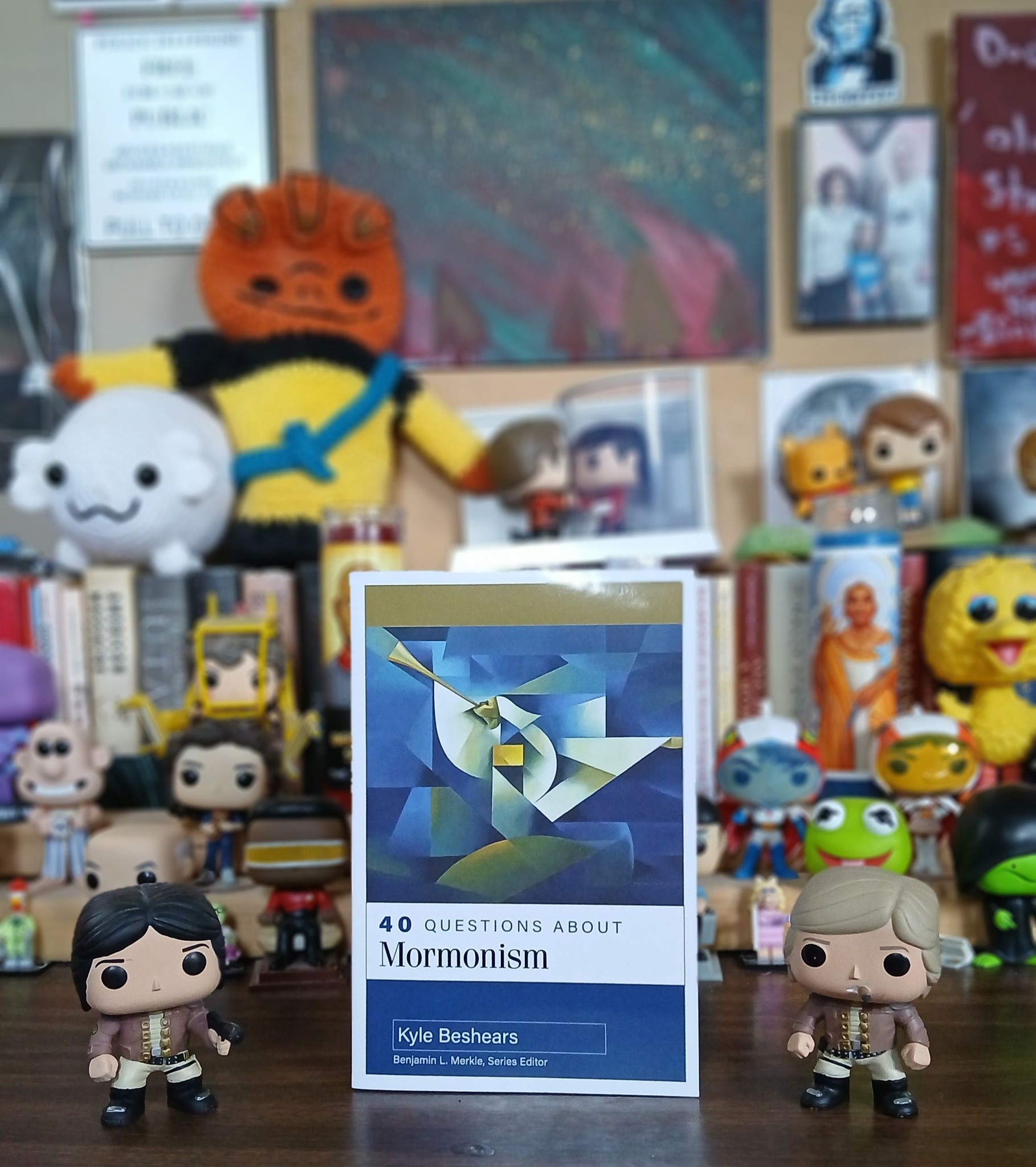
Title: 40 Questions About Mormonism
Author: Kyle Beshears
Publisher: Kregel Academic, Grand Rapids MI
Year Published: 2026
Pages: 348
Format: Trade Paperback
Genre: Comparative Religion
ISBN: 9780825447495
Price: $24.98
Reviewed by Kevin Folkman for the Association for Mormon Letters
In 1992, the Church of Jesus Christ of Latter-day Saints published a four-volume Encyclopedia of Mormonism in an attempt to help explain the church to members outside the LDS faith community. Priced at $240 and covering 1500 articles, it was targeted primarily to outsiders and academic use, rather than to the average church member. It was a daunting project, massive in scope, and years in production. I recall it being available in our LDS meetinghouse library around the time my family and I moved from Utah to Redmond, Washington. I may have consulted it once or twice and had mostly forgotten about it.[1]
Fast forward 34 years, and we have Kyle Beshears’ 40 Questions about Mormonism, weighing in at 348 pages and less than $25. Also targeted towards others outside the LDS faith, Beshears has produced a much more affordable and digestible survey of basic theology, practice, and culture of the LDS church that covers much of the same ground as the 1992 official encyclopedia. Considering that Beshears is a Southern Baptist and pastor at Mars Hill Church in Mobile, Alabama, it is surprisingly accurate, fair, and respectful of the theology, policy, and practice of the LDS church.
Beshears, however, is quite clear in his intent. His volume is geared towards instructing members of other faiths in how to understand Latter-day Saints, engage with them in dialogue, but also quite clear about how LDS doctrine and theology differs from traditional protestant Christianity. Each of his 40 questions clearly lays out the position of the Mormon church, as he refers to it, then places it in context with mainstream Christianity, summarizes the topic, and suggests five ways to enter into dialogue with the Saints in their community.
Questions include some of the most obvious ones, including “What is Joseph Smith’s First Vision?” “What is the Book of Mormon?” and “Why does Mormonism have Temples?” Others dig into the deeper questions, such as the LDS view on the Trinity, salvation, and eternal progression.
Beshears never ridicules or disparages LDS beliefs. When speaking about Joseph Smith Jr. and his revelations, he lays out the church’s position factually, quoting Smith’s experience just as Smith recorded it. The same goes for all of the other truth claims in the restored church. Beshears wrote his PHD dissertation on Mormon history, has published in the Journal of Mormon History, has many friends in the LDS academic community, and is active in the John Whitmer Historical Association.
Beshears is quite clear, however, about the differences between traditional protestant beliefs and LDS doctrine. In his view, God is the ineffable First Cause, the Creator of all things, calling “into existence the things that do not exist,” brought into being ex nihilo by his Word. [p206] God, according to traditional Christianity, exists without physical form, and is manifest through the three aspects of the Trinity: God the Father, Jesus Christ as his manifestation in the flesh, and the Holy Spirit. He correctly shows that LDS members believe in a God with bodily form who progressed into Godhood, and that his love includes raising his mortal children to a state equal to him through the sacrifice of Jesus Christ, his Only Begotten Son. All of this is accomplished by obedience and participation in ordinances necessary for exaltation, guided by the personage of the Holy Ghost, a distinct and separate divine entity. As such, Beshears concludes, “Traditional Christians are right to express concern here, leading some to wonder whether Mormonism could be considered even broadly Christian” [p176].
Likewise, for “Traditional Christians…LDS Christology teaches a Jesus who is not eternally God, and if so, then not truly God” [p184]. For this reviewer, such frankness is one of the great strengths of Beshears’ work, as it clearly lays out the differing views of the Church of Jesus Christ of Latter-day Saints and mainstream Christianity. If one is to engage in dialogue with others who hold differing beliefs, it is essential to understand their viewpoint honestly.
My favorite part of Beshears’ 40 Questions is towards the end of the volume, answering the question “How can a traditional Christian dialogue with a Latter-day Saint?” Beshears cautions his readers, “…before asking a Latter-day Saint, ‘Are you devoted to Christ?’ ask yourself the same question” [p332]. He goes on to admonish readers that “….approaching the dialogue table with concealed motivation is unethical…Don’t bait-and-switch Latter-day Saints with a veneer of friendliness that masks your disinterest in learning from them. If you want to proselytize, then do it. Never engage in stealth evangelism” [p333]. That is also wise counsel to LDS members engaging in dialogue with those of other faiths.
In summary, Beshears’ 40 Questions About Mormonism serves a dual purpose in educating those outside the Church of Jesus Christ of Latter-day Saints about its core beliefs, and those within it of the beliefs of basic Christianity to enable an informed and productive dialogue. In other words, this book could be a potent tool to help all of us in our efforts at Christian discipleship, whether it is with your Methodist next-door neighbor or the folks working with you collecting clothing for the homeless. After all, charity and love, regardless of our differing theologies, is something that we all should share abundantly.
[1] The Encyclopedia of Mormonism is now available free online through the Harold B. Lee Library at Brigham Young University.