Review
———
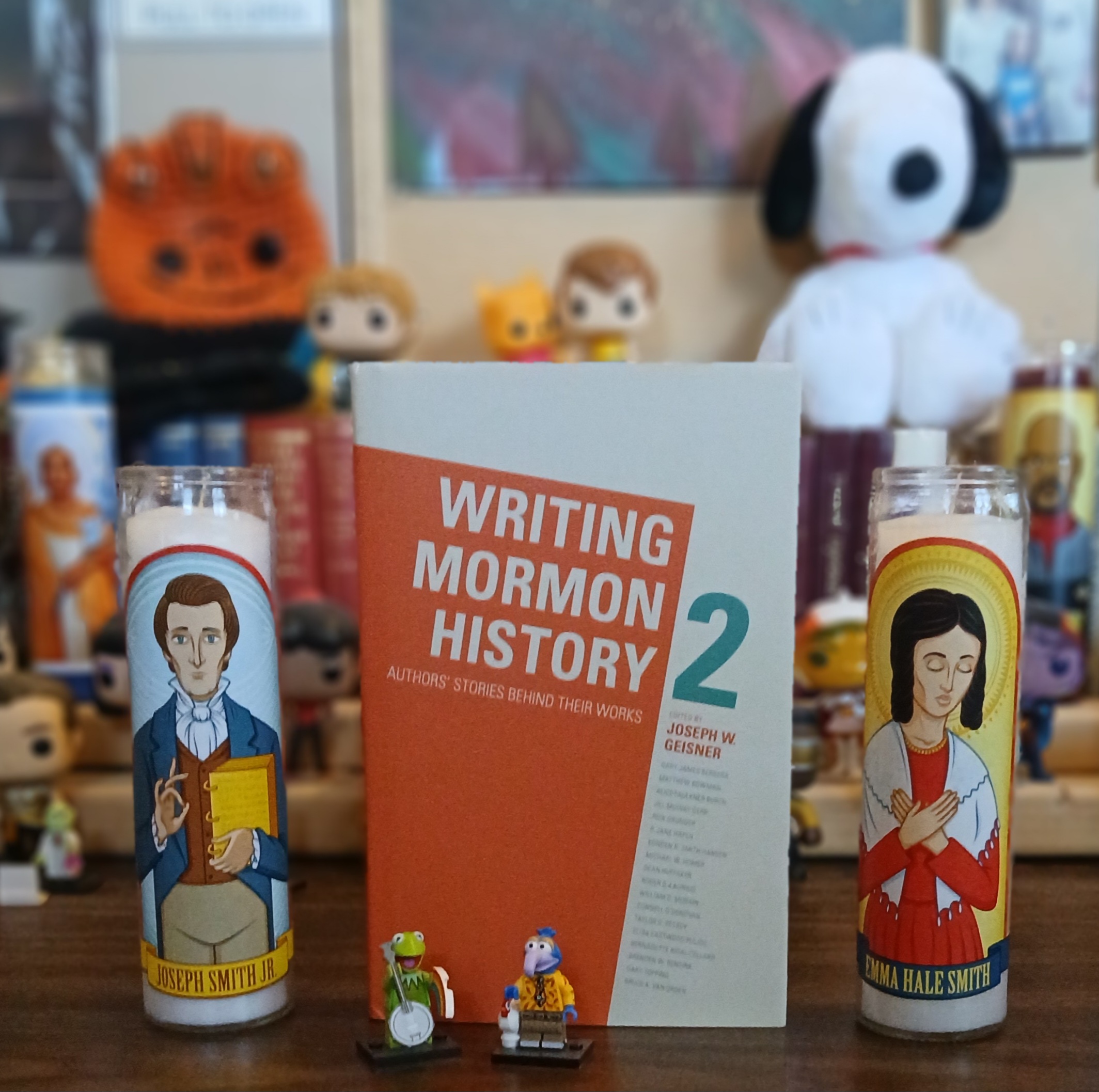
Title: Writing Mormon History 2: Authors’ Stories Behind Their Works
Editor: Joseph W. Geisner
Publisher: Signature Books
Date: 2024
Pages: 425 (index and author bios begin on p. 411)
ISBN: 978-1-56085-475-3
Cost (paperback): $35.95
Reviewed by Julie Nichols for the Association for Mormon Letters
Writing Mormon History: Historians and Their Books (2020) features comprehensive and important essays by fifteen historians covering a variety of topics in Latter-day Saint history, including the Utah War, Emma Hale Smith’s biography, and the work of Juanita Brooks, among others. The essays are both personal and academic, diving deeply into aspects of research, networking, and publication, processes often beginning with a merely peripheral interest in a subject that led to unexpected years of discovery, writing, revision, and sometimes disaffection from the church. As a reader, writer, and teacher of personal essay, as well as a Latter-day Saint with strong family ties to the institution as well as a healthy skepticism, I loved this book, dipping into it over many days, finding validation for much I have come to understand as well as learning much I hadn’t about the history of my church.
This second volume (which I will abbreviate as 2) widely expands the mission of the first. As Geisner explains in his introduction, he sought in 2 to include historians of groups of people of color within Mormonism (Elisa Pulido, Alice Faulkner Burch, Hafen, and Rensink, and Roger Launius), as well as historians of the LGBTIQ movement and its participants (Connell O’Donovan and Taylor Petrey). Three of the authors of Writing Mormon History: Historians and Their Books were women; five of the seventeen authors in Writing Mormon History 2 are women, not a terrifically significant improvement (20% to 29%), but perhaps that’s because there are fewer women scholars than men writing Mormon history. Perhaps these books will inspire more women to join the ranks. It’s clear that writing history, secular or religious, but perhaps especially religious, is not an easy path for anyone. The questions and answers in the theory and practice of the discipline are complicated and tangled—perhaps, for those very reasons, both addictive and rewarding.
Regardless, the essays in 2 are every bit as informative and honest as those in the first volume, and for me—not a historian, but a soft academician and a hard skeptic—wonderfully validating. I was at BYU during the Seventh East Press years (discussed in the first and second essays here, by Gary Bergera and Dean Huffaker); I have met Jill Mulvay Derr, whose memoir essay about writing Women of Covenant mentions other brilliant women I was exposed to in the 80s and 90s; I was briefly a subeditor under Taylor Petrey at Dialogue: A Journal of Mormon Thought. My own experience as a writer of feminist short fiction which was ostracized at BYU, coincides with the kinds of obstacles these authors describe: first, the asking of questions and discovery of sources often either suppressed or just plain challenging to speak openly about and root out; then appropriate interpretation of the answers that arise in those sources; then the striving to reconcile facts, evidence, and what feels like truth with apostolic injunctions against intellectual rigor and, perhaps even more heartbreaking, the condemnation of family and friends.
These seventeen personal histories, which link life journeys with intellectual and ideological ones, constitute a valuable contribution to our understanding of what Mormon and religious history is. Many (most? all?) recount zigzag routes to and from Ph.D. programs, mentors, advocates, and partners. The historian’s path is rarely a straight line from Point A to Point B. These well-edited, highly readable accounts of ambition, happy accident, and accomplishment are very much worth reading, for potential historians, academics, educators, and educated Latter-day Saints. Geisner (and Signature Books) are to be lauded for these volumes. May there be more to come.