
“I think we should call it lo fantástico frío,” (something like cold fantastical literature), said to me Rafael Vázquez, the editor of Ulterior Editorial, a Mexico City based independent publisher. He was talking about my debut novel La dama errante en la ciudad del fin del mundo [The Wandering Lady in the City at World’s End], which he was about to publish. He was trying to figure out what to label it for marketing purposes.
I felt the novel didn’t really have a genre. If anything, it would fit in the tradition of los raros, the strange ones. This how some Uruguayan writers, like Mario Levrero, have been labeled because their writings fit no particular genre even as they lean toward a kind of soft surrealism. Vázquez felt the novel is perhaps not strange in that sense. Pressed, I argued for a sort of soft magical realism. He begged to differ. Yes, it was fantastical, like Jorge Luis Borges, but it was also reminiscent of Mircea Cărtărescu, he explained. There was just something cold about the ambiance, like one would need to wear a sweater to read the novel, he argued.
The novel is set in the city at world’s end. That is the cold place my editor was talking about. It’s a city that ends on a wall of clouds (a veil of fog, if you will) which no one can enter. Or rather, no one can cross that veil and return. (Minor spoiler: there are watchmen on the other side and the only way to get through is to give the right answers to the questions that will be asked upon showing up to the misty barrier.) The city is grey and always cloudy. To this place arrives a wandering lady. Her clothes are mismatched, and she hauls a suitcase and a backpack filled with her writings, one which dates to 1541. The reader soon learns she has been wandering about for half a millennium. She’s come to this place, where no one goes out at night and people speak a nearly indecipherable language, to write her next book. In the process she will meet an apathetic pizza maker who has his own reasons for seeking refuge in the city at world’s end. Together, they will discover their own secrets, as well as the city’s.
There are fantastical elements in the narration, to be sure, but they are not based on magic systems (like one would find in high fantasy) or on exaggerations of reality (like one would find in magical realism). Rather, the fantastical elements come as a consequence of the world beyond the grave permeating into our own. They are also present because the protagonist can see things as they really are.
For this reason, my editor insisted on a new designation, that of lo fantastico frío, or cold fantastical literature. He described it as the presence of “bleak settings, the unexplained as commonplace, and quotidian alienation.” Ultimately, I gave in. Editor knows best. But I don’t wish to convey that I’ve written this pessimistic novel about a woman who spends centuries in pointless searching. I think it’s a very hopeful novel, and perhaps this description by Vázquez makes the point for me:
Monumental b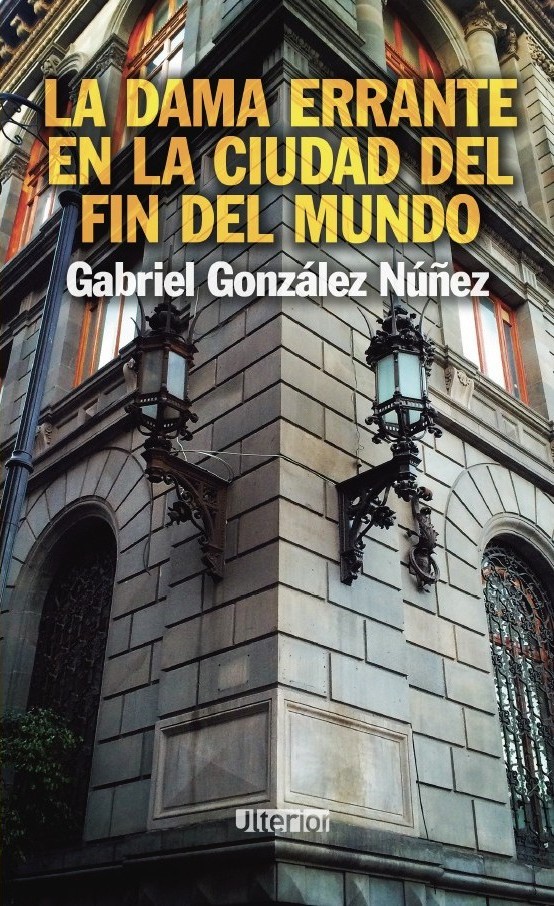 uildings, empty town squares, and discussions with a kind pizza maker tell a fragmented, poetic story about memory, foreignness, power, and the passage of time. The city, which ends in an impenetrable fog, becomes a mirror of things lost… and of things yet to be found.
In an elegant prose filled with imagery and a sense of history, Gabriel González Núñez offers up a novel that is part philosophical fable, part travel chronicle, and part exploration of identity.
So, yes, it’s a novel about a journey, one in which we lose so much, but it’s also about the things and the people we find as we move forward. My hope, of course, is that readers will see themselves in it and enjoy the ride.