
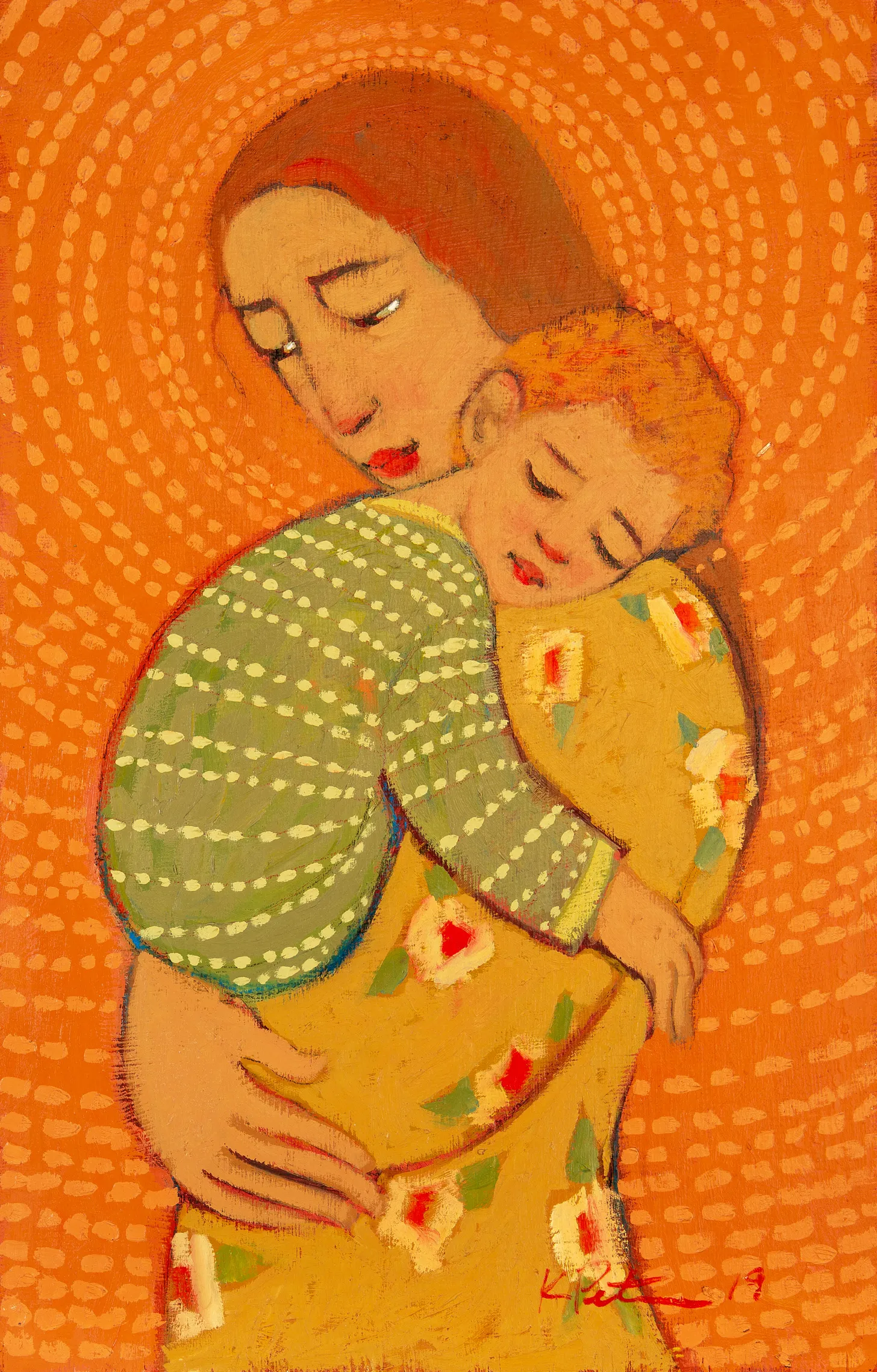
Reposted from Mormon Short Stories substack.
Jack Harrell’s “The Boy Comes Home” won the 2024 AML award for short story, but accolades be damned, what really matters is that this story is quite simply the best story I have ever read about the intimate details of how Mormon faith crises affect both the lives of those who experience them as well as the lives of those who love those who experience them but do not experience them personally themselves. A story for our times. A story for the ages. A story about the all too often complex realities of coming home. A Mormon Odyssey of sorts.
Because I will only be discussing a single story, and because this story is available free online—it was published by Wayfare on Feb. 22, 2024—I will go into more detail and reveal more spoilers than I normally do, so please read the story before you read my analysis. Harrell’s unnamed “boy” may not be the Odysseus of Homer’s epic, let alone the Matt Damon of Christopher Nolan’s cinematic adaptation. He doesn’t need to pass through the narrow strait between a deadly whirlpool and a six-headed monster, he doesn’t have to AA himself from addictive amnesia-inducing lotus flowers, he isn’t forced to kill a giant Cyclops. He doesn’t even have to tie himself—or be tied by his brothers like Nephi—to his ship’s mast. He also doesn’t have to face a disgruntled wife who he abandoned for two decades. In a home chock-full of 108 ill-meaning and ill-behaved suitors no less. And the story comes without the all-out sensory assault of Nolan’s sound effects and soundtrack, too. But that doesn’t mean that the boy’s return home is any less treacherous than Odysseus’s—either for himself or for those he loves (at least after a fashion) and those who love him (like only a mother can).
At the heart of Harrell’s story lies the all-too-common current reality of a mixed-faith Mormon home broken by a recent divorce and an estranged son, the aforementioned titular boy. The mise-en-scène is a boy “who hasn’t been home since leaving for college” finally at long last returning home for his father’s second wedding to his soon-to-be new stepmother. It is perhaps not stated explicitly, but we are left to assume that he probably hasn’t set foot in a Mormon church since leaving home, and shacking up with his girlfriend, either. His two sisters are less complicated, or at least have less complicated relationships with their mother who they are “just like, wanting the things she wants” and “let[ting] her love them, which is all she wants from her boy”—even if only one sister was actually married in the temple. While the father’s nuptials provide the occasion for this diminutive homecoming of sorts, the specific scene depicted in the story is simply the boy’s brief stop by the house to see his mother for a “few minutes” while he “pick[s] up some things from his childhood.” But a lot of complex familial and religious tension is packed into this short story about these two ships passing in the night.
In the simplest sense, “The Boy” is basically just a Bildungsroman, a coming-of-age story. It is the story of a late-teen/young twenty-something gradually asserting his own autonomy from his parents and moving off to “college on the other side of the state” in large part because he wants to “get away” from his mother. Even as a five-year-old, he was already free-spirited, jumping off the “diving board” into the “deep end” of the pool. Then on to adolescence with its “city league football” and “fights about his friends, his bedtime, his video games.” His mom may have been too “big on rules” from time to time, after all that was the “way she was raised” herself, but by fifteen her boy was all “Back off, mom” and “Jeez, mom! Give it a rest.” This independent streak may not have come entirely out of the blue, but it still “blindsided her” nonetheless. He had not only “moved beyond her reach,” but he “just kept moving” on from there.
Now he is at college on the other side of the state living with his girlfriend out of wedlock. By now, a mission is completely out of the question, if it had ever been in the offing in the first place at all. The boy has been stretching his legs, possibly even sowing some wild oats, for quite some time now. Nothing extreme or dangerous, but certainly not the simple orthodox life that his good Mormon mother had imagined for him. He has simply come of age in a different age than hers, and he has put his own mark on it to boot. His mother’s one conciliation is that he has finally, however belatedly, however fleetingly, at last come home. At least for a moment. He is not exactly a returning conquering hero, and her own open arms are perhaps little more than wishful thinking. More hopeful than assured, but she is now once again, like always, loving him the “best she knew how.”
At a deeper level, however, “The Boy” is an inverted Bildungsroman. It is told in third person, but in a limited third person that sticks close to and reveals not the mind of the son who is coming-of-age, but of the mother who is sliding deep into middle age, just shy of a mid-life crisis, precipitated at least in part by the growing distance between herself and her son, having already lost her recently divorced husband to his new wife. Kind of like a Catcher in the Rye told from the perspective of Holden’s middle-aged mom. This story focuses on the mom’s concerns, anxieties, insecurities, broken dreams, and simple desire to hold it all together and love her son in spite of whatever he or she thinks about their relationship. Most importantly, she realizes that her opportunity is short, so she wants to get things “right” and tenuously maintain “some connection to her son” in the brief “precious moments” that she has with him lest she risk “losing him forever.” She may be overthinking things, perhaps even making inadvertent mistakes, but her worries are the worries of one trying to love too much rather than too little, as perhaps only a mother can.
But the fundamental dynamics of both the boy’s growth toward independence and his mother’s loss of her son’s innocence are shaped principally by their different relationships to the Mormon faith. The boy’s parents are fundamentally “good people, dedicated to the Church and the principles of home and family,” even if they “somehow knew” early on that their marriage probably “wouldn’t last forever.” The “only question was when,” and apparently when is now now even if it still “hurt[s]” to see just “how easily he walked away from their life.” That they both “still [go] to church” does little to ease the pain, instead only opening up a Pandora’s box of questions about “their connection to the children”: “What was sealed and what was broken?”
What is perhaps most poignant in all of this is that the mother has learned to walk on eggshells, struggling desperately to remember that she needs to “stop herself” from worrying about her own concerns because she needs to be the grownup in the room and “think about” her son instead. She “can’t look anxious.” She can’t show that she is “disappointed.” She “mustn’t do anything he can’t ‘handle.’” She has to “compl[y] with the distance he puts between them.” Above all, she knows not to “ask about the Church.” This story is primarily about this delicate dance, this tiptoeing through the minefields created by the son’s decision to leave the church and the strain it puts upon his relationship with his mom. This strain is depicted thoughtfully in the subtle details of the story as the mother must game plan how to not let this religious difference break their relationship.
The “welding link” of sacred “covenants” that once held their family together is fraying, but perhaps not beyond repair. Her son may be moving ever further away from her, arguably an inevitable part of growing up, and distancing himself further still from the church, a decision he is far from alone in making, yet there is still something that “seals” her to her family “despite the choices of others.” However trying, however exhausting, however downright soul-crushing, she keeps hope alive, doing the best by her son that she knows how, however tenuous and tendential that may be. Ultimately, religion proves to be both the cross that the mother must bear and the strength that bears her up no matter how far her son may stray from it. It is also perhaps also the basket in which she has put all her eggs, so that when her son strays from that faith there is little else left to bind him to the family. The tension between the mother’s heavy cross and the son’s unbearably light unboundedness is what animates this story, turning it into a poignant and moving parable for our times.
The story is told from the perspective of the mother, so it obviously sympathizes with her Herculean, even Sisyphean, task of navigating a fraught intergenerational conflict precariously balanced on the precipice of an ever-widening religious chasm. The story carefully reveals her pain, studiously examines her equal devotion to both child and church, and largely exonerates her for, if nothing else, doing the best that she knows how. Her son’s probably many, but likely minor, grievances, betrayals, and disappointments are perhaps acknowledged by his mother’s forthright admission that she “knows she made mistakes.” Which, to her credit, is more than many parents can say, including ones who have made many more mistakes and made far less diligent effort than she has.
There is one particularly poignant moment in the story, however, when even the mother herself admits, “What does she want? She doesn’t know.” She’s improvising, grasping at straws, throwing everything at the wall to see what sticks. But some days, in a situation such as this, caught in her own strait between the Scylla of her God and the Charybdis of her son, what more can a mother do? We can hear the son’s voice through the cracks in the narrative, but he is not the star of this show. The spotlight does not shine on him. Not today. Narratively speaking, he is a two-bit player in the drama of his mom’s life. We know no more about the inner workings of his mind than we do of Rosencrantz and Guildenstern’s. All we can do is guess, but we can at least make an educated one. That perhaps is for another story, however. What this story does tell us about the boy is that he is the love of his mom’s life, the apple of her eye, her most cherished dream. And in that sense he is seen and heard, albeit only indirectly as refracted through the prism of his mother’s love.
Ultimately, however, the story concludes uncertainly in a liminal zone between hope and despair. The boy neither callously casts his mom off forever like a never-to-return prodigal son, nor does he rush back into her embrace like the little child he once one. Instead, he tenuously holds out an olive branch, inviting her to dinner. Or at least willingly and graciously accepting her invitation to dinner. Not a full-on olive tree mind you, but at least it is something. And something is always better than nothing, isn’t it?
If you are looking for a definitive exclamation point, however, you are not going to find it here. If you are looking for a no-holds-barred take down of how Mormon parents alienate their own children through their hyper-religiosity, you are not going to find it here. But if you are looking for solid reassurance that all you have to do is read your scriptures and go to church and all of your children will stay safely and comfortably in the church, you are not going to find that here either. I’m not going to go full-on Mark Twain on you and suggest that anyone looking for a moral to this story should be shot, but this is certainly not a blustering wear your self-righteousness or your self-unrighteousness on your sleeve kind of story either. No matter how sympathetic it is to a poor devout Mormon mother who not only loves her children deeply but wants nothing more than to have them not even love her back but more modestly simply let her love them.
What then is the moral of this subtle and nuanced cautionary tale? Certainly not that all is well in Zion or that if we just say our prayers and attend the temple regularly, then we will all hie off into the sunset and live happily ever after as an eternal forever family maybe somewhere near Kolob, to sort of mix genres between a Mormon western, a Latter-day Saint family sit community, and a beloved hymn. No. Life both in this life and in the hereafter is inevitably messy in worlds where individuals’ agency and temple covenants are often not easily aligned.
Certainly not that somehow the broken relationship between this mother and her son is somehow a unique, let alone aberrant, cross reserved only for the wicked. The cruel punishment of an angry God meted out unjustly and unfairly only to a few very unlucky souls. No. This is a story for our day. For the latter days. For Latter-day Saints. A universal story of Everyman and Everywoman. A real existential struggle coming soon to a theater, ward house, and home near you.
Certainly not that we must abandon all hope just because our children no longer attend church, have married outside the temple, or are simply shacking up out of wedlock altogether. No. This is a story of hope even in dark times, but it comes with a clear warning. Do not rush in where angels fear to tread. Walk gently. Tread gingerly. Respect others’ agency. Spend more time showing an increase of love by persuasion, by long-suffering, by gentleness and meekness, and by love unfeigned than reproving betimes with sharpness. Don’t even think of exercising unrighteous dominion. Practice random acts of kindness. And deliberately calculated ones as well. Don’t worry if you don’t know math all that well. The Lord looketh upon and rewardeth the heart. If at first you don’t succeed, try, try again. Let the hearts of the parents turn toward their children and wait patiently, and work diligently, for those children’s hearts to turn back toward their parents.
This story isn’t bold enough to promise like Orson F. Whitney did with a hockey assist from Joseph Smith that “the eternal sealings of faithful parents and the divine promises made to them for valiant service in the Cause of Truth, would save not only themselves, but likewise their posterity. Though some of the sheep may wander, the eye of the Shepherd is upon them, and sooner or later they will feel the tentacles of Divine Providence reaching out after them and drawing them back to the fold. Either in this life or the life to come, they will return.”
But it does try to keep hope alive. With faith in charity. And there’s a hat trick for you. Hope you enjoyed Spain’s utter dominance over Argentina which proves that with a good enough defense you don’t really need much offense. Sometimes, you don’t even need to score a hat trick. Sometimes a single virtue will do, but if you have to choose only one, this story reminds us that we should choose charity. It may not offer a prophetic guarantee that your own personal family homecomings will always run smoother than Odysseus’s—let alone the Fockers—but sometimes, like in this exquisitely beautiful and moving story, charity really is all we have left to fall back on. It may draw even to a tie in regulation once in a while, perhaps even have to go to penalty kicks from time to time, but it is still undefeated. It never fails. It’s a check that the bank will always cash. It may not make you a millionaire, but it will at least cover the tab for dinner, and if this also happens to be your lucky day, your children just might even join you.
I get the tactic of titling and opening with an Odyssey likening — a sort of Mormon Lit Crit movie tie-in? But then you’re obliged to tally all the unlikenings between Homer (or Nolan) and Harrell, so many as nearly to deconstruct the whole gambit. And it takes a while to get back to the story’s protagonist: this anxious mother who wants to welcome her son in such a way that, though he may not love her back, he will let her love him.
Still, one might rebound from the Odyssey to specify more precisely that the story is a “nostos” — Greek for “homecoming” (plural nostoi). The term, though not often used, has been available in English for something over a century, and designates what seems to have been a genre practiced by several ancient Greek poets. Modern examples might include Hemingway’s “Soldier’s Home,” Faulkner’s first novel, Soldier’s Pay (aint yet read that), Welty’s The Optimist’s Daughter, Jane Smiley’s At Paradise Gate, Marilynne Robinson’s Gilead and Home. The main action of the ancient Odyssey is a nostos: how Odysseus got home; the “Great Wanderings,” which we have mostly in mind when we say “odyssey,” are the tall tales Odysseus tells the court of Alkinoös after he washes up on the beach where princess Nausikaa finds him. Given that Jack Harrell’s co-protagonist is “the boy,” one might try a slightly stronger analogy with Homer’s Telemakhos, who also leaves home and comes back. But that analogy soon breaks down too: both Odysseus and Telemakhos come home to stay; “the boy” does not.
As your later phrase “prodigal son” suggests, the strongest analogy is with Jesus’s “lost son” story in Luke 15.11-32 (my essay on Luke 15 in Sunstone 20.4, December 1997, has primed me to read “The Boy Comes Home” from this angle). Here I think the unlikenings really get interesting, since this boy comes home not to his father but to his mother, who, given her particular situation, her fraught 21st century Intermountain West LDS history with (and relation to) her maybe-lost son, cannot just dash out to embrace and kiss him and call servants to fetch him a robe and a ring and kill a fat calf for a feast. She’ll have to meet him warily, and take whatever she can get. If we thought Jesus’s story was heartbreaking (and I do). . . well, how about this variation on a theme?
So, “Mormon Odyssey”aside, when you get onto this story as the mother’s story, you do say more right-on things than I could hope to tally, trying for brevity here. Pardon, please, if I let just one stand for most of them: “a story for our day. For the latter days. For Latter-day Saints. [. . .]. A real existential struggle coming soon to a theater, ward house, and home near you.”
I’m reluctant to call it “universal”; but we’re surely free “universalize” it (on this, see Martha Nussbaum, The Fragility of Goodness 298–305). I’m also reluctant to call it “cautionary,” more disposed to call it “cautious”; but we’re free to take warning from it. As we’re also free to notice how it quietly, cautiously, implicitly critiques the Mormon/LDS culture it springs from, belongs to, and offers to be heard by. To me it “says” something like “Let me try to tell you, show you, how it might feel to be this one particular divorced LDS mother, faithful to her covenants, greeting a beloved son, who may or may not be “lost,” on his first visit home after three years’ absence (I’m not putting that as well as the story deserves.)
I’ll add a few scattered noticings. The boy’s father and mother did not have a “mixed-faith” marriage, rather a more or less “standard” LDS temple marriage that didn’t last very far past their youngest child’s departure; maybe there was less “faith” (= fidelity) on the husband’s side than on the wife’s; yet although the father is to marry a second wife outside a temple, he’s apparently still “active,” as the mother also is. The boy chose to attend “a college on the other side of the state,” and that, with other details (his mother stopping to visit him on her “way to see her mother in Oregon,” a plan to have dinner at a “Stockman’s Grill,” “that steak place on Pioneer Drive”) suggest a Southern Idaho setting on an axis between Idaho Falls or Rexburg on the east and Boise or Nampa on the west. Jack Harrell is working close to home; maybe close to the bone (if not his, then someone else’s he has known or watched). It’s a small, good thing, among several in the story, (e.g. a bowl of peanut M&Ms) that the mother seems to like her son’s girlfriend Lindsey (one of two named characters in the story, neither in the family), even though they live together out of wedlock. (Yes, I think Jack has been learning a small, good thing or two about short fiction from Ray Carver.)
Maybe I’m already saying and suggesting too much. We can leave a lot more to patient generous readers — allusions to scripture, ordinances, history, whatever; implicit questions aimed at some “doctrines” regarding covenants and Degrees of Glory; and so on.
A more “complete” or more “adequate” reading, I think, might try to articulate, formally and technically, how the story presents its action, and might still more closely attend its two major scenes, the welcome and the plan for dinner, but also the mother’s more private, inner experiences and reflections before and between and after those scenes. All in the hope of helping any interested reader see and feel the story more fully and clearly. You make a strong start here, and I hope I’ve added to it more than detracted from it.
About the boy’s “Mormon Odyssey”: as your second paragraph implies to me, the story gives us too little to go on. If an “odyssey” it is, it started in adolescence, or earlier, and is still in its outbound phase — he’s twenty-one now, and as his mom recognizes, he still has a lot to learn. I’d not be surprised to see, farther down the road, a good Mormon novel growing out of this story and taking up more of its potential protagonists and points of view — the boy’s, the father’s, the soon-to-be stepmother’s, Lindsey’s, one or both of the older sisters’ — and following their relations on out across several more years (if the mother lives that long).
[composed in WP, pasted here; and alas, my italics vanished and I don’t know how to get them back]
Salud!
bwj
Dear Bruce,
First and foremost, let me sincerely thank you for engaging in discussions of Mormon short fiction. However much we may unfortunately “disagree” once again, the world certainly needs more—not less—of such discussions. For all that you profess to be a careful reader, however, I think that you sadly miss some of the most basic claims of my piece.
First, this is not an extended analogy between Harrell’s “boy” and Odysseus. As you yourself note, I take reasonably great (for a simple substack post) pains to distance my analysis from Homer (and Nolan). Nowhere do I raise the question of nostos, let alone nostoi, or their etymology and historical usage, including their deployment by Hemingway, Faulkner, Welty, et ad nauseum—although I am duly impressed with your powerful mastery of Greek and mastery of the canon (which to me personally seems to be more of your actual point than a reading of Harrell’s story–careful or otherwise). Yours is a fascinating comparative analysis of Homer and Harrell, and I thank you for sharing it, but let me be clear—in case my disclaimer (“Harrell’s unnamed ‘boy’ may not be the Odysseus of Homer”) wasn’t obvious enough and my title somehow mislead you—I am trying to make a much more modest, even simple (like Prufrock’s pin), claim. I apologize if I am no Hamlet.
I believe that I reasonably clearly frame my analysis simply as the most basic claim that both Odysseus’s and the boy’s homecomings are no “less treacherous.” Which unfortunately equates killing a Cyclops with having a simple five-minute conversation between a mother and her son. But alas, here we are. Or at least it seems so by the inordinate number of recent conference talks about just how intolerably painful it is to have a “wayward” child these days. Or more to the point: just how magnanimously Mormon parents have to bend over backwards to simply love such “prodigal” children. Note to Mormons: I think that you all are making this more difficult than it needs to be.
Your attempt to belaboringly belabor your personal reading of all the parallels and non-parallels and alternative comparisons between Homer and Harrell seem to miss the mark (of my essay) and deliberately misread my fundamental claim that Harrell’s story represents a “diminutive” not a grand Homeric homecoming. Personally, I believe that Harrell’s story deserves, is even required, to be read as such. Telemachus, I mean Telemakhos, notwithstanding. I think it is clear throughout that I am simply attempting to “read” this simple, brief interaction between a parent and child. As articulated by Harrell not Homer. I might add, parenthetically, that your hectoring tone is unbecoming, so I graciously reply in kind.
Similarly, I believe that I reasonably clearly state that the “heart” of this story is the “all-too-common current reality of a mixed-faith Mormon home.” Meaning intergenerational not marital. If I did not make this explicitly clear, I believe that the story itself does. And a reasonably generous reading might assume that I did, in fact, read the story and at the very least might read my actual language as written. I do not believe that I ever claimed that anyone had a mixed-faith “marriage.” Although I do appreciate your careful reading of how active each parent is (a typical Mormon fixation) and that you are on a first name basis with “Ray” who some of us hoi polloi—sorry for my Greek, which I assume you are already familiar with, of course, referring to its more common snobbish usage in English beginning sometime in the 17th century or was it the 18th?—know only more conventionally as Raymond.
In conclusion, I greatly appreciate that you carefully point out the occasional moments when I say “right-on things,” and I’m deeply sorry that I have not yet found time to read your seminal essay on Luke in Sunstone which I am quite certain would have given me a completely new understanding of Harrell as it does you. Almost thou persuadeth me to read it. If I ever do, I’ll get back to you.
Best,
Robert
P.S. I apologize in advance for my snarky tone, but snark is no greater sin than pomp. And I sincerely believe this. At least not for my generation. You can speak for your own.