
A guest post by Stephen Dethloff, reposted from his Substack. He discusses prophecy, Orson F. Whitney’s writings, and introduces his own new novel, Neither Fear Ye Their Fear.
Elias
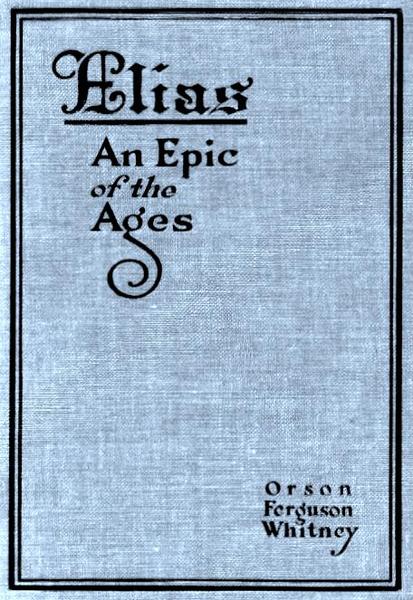 Appendix Two (1) of Greg Kofford Books’ republishing of the epic poem Elias—An Epic of the Ages is a collection of Orson F. Whitney’s writings on poetry and literature. The last article in this appendix (2) is quite amazing. It was written 24 years after Elias, and repeats and elaborates on a key theme in the poem. Here is that idea as it was written in the poem, in 1902:
Mark how the annals of the ages teem
With repetition. Time, eternity,
The same have taught; but few, alas! The moral see.
Elias, Canto Six, 1440-1442
This is very close to the language Whitney borrows in his 1926 essay:
This is “the open secret–open to all, seen by almost none.”
This phrase that Whitney borrows is from Thomas Carlyle, who used it in 1840 in his essay The Hero as Poet. Dante: Shakspeare. In that essay Carlyle explains that he, himself, is developing this idea from Goethe, whose “open secret” (offenbares Geheimnis) describes a truth that is completely visible in plain sight, yet remains profound or hidden due to our lack of careful observation or deeper understanding.
It seems to me that what Carlyle and Goethe seem to be implying is what Alma taught in Alma 30:44, “…all things denote there is a God; yea, even the earth, and all things that are upon the face of it, yea, and its motion, yea, and also all the planets which move in their regular form do witness that there is a Supreme Creator.”
Whitney uses the phrases of Carlyle and Goethe and goes past the scope of their original arguments. He writes:
The Universe, composed of things great and small, the smaller symbolizing the greater, is one vast poem. Filled with types and foreshadowings, the seen and heard bearing witness of the unseen and unheard, it is a mighty prophecy, ever fulfilling and awaiting further fulfillment. To read this poem, to interpret this prophecy, requires a poet of the highest order, and when we have a poet of the highest order, we have a Prophet of the Most High, one standing next to God, and best able, therefore, to comprehend him and make known his purposes.

Whitney’s great, open secret is that the real world is narrative. The real world is a poem. Peoples lives repeat spiritual archetypes and story shapes. As Shakespeare wrote it:
All the world’s a stage,
And all the men and women are merely players;
They have their exits and their entrances,
Joseph Campbell has his archetypes: the hero, the mentor, the trickster. Whitney has his, too. These are spiritual archetypes, which do not only apply to stories, but to history.
Elias, the theme of the poem, is one of these spiritual types. Whitney’s poem is about individuals who fit the shape of Elias. The shadow of the form. Instances of the type. Elias is he “which was to come to gather together the tribes of Israel and restore all things” (D&C 77:9). In Whitney’s poem, Elias is:
- The Moon
- Nephi
- Enoch
- John the Baptist
- John the Revelator
- Joseph Smith
- The Spirit
Elias is a forerunner. Someone who comes before another and says, “make straight the way of the Lord” (John 1:23). Whitney notes in line 1919 of the poem, that even the forerunners have forerunners. Connecting Joseph Smith to the Nephites, Whitney writes: “Forerunner thou, and thy forerunners these.” Turtles all the way down. Everyone is a forerunner to something else.
In the Joseph Smith Translation of John 1:26-28, it is written that even Jesus Christ, himself, is an Elias. A forerunner. A restorer of all things. And, thus, all the prophets who are themselves Elias are only a type of the great, prototypical Elias himself, Jesus Christ.
The Highwaymen
Examples of individuals filling instances of a type, and having that type be replayed throughout history, is wonderfully exemplified in the The Highwaymen’s 1984 song Highwayman, which was originally written and recorded by Jimmy Webb back in 1977.3
In the song, each member of The Highwaymen sings about how they are each an instance of the type:
- Willie Nelson – Frontier Outlaw
- Kris Kristofferson – Sailor
- Waylon Jennings – Dam Builder
- Johnny Cash – Starship Pilot
One of the things that’s great about this song, and this supergroup, is that its self-mythologizing. These four men sing a song about highwaymen. And they are the Highwaymen! Willie & Waylon & the boys are instances, and the prototype! They are both the parts and the whole! It’s great.
And, then, at the end of the song, Johnny Cash, singing as the starship pilot, explains that after his life is over, he’ll come back as something else. Maybe a single drop of rain. Maybe a highwayman again. But he will be back. He’ll be back again, and again, and again. The type goes on. There will always be Highwaymen. There will always be blue collar laborers. The Wichita lineman will always be there. The instance continues to repeat itself.
Isaiah & Hezekiah
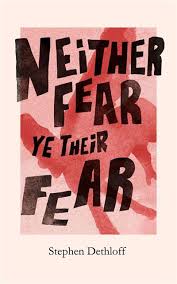 Types & signs & instances are a big part of the book I published a few days ago — Neither Fear Ye Their Fear. It’s my debut novel. Historical fiction. Very well researched.
In the book, the main character, the tragic King Ahaz, struggles against becoming a type. He does not want to be a highwayman. He does not want to be an instance. He does not want to be a parable or a moral or a sign of what happens to wicked people. He does not want to be an instance of righteous justice. He does not want to be an instance of a theme. He feels it diminishes himself. He wants to be a rugged individual, just like everyone else.
On the flip side of these concerns is Isaiah, Ahaz’ prophet-advisor. He is actively trying to create types—but of Christ. What greater role can one fill than being an instance or type of Christ? Being a part of a whole is true freedom.
In the book, Isaiah is actively trying to point people towards the Messiah, but he has to do it as, “an open secret–open to all, seen by almost none.” Why must he teach people this way? Because he was commanded to. In my book’s prologue, Isaiah receives the revelation written in Isaiah 6, in which he is told by the Lord to tell the people, “Hear ye indeed, but understand not; and see ye indeed, but perceive not.” Isaiah must teach of this Messiah as an open secret.
This is a Pauline idea. It is a concept repeatedly taught by the apostle Paul, who looked through the entire Old Testament and viewed it as writings which actively revealed the secret mystery of Christ. According to Paul, the only people that can truly understand the open secret of Isaiah, the mysteries of the Old Testament, the prophets’ offenbares Geheimnis, are those with eyes to see and ears to hear. Seeing the Law & the Prophets for what they truly are, is seeing them as mystery teachings, foreshadowing Jesus Christ.
This idea is also found in my historical fiction novel in Chapter 15: “Vision in the Fuller’s Field.” This chapter is a dramatization of Isaiah 7. In it, Isaiah gives the great Immanuel prophecy. He tells King Ahaz, who is spiraling out in a mental health crisis:
Behold, a virgin shall conceive, and bear a son, and shall call his name Immanuel
This prophecy finds fulfillment twice (at least, that I know of). Once with Hezekiah, Ahaz’ son, born to his then-virgin mother Abijah, who at the time of the prophecy being spoken is only betrothed to King Ahaz. This is how Ahaz, perhaps, comes to understand the prophecy. Or, this is how Ahaz is encouraged to understand the prophecy.
The prophecy also finds fulfillment a second time in Christ, 700 years later, in the miraculous virgin birth of Mary. Isaiah is openly teaching mysteries. Ahaz does not know this. He does not understand this. He does not choose to look deeper. It is like the light shining in darkness, and the darkness comprehending it not. Immanuel is Hezekiah and Jesus Christ. The Highwayman is an outlaw, a sailor, a dam-builder, and a spaceship pilot. Elias is Nephi, John the Baptist, and Joseph Smith.
Stephen Dethloff writes historical fiction. Past efforts in the genre include writing & producing the Strangers & Pilgrims Podcast on The Death of Joseph Smith, and writing the screenplay for Garrett Batty’s Out of Liberty.
You may consider that Goethe’s offenbares Geheimnis may mean revealed secret. The word offenbares may come for the German word Offenbarung which means revelation. Geothe could just have written offenes Geheimnes if he meant open secret.
That’s interesting. I’m going to add this note to my original substack article and reference your comment here. That does add a nice layer to the phrase / gives me a better understanding.