 Reposted from Mormon Short Stories substack.
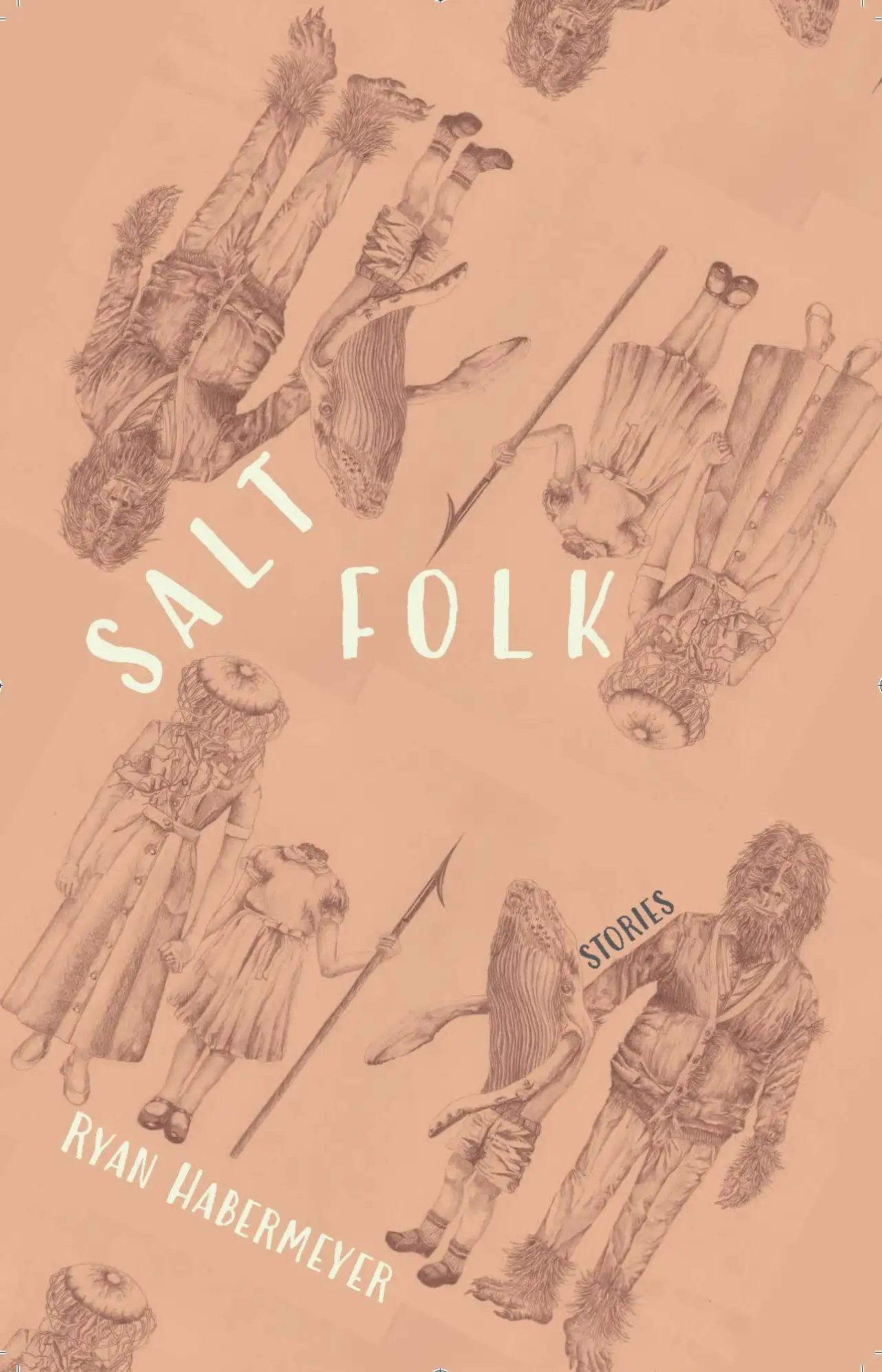
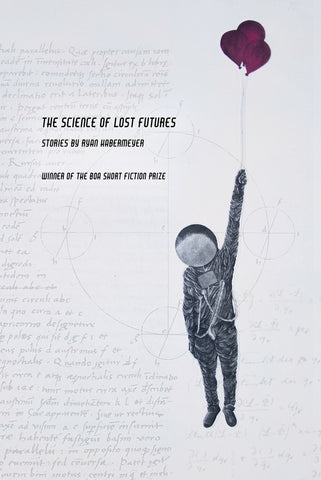
Maybe I’m starting to sound like a broken record, but I’ve been arguing since the beginning of time that Mormon letters needs more writers like George Saunders and Donald Barthelme. I’ve noted traces of such literature in several stories by William Morris, Ryan Shoemaker, James Goldberg, and a few others, but Saunders and Barthelme’s most obvious comp among Mormon short story writers is clearly Ryan Habermeyer who will soon publish “Bring Me the Head of Ezra Taft Benson” in the upcoming (Fall 2026) issue of Dialogue, so it will also be—like all Dialogue stories—available free. The story’s madcap title alone essentially proves my point without further comment. That it also obliquely recalls the macabre hilarity of Brian Evenson’s “The Prophets” only adds further damning evidence that Habermeyer stands guilty as charged. Moreover, alongside this excellent story, Habermeyer has also published two incredible collections of short stories: The Science of Lost Futures (BOA Editions, 2018—winner of the BOA short fiction prize and the AML short fiction collection award) and Salt Folk (Cornerstone Press, 2024—shortlisted for the AML short fiction collection award). Throw in his recent novel, Necronauts (Stillhouse Press, 2026), and you’ve got yourself a hat trick. If not a trifecta or even a triumvirate.
Like many, if not most, great postmodern narratives, “Bring Me” is built around an unmistakably absurd, not to mention LOL funny, premise: that the Mormon church, for some nebulous reason bordering on a conspiracy theory, must auction off its entire back catalogue of historical artifacts and sacred relics. As the ushers cryptically announce, “Everything must go” because “every scrap” of Mormonism is now “officially for sale.” The auction begins simply enough with a “1920’s-era milk bottle produced by the Deseret Welfare Society” and a few “Kirtland Safety Society bank notes” followed predictably—once you accept the story’s postmodern logic—by a “VHS copy of The God Makers” and “Michael Ballam’s hymnal.” While the more prosaic “robes from the tabernacle choir” garner only “pennies,” more exotic fare such as “Bruce R. McConkie’s Ouija board commands a slightly more respectable price.” By the time the auctioneer gets around to the “Kinderhook plates” and the “lost 116 pages” the story has clearly lost—or perhaps found—its plot. Only to ultimately be outdone by the even more eccentric offering of a “taxidermized white salamander . . . brought out in a cage, donated from the personal collection of Dallin H. Oaks.” IYKYK, and the rest of the auction only proves conclusively that the farthest reaches of deep space nine Mormona hide still more treasure troves of the eclectic and outlandish.
But for all of its zany inanity—or inane zaniness if you prefer—Habermeyer’s auction is simply the scaffolding on which he constructs an even quirkier story about “kooky” old Brother Orel T. Talbot who has refused to wash his venerated left hand for “fifty years” because it once “shook hands with Ezra Taft Benson.” The circumstances under which this happened are only one small gem in this story, but the now revered hand causes rampant speculation about whether it can perform “miracles,” ranging from resurrecting a hamster to throwing a “90-mph fastball.” Either story alone is enough to create a Barthelmean funhouse; combining both stories into one is a tour de force. That should give you the gist of the story’s broad outlines, but I’ve still left out more than enough clever, inventive, intriguing, and simply wickedly funny details to make it well worth your while to read the full story for yourself. I can promise that you won’t be disappointed.
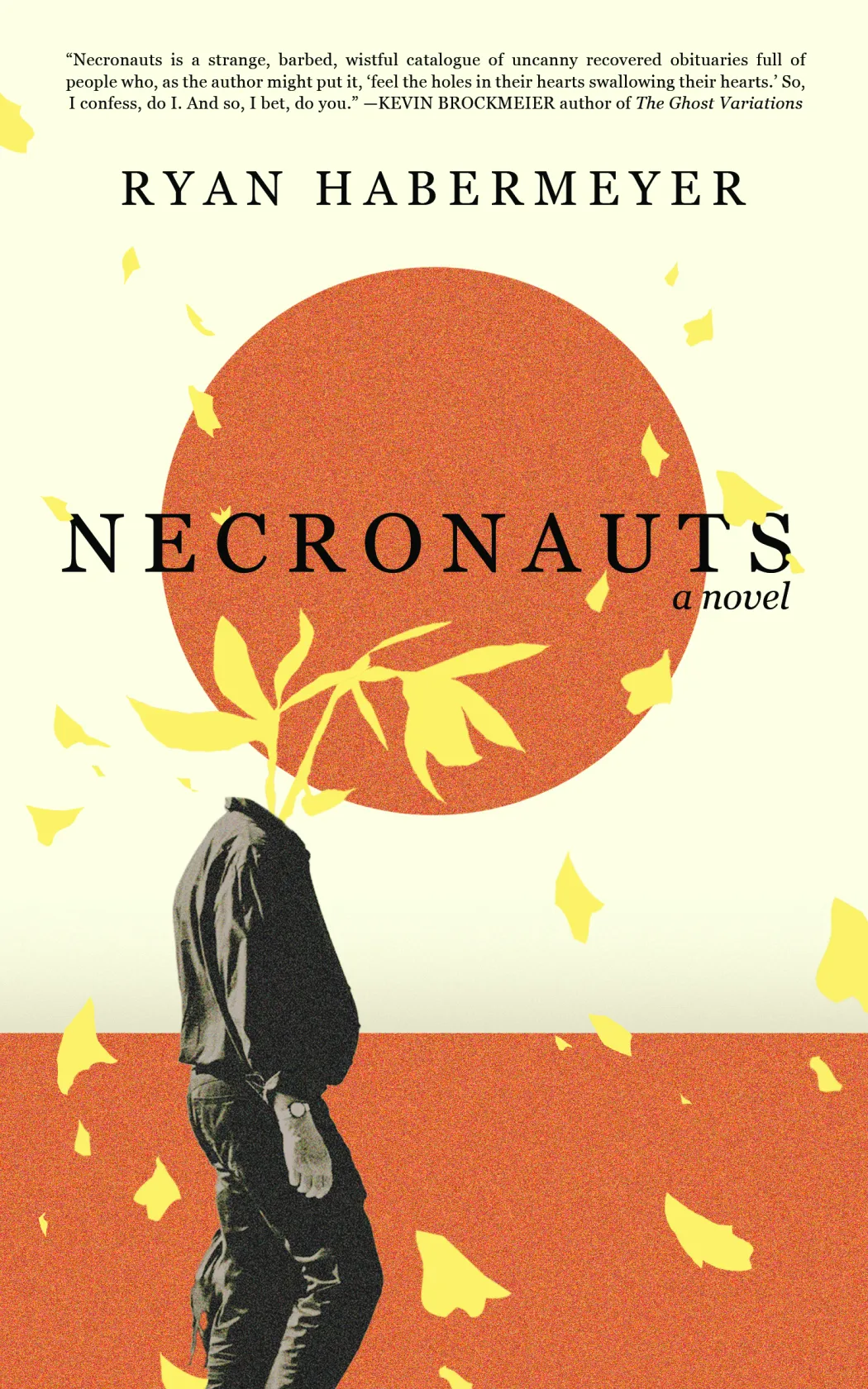 I could go on and on about how Habermeyer is Mormon literature’s answer to Barthelme and Saunders, but if in your mind I haven’t already established at least a prima facie case for this proposition then you are probably a lost cause who can’t recognize exceptional postmodern prose even if it bites you in the ass. Besides, making such comparisons would largely be merely an exercise in superlatives if not outright fanboying. And my forthcoming review of Habermeyer’s recent novel Necronauts—“The Great Postmodern Mormon Novel?,” which should appear in the Winter 2026 issue of Dialogue—already lays out a more detailed case for Habermeyer’s postmodern bona fides. Come for the short stories and stay for the novel, or vice versa if you prefer, but either way you can expect to be regaled with a sumptuous multi-course feast of postmodern hijinks.
For a writer focused on issues of craft, however, one thing that stands out immediately about Habermeyer’s writing are his stories’ unforgettable first lines. What’s not to love about a story that begins: “Every morning, the elephant masturbator lures the elephant into the cage by humming Bach” (“La Petite Mort”). Or less dramatically: “The job notice was simple: COSMONAUTS WANTED. NO EXPERIENCE NECESSARY” (“A Cosmonaut’s Guide to Microgravitic Reprodution”). Or even simply: “A foot was recovered from the inlet” (“The Foot”). I’m currently teaching a course on the short story, and I begin this course by exploring how a great story’s first line should immediately draw the reader into the story and hook them into wanting to keep reading. Through a clever premise. Through curiosity. Through humor. Or, more often than not, through the sheer power of the imagination to invent a uniquely imagined world sui generis, launching the reader down a rabbit hole or into a fun house of pure creativity. If that’s your jam, Habermeyer is your man.
And if his first lines don’t instantly snare you, his first paragraphs certainly will because, more often than not, his brilliant first lines inevitably develop into extraordinary opening paragraphs. Like this one from “Indulgences”:
 “Yesterday the doll saw me naked. It’s one of those Baby Breathe™ dolls that perform the fluid functions: she belches, cries, sneezes, pisses, shits, and, yes, just like it advertises on the packaging, she breathes. In product development they engineered a menstruating prototype but it was rejected on the grounds of being unrealistic. A pity, really, because the marketing department had partnered with tampon companies on some innovative holiday promotion strategies.”
One could simply stop there, and this paragraph alone would be enough to warrant greeting Habermeyer at the beginning of a great career, a la Emerson and Whitman, but this paragraph is only one of many. Technically speaking, it is probably not even his best, but it is where I first fell hopelessly in love with Habermeyer’s opening gambits. The first paragraph of “The Good Nazi Karl Schmidt,” however, is where I was ready to tie the knot:
“Over the holiday break we got a pet Nazi. This was a little unexpected. My mother says it is not really a pet. She’s very particular that, beneath the costume, the Nazi is in fact a man, a very sad and troubled man who needs our love and sympathy and forgiveness, and under no circumstances should we tell the other children or their parents we have a pet, especially not a pet Nazi. I’m not sure I believe her. The Nazi answers when I call him, is waiting for me when I come home from school, watches me fall asleep, and eats whatever I feed him. That sounds like a pet to me.”
A second notable feature of Haberemeyer’s work is his frequent, and often wildly humorous, invention of encyclopedic Whitmanian lists that dogpile seemingly random, if not outright incongruous, images into complex Rube Goldberg machines with a wide range of discordant interlocking pieces that improbably keep his stories in continual motion despite, or more often because of, their elaborate baroque, or even rococo, designs. For example, “Book—-er” lists the diverse items found inside a library’s various books: “One slice provolone cheese. Enema tube, used. Forty-seven Russian rubles. Army supply list. Three pubic hairs. Blood test results. Six molars. First-in-show ribbon. Juvenile starfish. Suicide note. Four-leaf clover. Wedding invitation. Bar soap. Sonogram of fetus. Winning lottery ticket. Divorce papers.” To this wonderfully eclectic list, Habermeyer almost parenthetically adds what every genuinely postmodern reader might be thinking at this point: “Why these little seizures of anarchy give me pleasure I cannot say.” Except perhaps that you have probably been reading too much Barthelme.
In “Of Angels” the list making is not quite so compact, but the story essentially alternates between a long list of things that various people either have or have not seen angels doing. The story begins simply enough by noting that the narrator has never seen an angel “make love” to his grandmother’s great-great-grandmother. Similarly, he has never seen her grandson with an angel “waiting in Sundance canyon at midnight to trade his soul to play the fiddle.” Technically, the more traditional custom is for devils, not angels, to barter souls for musical chops, but I still get where Habermeyer is going here. And the things that the various people have seen angels do are just as intriguing—at least for celestial beings if not quite for their human counterparts: “drink tea” on the top of the Salt Lake tabernacle, bathe “in the Spanish Fork hot springs” while singing “Italian opera with flawless accents” no less, “lose a tooth in a game of Mormon basketball,” and drag race “a Chevy Malibu with a bumper sticker that says HEAVEN IS SAD.” Ultimately, the story is essentially just a list, but it is a delightful, imaginative, and ROFL funny one that will change the way you think about angels forever.
Another technique that Habermeyer has mastered is the bold invention of ironic incongruous comic juxtapositions. Just when you think he is going to zig, he zags. If not summersaults, backflips, or even catapults himself in unexpected directions. Such comic misdirection recurs on virtually every page, and I have already noted, simply in passing, more than enough examples to prove my point: Nazi/pet, Bruce R. McConkie/Ouija board, elephant/masturbator. Habermeyer’s lengthy list of items found in library books offers just one of his many extended variations on this theme. “Delousing” and “The Inheritors,” in particular, are master classes in this genre with the incongruous comic images and one-liners coming so fast and so furiously that I would simply need to retell the entire stories in toto to even try to paraphrase their reckless proliferation of incongruity.
In addition, Habermeyer has also mastered the art of cleverly combining multiple, again often incongruous, braided stories and subplots into complex narrative Rube Goldberg machines. In “The Inheritors,” for example, before we even leave the first paragraph, Habermeyer unleashes a story about the eclectic “Bodhitree Retirement Community” which “offers exotic meat Mondays” with fresh servings of “octopus tacos,” “rattlesnake kabobs,” and “kangaroo burgers.” Obviously, not your standard fare for a retirement home, but when we discover that Mr. Meh-Teh “avoids exotic meat Mondays,” a secondary subplot is quickly revealed as we find out that Mr. Meh-Teh is a Yeti at the facility who feels “a little uncomfortable” about “seeing so many residents shoveling exotic meats down their throats.” If you are surprised later on in the story when a pair of Mormon missionaries, one of them smoking a cigarette, “tries to save the Yeti’s soul” by convincing him that he “needs a special Mormon bath” well then, I suppose that’s a you problem. A retirement home that once performed a “theatrical reenactment of the Mountain Meadows Massacre,” a Yeti who sometimes “throws snowballs at the Pangboche monks during their meditations, hoping to rattle them out of wherever they were projecting their consciousness,” and another Mormon character, a grandmother of thirty-eight who offers to “marry the Yeti in a Mormon ritual so they can ascend to the third heaven and have little Yeti babies in the afterlife.” Senior citizens, Yetis, and Mormons, oh my! Another hat trick. Who is this Habermeyer guy? The Second Coming of Lionel Messi?
Finally, and I’m going to get a little technical wonky literary critic here so bear with me, Habermeyer’s stories, especially in The Science of Lost Futures, often present textbook examples of first-class purist postmodern discourse. His stories do not so much tell a story as they deconstruct the very possibility of telling stories, subverting all attempts to interpret their narratives in such a way as to find some kind of definitive, fixed center or meaning. Instead, they delight, even luxuriate, in what Jacques Derrida refers to as a “second interpretation of interpretation”: one that affirms the Nietzschean free play of language without a truth, presence, or origin.
When you read stories like “The Foot,” you might start out trying to understand what the foot really is, but such an effort ultimately proves to be a fool’s errand. Each twist and turn in the story, and there are far too many to count, changes the meaning of what the foot is, casting it in a new light, subverting previous interpretations, and proliferating alternative possibilities. Trying to make sense of it is a wild goose chase as the meaning of the foot constantly escapes the reader’s grasp. It is always just around the next corner, hiding underneath the next bush, as slippery as the loot pursued in Joseph Smith’s infamous treasure digs. The inescapable play between Derrida’s centered and decentered interpretations of interpretation is on vivid display in the story’s closing paragraphs when somebody suggests that it is “just a foot,” leaving the narrator as the “only one left on the beach, unable to admit that it was only a foot.” Despite somebody’s confident declaration of closure, the narrator, like the narrative itself, is left incurably jonesing for polysemous traces of wildly proliferating alternative interpretations and stray meanings because sometimes a cigar isn’t just a cigar.
The same pattern plays out in “Visitation” after Naomi, who is “not well,” discovers that her “womb” has fallen to the “floor.” The story then leads the reader down a rabbit hole of possible explanations for why this has happened, what it all means, and what should be done about it. That the premise itself is on the surface absurd is only one clue that the reader should be on the lookout for preposterous and outlandish—not to mention literally ROFL funny—possibilities. Prosaically, this must have happened “sometime during the night,” but the narrative takes an unpredictable turn when the narrator admits that he is “suddenly jealous” because he wishes that he had “a womb of [his] own to lose.” Suspending disbelief, the reader may, like the character Naomi, attempt to find some kind of resolution to this dilemma, but the story continually frustrates both Naomi’s and the reader’s futile attempts to resolve the situation. The “rental contract says nothing about fallen wombs,” the “library has no self-help books” on the subject, and when the narrator suggests that maybe we should just “eat it” like they do in “some primitive cultures,” Naomi replies appropriately, “‘That’s the placenta, you idiot.’” Should she “donate it to a community college biology lab,” or “take it to a homeless shelter,” or “offer it as a house-warming gift”? Maybe just “boil it on the stove and use the fluids as biofuel.” Naomi is just grasping at straws and throwing everything at the wall to see what sticks. And what little advice Naomi does eventually discover seems dubious at best: When “she reads in books that wombs respond favorably to Near Eastern spice-blends,” she decides to “eat Indian food all day,” but to no avail. And the rest of the “solutions” explored in the story prove no more fruitful, but no less funny, than Naomi’s postlapsarian uterus.
In “Teeth Like God’s Shoeshine,” Habermeyer perhaps describes his own slippery postmodern language best: his stories are like the “game” of “chutes and ladders: sometimes you slide down and sometimes you climb up and sometimes the gears go wonky and you just spin.” Or as he puts it in “Everything You Wanted to Know About Astrophysics but Were Afraid to Ask,” “we keep making holes because we want to reach inside them, grasping for lost horizons in a constant search for the other end of nothing.” And “Indulgences” reminds us that sometimes it is just “better to remain suspended in anticipation,” while “The Fertile Yellow” asserts that “if you want to reach the impossible you have to attempt the absurd.” The same story’s claim that “to be a sperm is not about finding existential closure but learning to ride the ejaculatory wave” isn’t even a bad paraphrase of the ecstasies of jouissance despite its phallogocentric reference to sperm.
And so it goes in Habermeyer’s literary funhouses and narrative Rube Goldberg machines: The reader repeatedly sets out upon a quixotic quest for meaning only to have the interpretive rug constantly pulled out from under them or fall on another hermeneutical banana peel. Like Godot himself, the long-anticipated meaning never seems to arrive. But in these micro-allegories of poststructuralism’s renowned endless deferral of meaning, that’s precisely the point, if there is a point, which there really isn’t, after all. Besides, Habermeyer’s stories are much more entertaining to read than Of Grammatology or Anti-Oedipus, but they will pretty much get you to the same place if you read enough of them.
Through it all, Habermeyer frequently circles back on Mormonism, or at least Utah, insightfully—or at least provocatively—describing Utah as a world of “Misfits, perverts, and prophets all swept up by apocalyptic fever. In Armageddon we trust.” And Mormons as people who “think they’re all white and radiant because they stand on the right hand of God, but really it’s just the uranium in their water.” Or when he waxes poetic, he lyricizes about this “weird place, this Utah. Full of L.A. transplants who swear they’ll never go back, and L.A. dreamers desperate to get out of here. There’s a different story for everyone under all this sand. Just a shame it swallows you up when you start digging for it. The Mormons are nice. I’ve had four baptisms. They look at me and sneer. But I was born here. I’m salt folk. Lick me, grind me, melt me—I just brine back. From salt I came and to salt I’ll return, I tell these wannabe believers. Until then I got no home. Just a mutiny of gray pubes.” Alternatively, he also describes Utah as a “cruel place. The weird orphan of the West nobody invites to the birthday party . . . A fever dream of madness and manners. Bubbled up on the butt cleft of nature. A land of addicts relapsing in perpetuity, always itching for the next fix of faith. Afterthoughts in God’s retirement. Make no mistake: He is retired. Not out sick, not dead, not MIA, not hold-all-my-calls-during-a-lunch-break. Retired.” Habermeyer may not play for the home team anymore, but he still has its playbook down stone cold.
Did I mention that Habermeyer is also a superb stylist whose prose sings, or at least screeches, like only the late Kurt Cobain can? Postmodern hijinks. The reckless proliferation of incongruous comic juxtapositions. Absurd premises. LMFAO humor. Outlandish zaniness. Ludicrous inanity. Literary funhouses and fictional rabbit holes. A wild roller coaster ride of pure unadulterated sui generis imagination. Elephant masturbators and Yetis. Elaborate narrative Rube Goldberg machines. If a story walks like Donald Barthelme’s, and quacks like George Saunders’s, it just might be Ryan Habermeyer’s.