
 From Robert Bennett’s Mormon Short Stories series on Substack.
I started my substack with a couple posts about Andrew Hall and Robert Raleigh’s anthology The Path and the Gate, arguably, if not inarguably, the most recent landmark anthology of Mormon short stories. I did this in part because my interest lies not just in Mormon short stories in general, but more specifically in what we might call the new or the modern (or even the postmodern or proto-postmodern if you want to go there) Mormon short story. So, I started at the end of the road where we find ourselves today in the present moment, in the now, essentially asking the quintessential Mormon question: why am I here? Or maybe even, where am I?
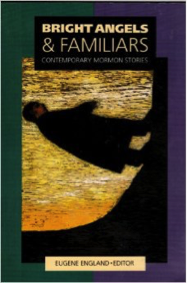
In this post, however, I want to approach this question of the new from the other direction, asking instead the other quintessential Mormon question, where do I come from? Or how did I get here? Consequently, I am turning backward to try to locate what we might call the origins or the ur-anthology of the new Mormon short story. I had always assumed that Eugene England’s 1992 collection Bright Angels & Familiars was the motherlode, but when I sat down to re-read it to write this post, I suddenly started second-guessing myself. I had only barely cracked the first pages before I instantly began asking if what I was reading really was modern. Or new? Or how new? Or was it simply a continuation of a by now clearly traditional if not exhausted canon of days long gone by. Good writing to be sure. Even a story published in The New Yorker (albeit in 1953), but didn’t these stories still somehow belong more to the past than to the present, let alone the new? The anthology is undoubtedly a classic, but is it just a classic? More tradition than the individual talent, as T. S. Eliot might have put it. Not quite the avantgarde. Certainly, not anymore.
Obviously, the answer to this question lies somewhere in the middle given that this anthology stretches both backwards and forwards in its sensibilities. Deliberately. As a kind of balancing act, or possibly even a display of well-honed juggling skills. As the two recent books about Eugene England—Terryl Givens’s Stretching the Heavens: The Life of Eugene England and the Crisis of Modern Mormonism and Kristine Haglund’s Eugene England: A Mormon Liberal—have demonstrated, England himself, his relationship to liberalism/modernity, and his relationship to the church often inclined more to the middle than the extremes. Perhaps more left of center than dead center, but he was not exactly a revolutionary with a manifesto in one hand and a Molotov cocktail in the other either. Professor, I served with Che Guevara, I knew Che Guevara, Che Guevara was a friend of mine. Professor, you are no Che Guevara. To riff on Lloyd Bentsen’s famous quip to Dan Quayle. It should come as no surprise then that England’s attitude toward Mormon literature might be no different. In fact, it is perhaps to be expected, if not utterly predictable.
Upon further inspection, however, as far as acid tests of the new are concerned, England’s anthology pretty much limps out of the gate. The reader is instantly bombarded with water rights disputes, johnny cakes, deer hunts, sheep camps, and intricate—how many angels can dance on the head of a pin—philosophical debates about the difference between a manure fork and a barley fork. In short, it reeks of a Mormonism—bishops, missionaries, pioneers, and even the Three Nephites—deeply rooted, possibly even inextricably entrenched, in a parochial, agrarian, rural Utah past with its generally predictable orthodox religious traditions and practices. One story does cleverly poke fun at the patriarchal order by suggesting when God doled out the sayso and sense men got the former while women got the latter. When it comes to the church, it may be hard to argue against that, but even this clever insight hardly constitutes a feminist manifesto. And maybe one character does take what she describes as a pretty wild and crazy weekend trip to California (spoiler alert: it was really neither particularly wild nor crazy), but at least initially, that’s about as modern as the anthology gets. Not quite The Hangover in Vegas. Although, it’s not like you good temple-recommend holding members of the Church of Jesus Christ of Latter-day Saints should be watching movies like that anyway.
And yet England’s own Introduction insists repeatedly that these stories are contemporary. Sure, this anthology is already three decades old, so the contemporary may have looked different back then. And to be generous, maybe England means contemporary in perspective or even form, more than contemporary in theme and setting, but from where I sit today, the anthology certainly doesn’t feel very contemporary to me—even in form—until I am nine or ten stories in when Darrell Spencer (indisputably a new Mormon writer) in his characteristically postmodern rambling narration finally claims that “Los Angeles is not the end of the world, Francois. Orem is.” And even then, his paean to Vin Scully and Tommy Lasorda perhaps ultimately dates him—and me—more than it announces some kind of imminent shock of the new. His character’s occasional beers notwithstanding.
But if we really can relegate large swaths of this anthology to the dustbin of the classical tradition of an age long gone, how/where does the anthology also promote something that we still might recognize as decisively new? There are certainly bits and pieces scattered here and there slouching toward Bethlehem, starting with Spencer’s love affair with the Dodgers and continuing through a little poker, a prostitute, a water reclamation project in Niger, some snarky teenagers, brief flirtations with “The Love Song of J. Alfred Prufrock,” and even some speculative fiction about a bishop gone rogue. Certainly, there is enough material here to begin working with. To begin crafting a distinctively new tradition. It may not quite be Huxleyan brave new world new, but at least it isn’t just stale old Homerian old either.
If we want to talk about where the new intersects with the Mormon short story most dramatically, however, I would focus primarily on three delightful stories that all depict what happens inside the hallowed halls of Mormon meeting houses: Neal Chandler’s “Benediction,” Levi Peterson’s “The Christianizing of Coburn Heights,” and Phyllis Barber’s “At the Talent Show.” These stories are all deeply Mormon, but they also depict Mormonism in distinctively new—at least complex, arguably surprisingly critical, and often comically irreverent—ways. They may not outright wreck, but they at least creatively deconstruct, orthodox Mormonism.
I will quickly dispatch with the first two. Chandler’s story is a creative account of an epic OK Corral-level showdown between a liberal ex Sunday School teacher and his conservative replacement. We have all been there before. IYKYK. And this piece, worthy of its title, ends with arguably the best benediction in all Mormon literature—new or otherwise. And Peterson’s story about a bishop’s commendable, if not entirely successful, attempt to bring an impoverished and cantankerous, but simultaneously witty and wise, lost sheep back to the fold is so exemplary of the new Mormon short story that it is already widely read, recirculated, and known. So, I leave these stories for the moment not because they are unworthy of further analysis, but rather because I plan to eventually review Chandler’s in more depth when I write about his larger collection, with the same title, in which it is included. Peterson’s story has become so canonical, in fact, that it perhaps even deserves an entire stand-alone analysis itself.
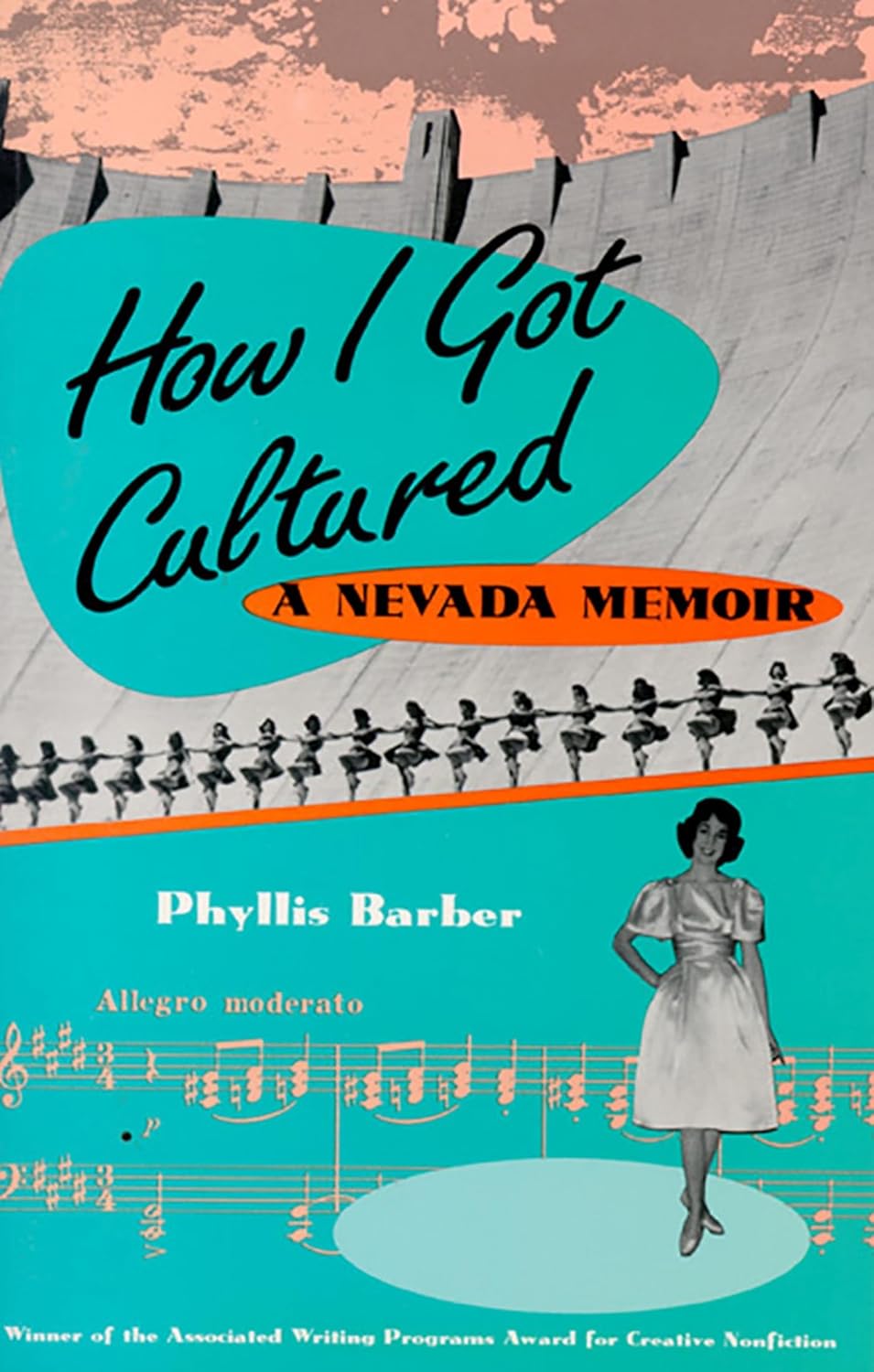 So, let me turn our attention then to Barber’s delightfully comic portrayal of a ward talent show. A bit of a spoiler here. The talent show is in three acts: first, a nine-year-old boy accompanies three musical acts with varying degrees of talent; next, three teenage girls perform a campy version of “Chiquita Banana” (is there a non-campy version?); and finally, a bishop does a camp-for-camp’s-sake hula dance. On the surface, Barber’s story initially seems to be just a comic version of an unusually humorous ward talent show, albeit a slightly hyperbolic one. But for me it is the slight difference between the comic (with its laugh out loud jokes) and the camp (with its culturally subversive overtones)—together with Barber’s occasional overt jabs at Mormon cultural values and practices—that really distinguishes this story.
Of course, Barber begins with a classic comic juxtaposition when she makes her nine-year-old a musical prodigy, but isn’t this just slight exaggeration? After all, Mormonism is famous for its kid wonders, especially when it comes to music. Nine? Doubtful. But twelve? Maybe fourteen? Now that’s a real possibility. At least in certain wards where true helicopter parents are already hard at work on their children’s college applications.
The next two acts, however, transition the story away from the merely comic to the more provocatively campy. While in the previous act Barber comically juxtaposes the nine-year old with his musical hat trick, the boy’s—and the other musicians’—talents are still taken seriously. This is a talent show that showcases real talent—imperfect and nascent as those talents may be. The Chiquita girls’ campy performance, however, does not showcase talent so much as it actively subverts it. Garishly costumed and made-up, their act is so over-the-top theatrical—not to mention LOL funny and under-rehearsed—that they can barely, if at all, contain their own laughter which is also widely shared by the audience. The laughter is so loud, in fact, that it becomes subversively contagious.
But the line that catches my attention here is when Barber explicitly notes that in this act “there is no investment in perfection.” Not only no perfection, but not even investment in it. With this line, Barber subtly inverts the talent show into an anti-talent show. This is not even some kind of talented comedy performance; this is a campy inversion of the very principle of talent itself—both God given and otherwise. Here is where Barber takes the Mormon short story in new directions. There have inevitably been comic Mormon stories before. No culture, even our staid general conference, is without its humor, after all. Even if we are a particularly sober and serious—often largely humorless—tribe.
But Barber is not just making a joke. She is striking at the heart of core Mormon values: developing our talents (hence the child prodigies) and striving for perfection (the so-called teleological end-all be-all of Mormon morality or even theology). Consequently, Barber’s story isn’t just funny; it is a deceptively simple, yet profound commentary on—even critique of—Mormonism, if not quite in toto than at least at large. A call to not take ourselves so seriously or always strive, even over-strive, so earnestly for perfection. Arguably two of Mormonism’s tragic flaws. Barber’s “talent” show is even a rallying cry for lightmindedness and loud laughter. Things Mormons actively, even solemnly, forswear in our sacred temples. Or at least we used to. This isn’t just a funny story; it is a trickster-like inversion of fundamental core Mormon values: perfection and seriousness first and foremost among them.
Obviously, the heart of the story, however, lies in the fact that it is the bishop, the supreme authority figure in the ward, who is the campiest of all. In an over-the-over-the-top luau act (shirtless and gaudily made-up in a grass skirt with two half coconuts covering his nipples and in a solid deadpan), the bishop steals the show from the teenagers who only moments before stole the show themselves. To thunderous applause, he is greeted afterward by an adoring Sister Palmer who boldly proclaims his act “the funniest thing I’ve ever seen.” The conquering camp hero, Bishop Moore is hailed not only as a stand-up comedian but even as a trickster god like Loki.
This ever-escalating humor, important as it is to the story’s claim that “you can never laugh too much” (itself already a dubious claim according to mainstream Mormonism)—however, isn’t the story’s final coup de grâce. Instead, in a whiplash inducing final plot twist, the musical prodigy, the bishop’s son himself, calls his own father to repentance for his pride. You’ll have to read the story to find out why. I can’t give everything away. Now bewaring of pridefulness is indeed a core Mormon virtue—at least since Ezra Taft Benson’s famous conference address—but in this story the warning comes out of the mouth of babes, thereby inverting both the patriarchal and ecclesiastical order of things. In short, the kid simultaneously schools both his father and the bishop.
While Barber may not be the first writer to point out a bishop’s—or a father’s—flaws, she does so here with a sense of humor and cultural vertigo that plays with Mormon cultural values more than affirming them, and this strikes me as if not outright new, then at least moving towards the new. In several ways then, Barber complicates and questions Mormon values and authority in ways that reflect a decisively post-devotional turn in the Mormon short story. The story isn’t without a moral or two, but what morals it has are decisively counterintuitive, if not countercultural, for such a sober patriarchal crowd, and it studiously avoids even the whiff of traditional moralism.
But the final story I want to comment on is Walter Kirn’s “Whole Other Bodies,” the anthology’s concluding story. Here is where I see the conservative bent of the anthology most forcefully. To begin with, it is a relatively straightforward story about how missionaries convert a family to the church, and how their conversion again more or less straightforwardly improves their lives. While I have nothing against conversion stories per se, or even against stories about the benefits of Mormonism, this story simply comes across as too simplistic, too sentimental and clichéd even, to exemplify anything that I would want to call the new Mormon short story. I do like how the kid opens his eyes during the prayer at the baptism. It is a nice touch in what I consider to be an otherwise mostly forgettable story, but I say this not to disparage Kirn as a writer, only this particular story which he happens to have written. Possibly, his worst. Certainly, not his best. But hey, even LeBron James has an off night.
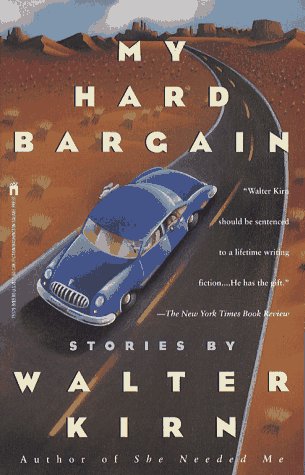 My real complaint about this story, however, is not that it was included in the anthology, but rather that another story, “Planetarium,” from Kirn’s same collection, My Hard Bargain, wasn’t included instead. Now obviously, Kirn may have chosen this story himself, or there might have been publication rights issues, or there could be any number of other considerations that went into this choice, including perhaps the editor’s or publisher’s unwillingness to really embrace the new. Nevertheless, I find it an unfortunate choice. “Planetarium,” a humorous, satirical story about the church’s problematic approach to teaching young men about masturbation, virtually screams newness, breathing a whirlwind of fresh air into its genre—let alone the church’s stale heavy-handed approach to sexual purity.
It is also the first Mormon short story that I ever read, perusing it in the bargain bin in the BYU bookstore of all places. It was a real revelation about how someone could actually think critically and creatively about the church without necessarily just becoming an angry young Mormon determined to leave the cult but never leave it alone. Instead, this story examines the church’s fault lines and chipped edges. It explores its confusions and contradictions. And in a very clever and entertaining—even lighthearted and comical—manner. Satire, but not biting. Mere lightmindedness. Not quite loud laughter. Looking back, I’m surprised it didn’t inspire me right then and there to become a Mormon short story writer. But alas, I had just returned from a mission and was mistakenly addicted to those sad apologetic mimeographed F.A.R.M.S. reprints. In retrospect, I should have immediately demanded a trade, or at least flirted with free agency.
To refer to Eliot again, England’s anthology misses a real opportunity here to end with a bang instead of a whimper. To choose fire instead of ice. To reject tradition and embrace individual—even new—talent. The anthology may hint at a dam about to break or a fault line beginning to slip, but it only inches open the door of the new instead of throwing wide open a Pandora’s box of innovation. It may be a landmark, even a Mount Rushmore, contribution to the new Mormon short story, but it still leaves me wondering what could have been. What other possibilities were left on the cutting room floor.
I won’t presume to pass final judgment on the man, the myth, and the legend—let alone his anthology—other than to say that, whatever its other flaws may be, it certainly helps move, push, or maybe only inch forward the future of the new Mormon short story. Consequently, it remains an indisputable, if uneven, starting point for discussion about this new emerging canon, and it introduces some of its enduring central texts. After all, where would we be without Chandler’s, Peterson’s, and Barber’s stories? Possibly still waiting for Steven Peck’s incredible “Sister Carvalho’s Excellent Relief Society Lesson” (in The Path and the Gate).
But go read “Planetarium” in Kirn’s My Hard Bargain right now. It is required reading. I hope to eventually write a whole stand-alone piece about it. Although, this does mean that I have just committed myself to three new essays in my last 3,000 words. “Planetarium” is a Mount Rushmore level landmark in the history of the new Mormon short story. But you can skip “Whole Other Bodies,” which also means that even if you should read England’s anthology, you really don’t need to read it all the way to the end. Bruce McConkie might have even described “Whole Other Bodies” as just a barking dog snapping at travelers’ heels as the caravan moves on. Much of Kirn’s other writing, however, is revolutionary, and it just keeps getting better. Once you finish “Planetarium,” read Kirn’s “Mormon Eden” in Robert Raleigh’s anthology, In Our Lovely Deseret: Mormon Fictions. There is nothing sentimental or clichéd about that one. It is all fire, no ice.